
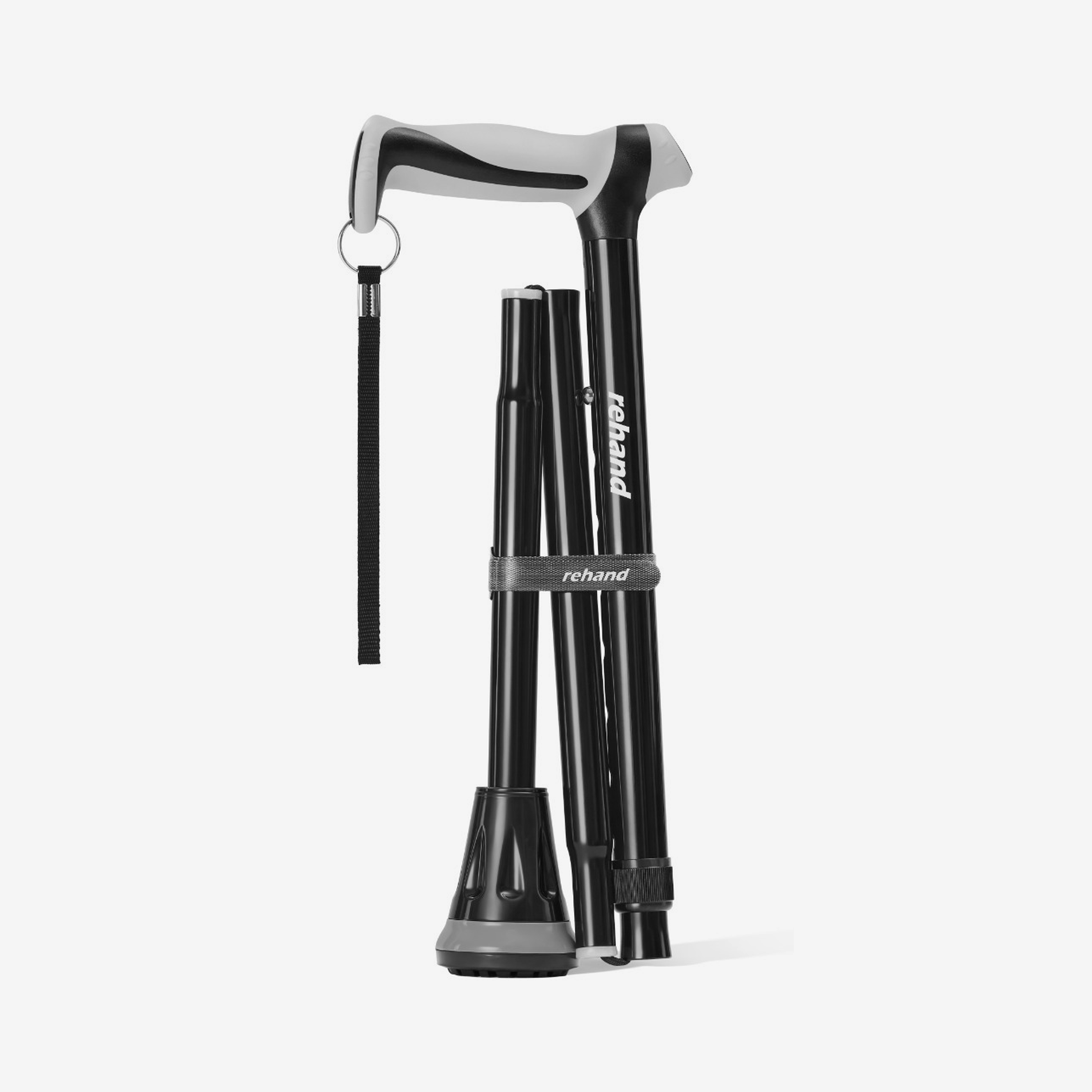
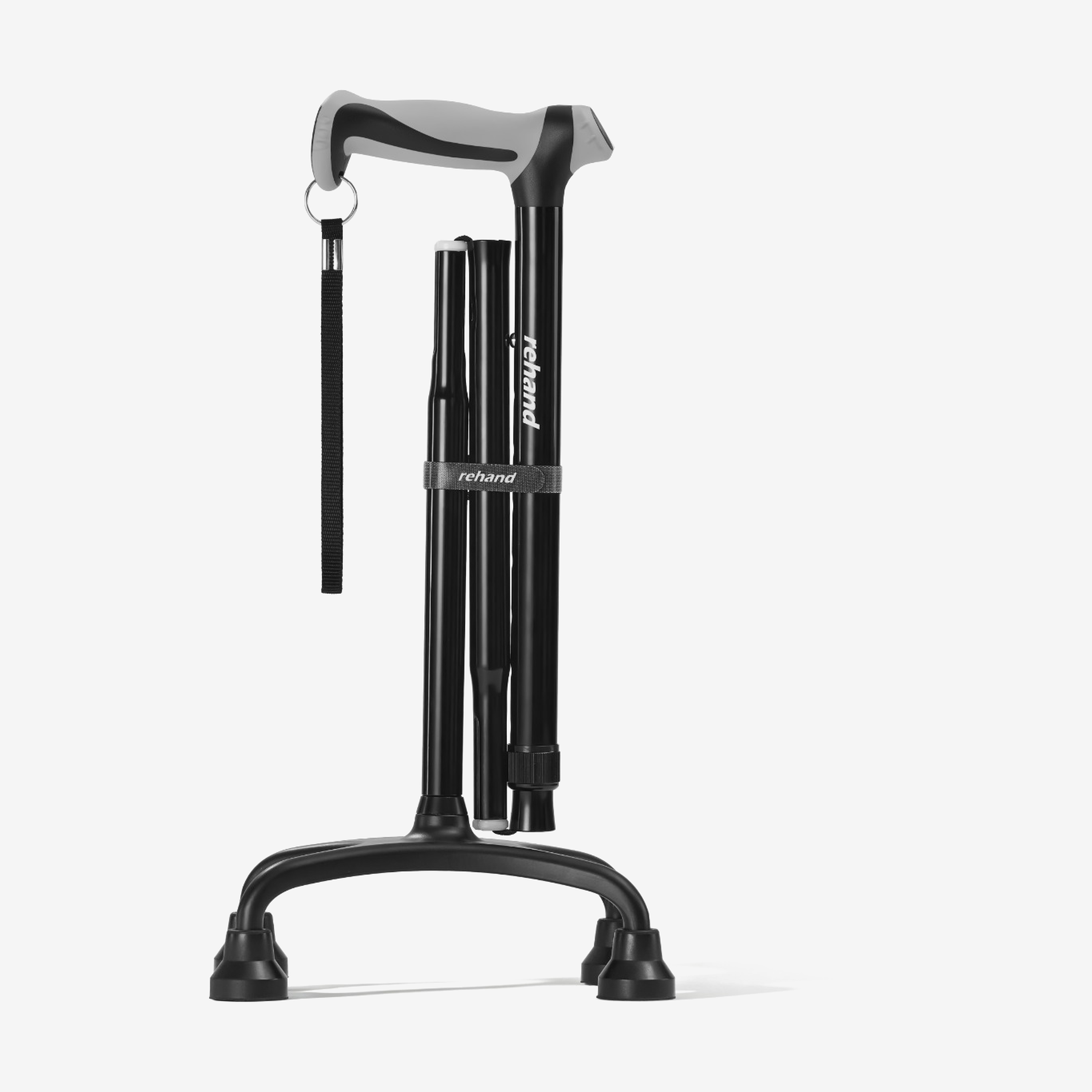
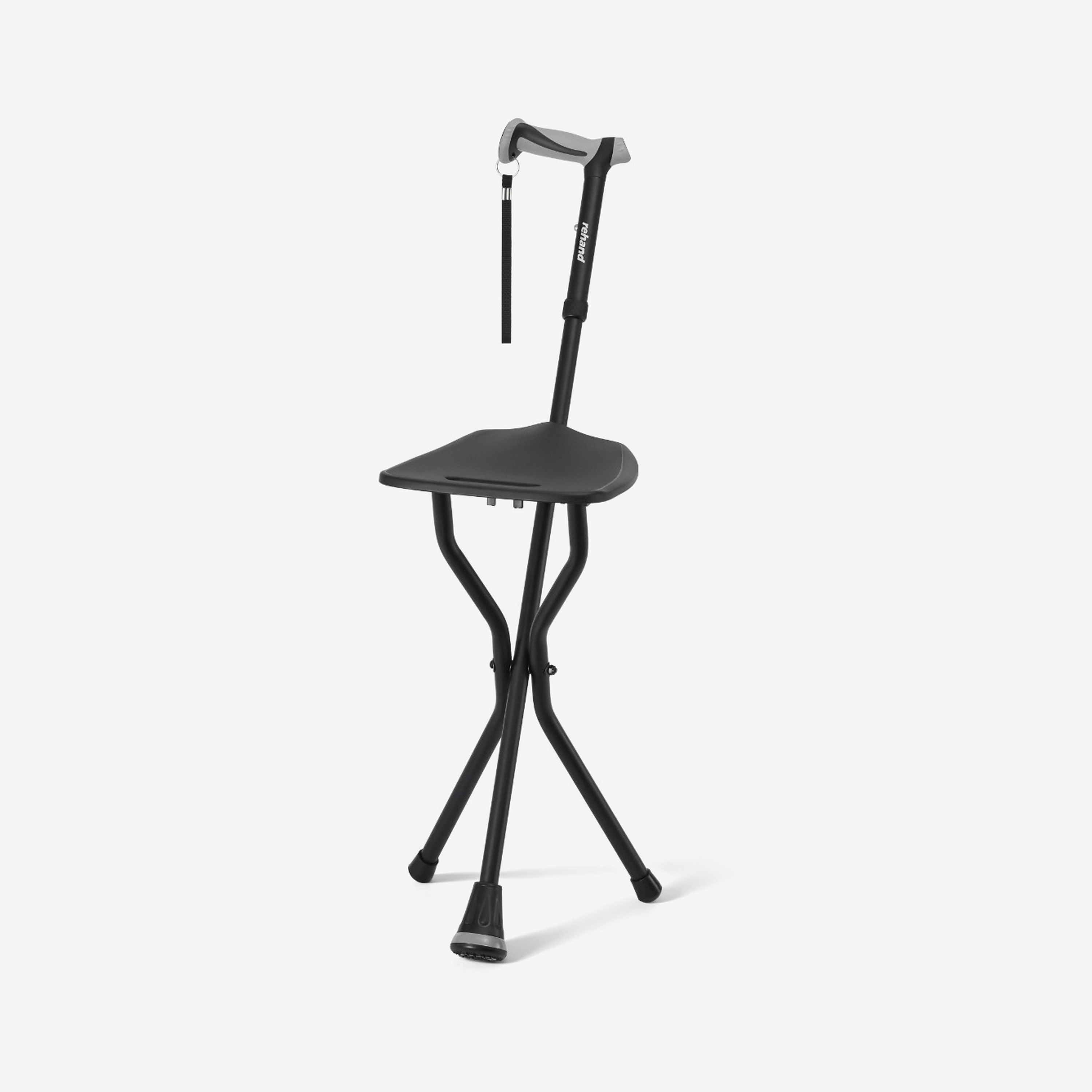
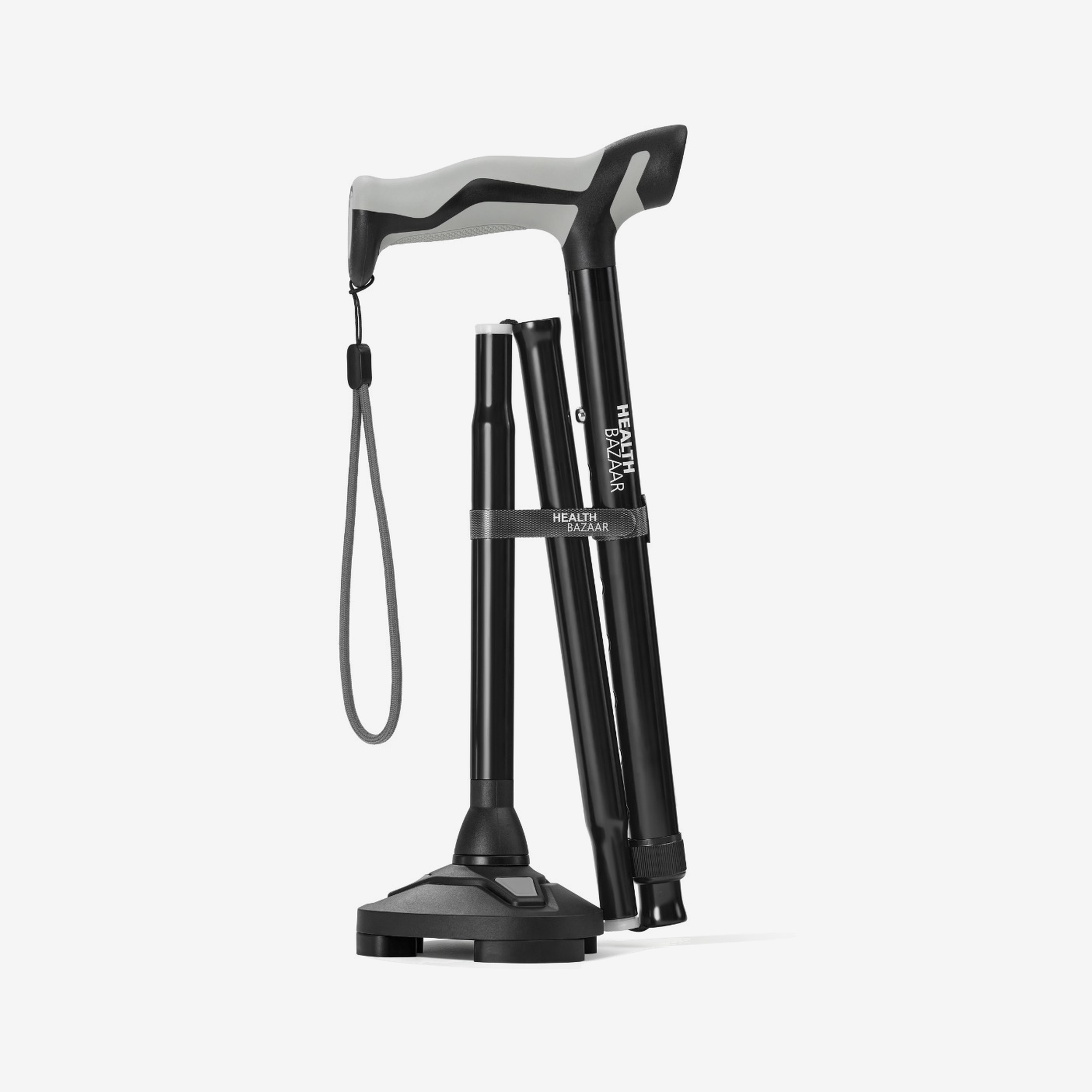

A self-standing cane has a base designed to remain upright when you let go on a suitable level surface. A regular single-tip cane has one floor-contact tip and usually needs to be held, placed in a holder, or laid somewhere secure when you are not using it. The self-standing feature can be convenient during a pause, but it does not mean the cane cannot tip or that its walking support is right for every person.
Start with the support and fit recommended for you. Then compare what happens during ordinary stops: at a checkout, beside a chair, or when putting on a coat. A cane that is easy to set down but awkward to walk with will not solve the main problem.
What changes when the base can stand on its own?
The difference is most noticeable between steps. A single-tip cane has a smaller floor footprint. When you release it, however, it may slide from a wall or fall from a chair. A self-standing base gives the cane several contact points so you may be able to leave it upright beside you on a firm, level surface.
That convenience has limits. Carpet pile, a sloped sidewalk, bumps, a moving bus, or a crowded aisle can change whether the cane stays upright. Keep the cane within reach, place it where nobody will trip over it, and never use an unattended cane as a handhold while standing up. Rehand's user guides explain how to place the particular base flat before letting go.
Compare the base while you are walking
Multi-point and single-point bases can feel different as you turn, pass furniture, and move along a narrow route. A wider base needs more clearance around your feet and nearby objects. A pivoting base can allow the shaft to angle while its contact points remain on the floor, but its motion and grip still need to feel predictable to you. Cleveland Clinic describes both single-point and multi-point canes and advises having a healthcare provider help choose the right type and fit. Read its cane guidance.
Do a practical comparison on a clear, level route if you can: walk, turn, stop, and set each candidate down. Check whether the base catches your shoe or furniture. Do not assume the cane with more tips always provides the best personal fit. Mayo Clinic notes that a four-tip cane offers a broader base but can be heavier and more difficult to handle. See Mayo Clinic's cane selection guide.
If you have been prescribed a particular device or weight-bearing restriction, ask your physical therapist or clinician before changing base type.
Check height and grip before choosing a feature
For an initial fit check, stand upright in your usual shoes with your arm relaxed at your side. The handle should be near your wrist crease, and your elbow should bend slightly when you hold it. A clinician may adjust that setup for your needs. Use the Rehand Fit Guide to compare product ranges and our walking cane height guide for the measurement steps.
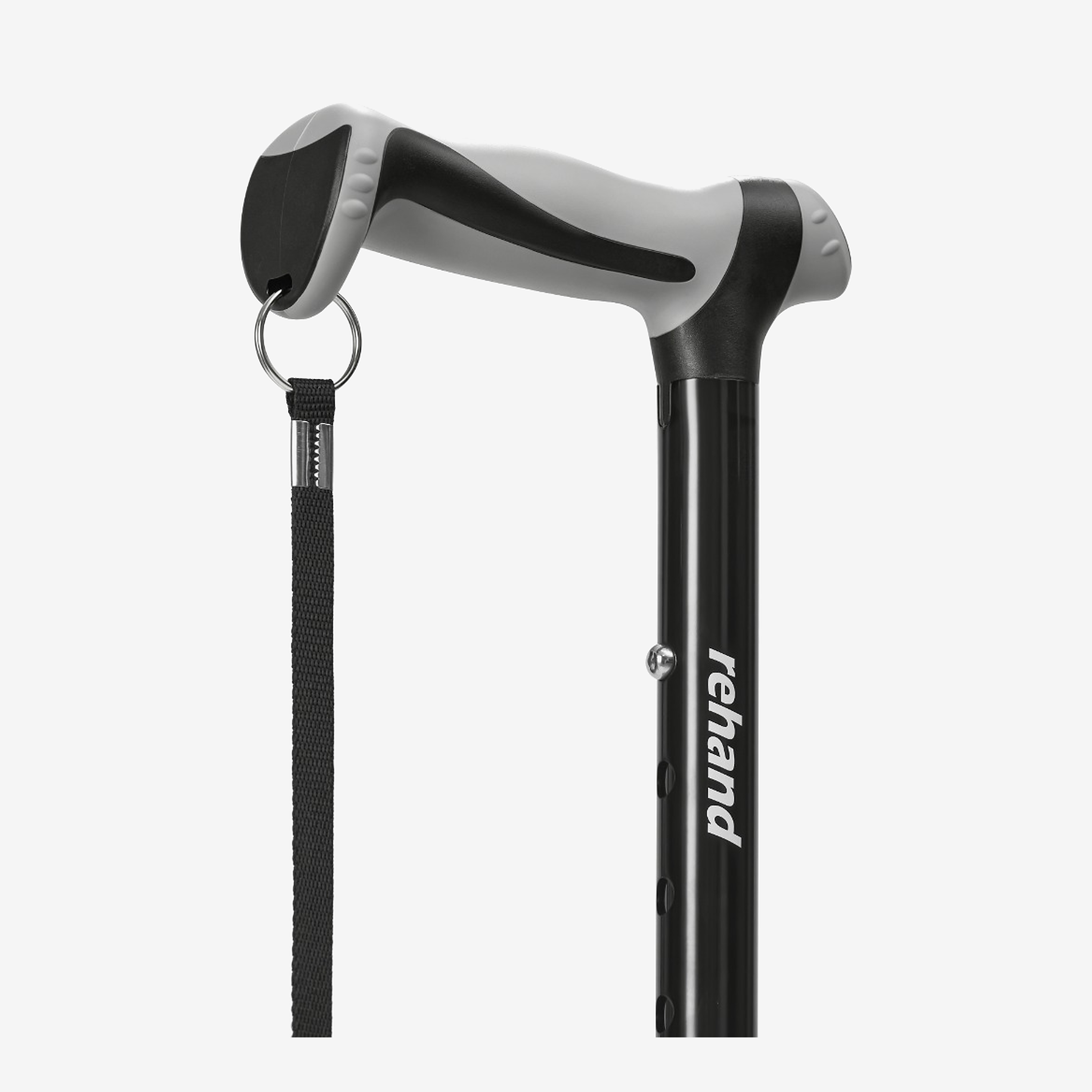
Compare the handle shape, hand position and lock as carefully as the tip. Check that the height button seats fully and that every folding section is assembled according to the model's instructions. If you cannot grasp the handle comfortably or the base disrupts your walking pattern, a self-standing feature alone is not a reason to keep using it.
Two Rehand designs, two different daily routines
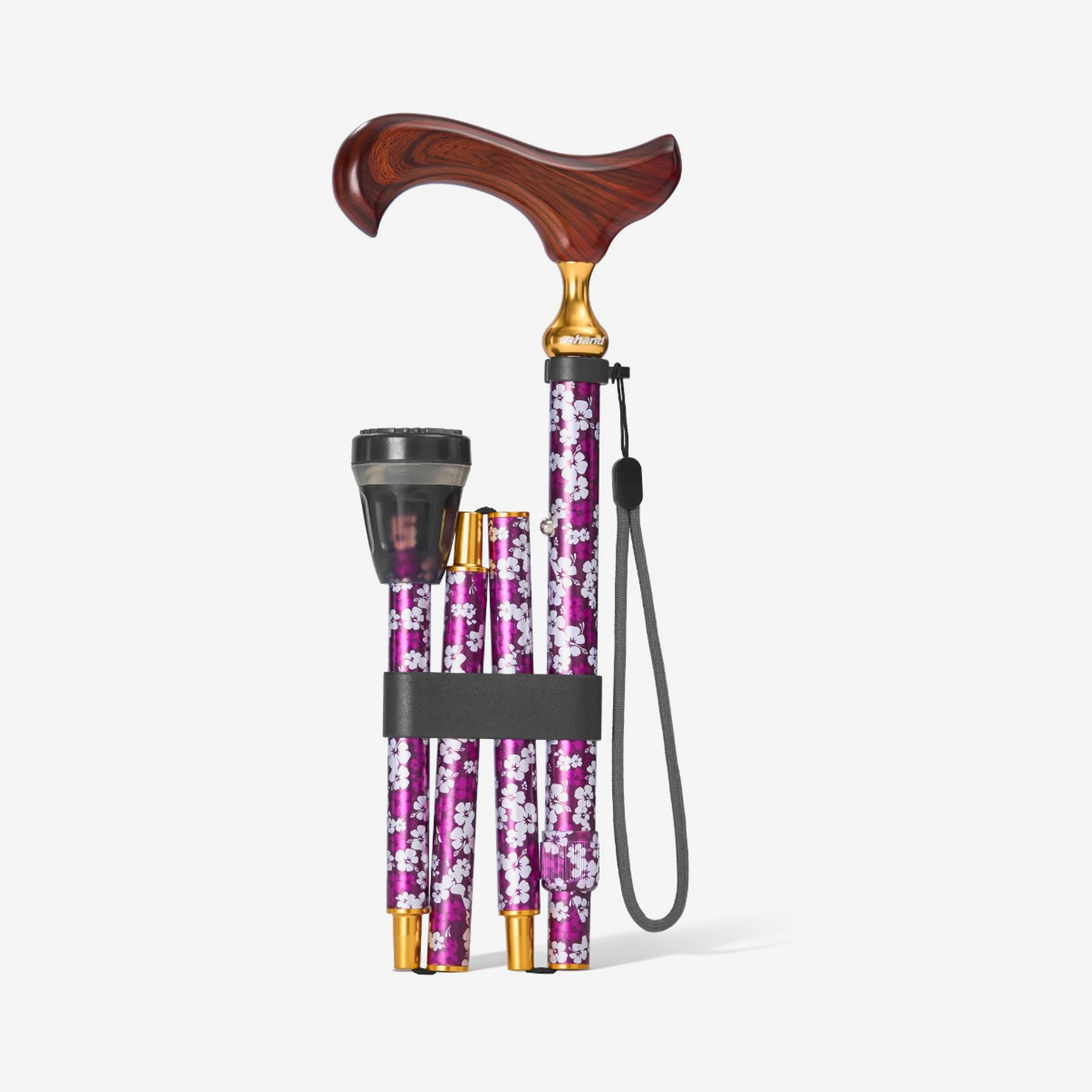
The Rehand Foldable Walking Cane uses a single contact tip and folds to a listed 14 inches. The Rehand Self-Standing Walking Cane has a four-prong pivoting base and also folds to a listed 14 inches. Both have eight discrete height settings from 31 to 38 inches. Those specifications describe the products; they do not prove either one is better for a particular person's gait or medical condition.
| If your main question is… | Check this first |
|---|---|
| “Where can I put the cane during a short pause?” | Try the self-standing base on the level surfaces you actually use; keep it within reach. |
| “Will the base fit around my shoes and furniture?” | Compare the footprint and practice turns. |
| “Will it fit my height and hand?” | Measure wrist-crease height and check the grip and adjustment range. |
| “Do I need more walking support?” | Ask a qualified clinician to assess the appropriate aid; the self-standing label does not answer this. |
A simple choice
Choose a self-standing cane if its base works well during walking and the ability to set it upright addresses a real daily frustration. Choose a regular single-tip cane if its smaller base and walking feel suit your route and you have a secure way to place it during stops. If you need a different level of support, ask a clinician whether a quad cane, walker, or another aid is appropriate.
Explore Rehand self-standing canes, check the specific product page and manual, and compare the fit in your everyday shoes before deciding.