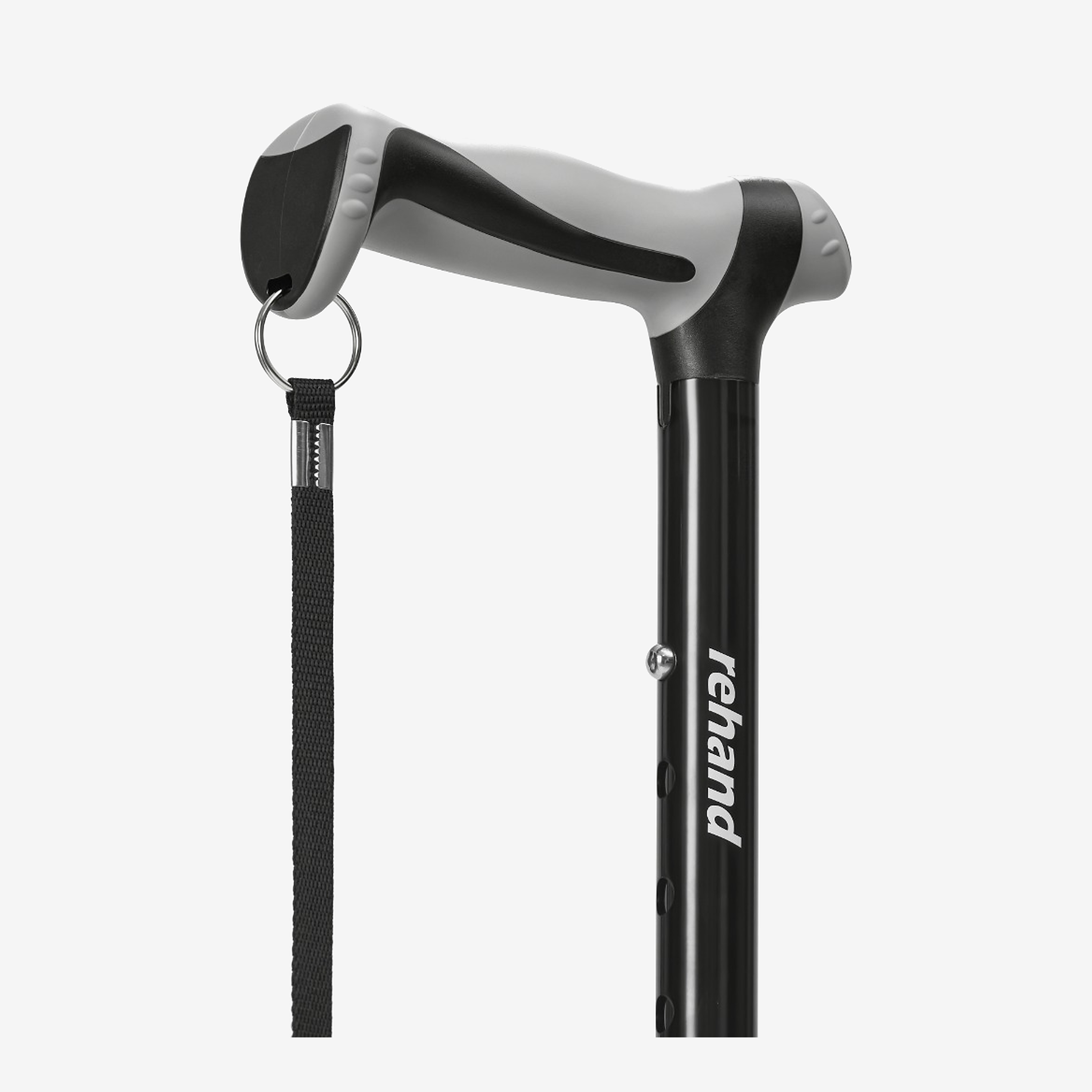

A walking cane for narrow spaces has to work in two places at once: in your hand and in the route around you. A base that feels comfortable in an open room may be awkward near a bathroom doorway, a kitchen counter, a chair, or a narrow hallway.
The right choice is not simply the smallest cane. Start with the support level recommended for you, then compare the cane’s footprint, turning clearance, handle height, storage method, and the way you use it in your home.
Quick checklist for small spaces
Before choosing a cane for an apartment, bathroom, hallway, or crowded room, check:
-
the base width and depth;
-
how much space you need to turn the cane;
-
whether the grip and shaft stay clear of nearby furniture;
-
whether the height range fits you;
-
whether the cane can be stored without becoming a trip hazard;
-
whether the tip or base remains fully on the floor during a turn; and
-
whether the exact product is suitable for your support needs.
A compact design can make movement easier in tight spaces, but compact does not mean universally better. A broader multi-point base may provide more ground contact while also requiring more clearance.
1. Measure the route, not just the cane
Look at the spaces where you use the cane most often:
-
bedroom-to-bathroom routes;
-
doorways and thresholds;
-
the gap between a toilet and a wall;
-
the space beside a kitchen counter;
-
the turning area near a chair or bed; and
-
the storage spot where the cane rests when not in use.
You do not need a perfect architectural drawing. A simple measurement of the narrowest point can reveal whether a wide base or long handle will repeatedly contact furniture.
Also pay attention to turns. A cane may fit through a doorway when pointed straight ahead but catch on the frame when you rotate your body or change direction.
2. Compare the base footprint
The base is one of the most important differences between a single-tip, self-standing, tripod, or quad-style cane.
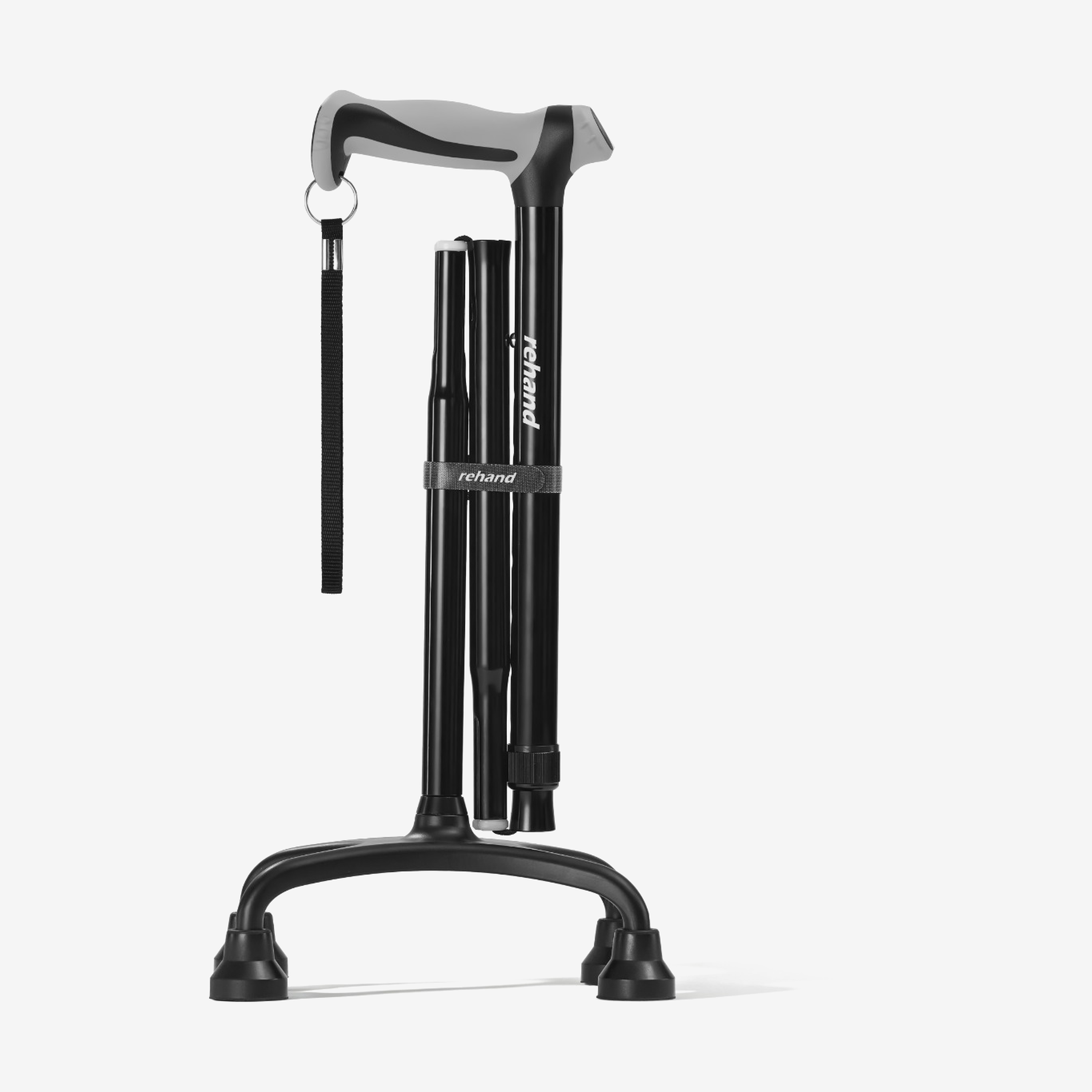
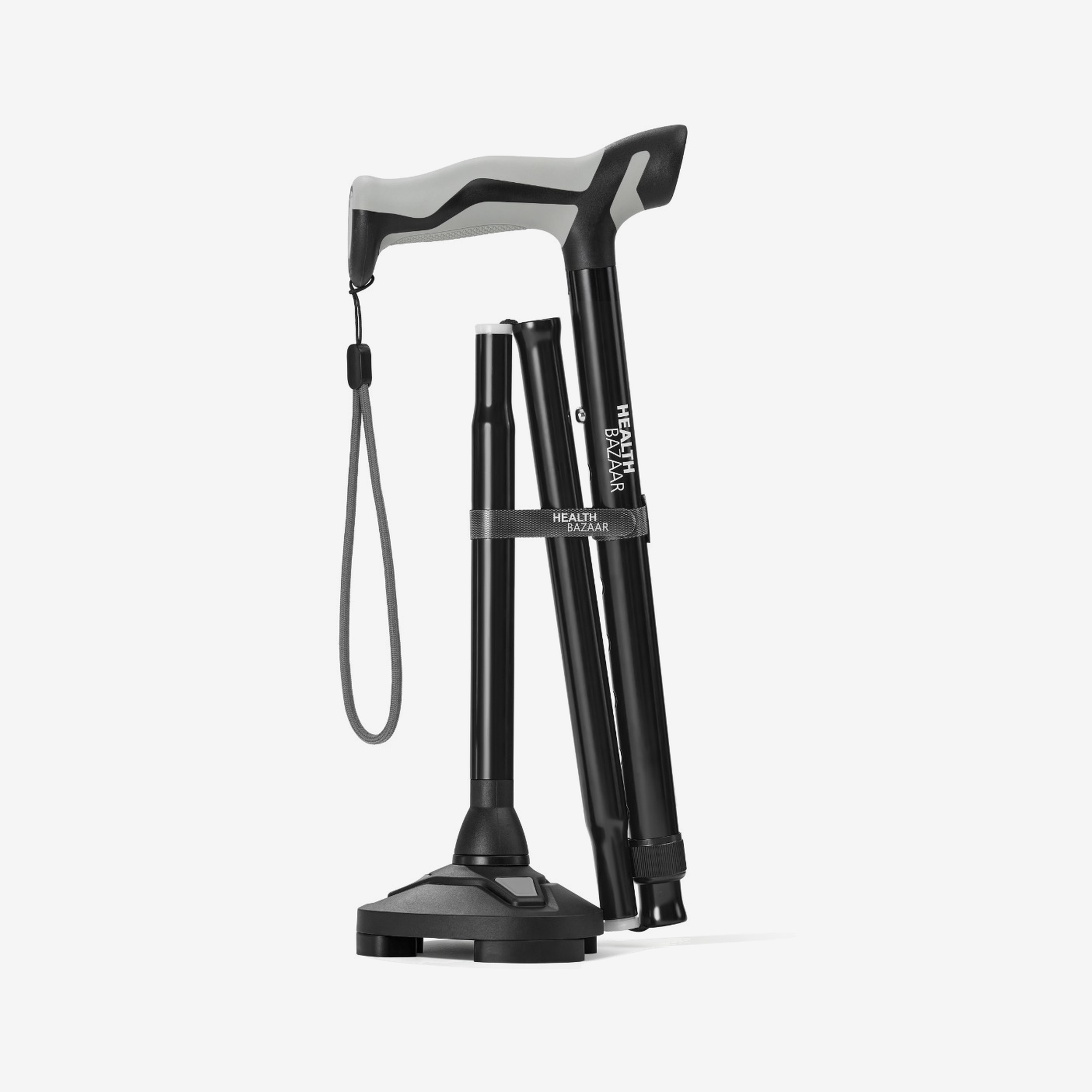
A single-tip cane usually has the smallest contact footprint and may be easier to place in a narrow route. A multi-point base can provide a broader contact area or self-standing convenience, but it may need more clearance when you turn or move around furniture.
Do not describe a base as “best” without context. Compare:
-
the actual width and depth of the base;
-
whether the base is centered or offset relative to the shaft;
-
whether the base pivots or stays fixed;
-
how the base sits beside your foot; and
-
whether all contact points remain on the floor during normal use.
Current competitor pages commonly market compact quad bases as easier for narrow hallways or stairs, but the specific dimensions still matter more than the label. For example, Drive Medical and Carex both describe small-base designs as useful for maneuverability, while their published dimensions and weight capacities differ by model. Use such pages as comparison context, not as proof that one base is right for every user.
3. Check turning clearance around furniture
A cane does not move only forward and backward. In a small room, you may need to rotate it around a chair, move it beside a bed, or reposition it near a sink.
Practice the motion with a representative cane if possible. Keep the cane close enough to support your walking pattern without striking furniture. If the grip, shaft, or base repeatedly catches on nearby objects, a different footprint or route may be more practical.
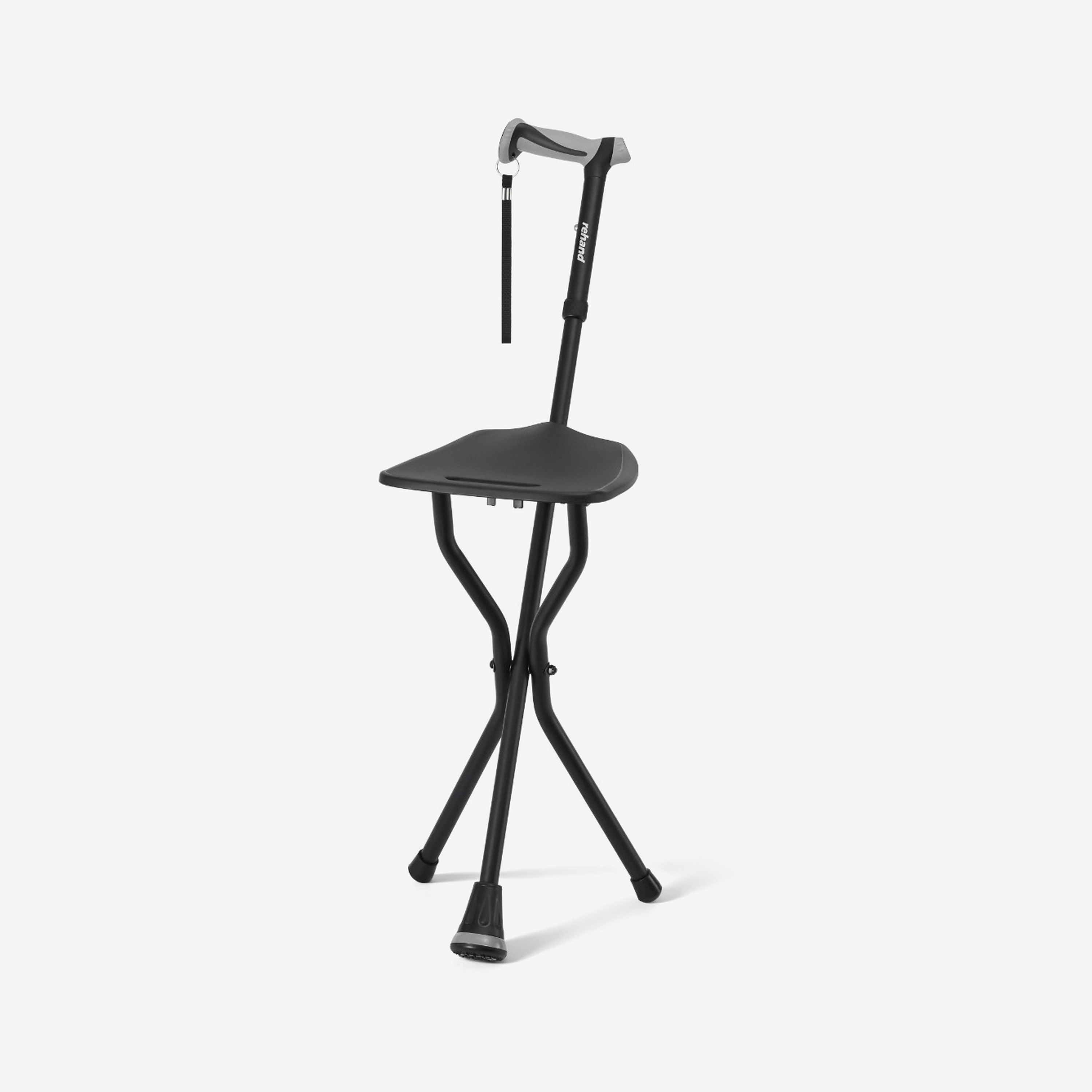
A self-standing cane can remain upright when you pause, but it still needs a firm, level surface. Do not treat self-standing as permission to leave the cane in the middle of a walkway.
4. Check the handle position and your shoulder posture
Narrow-space maneuverability does not replace correct fit. With your normal shoes on, set the handle near the wrist crease and confirm a comfortable slight bend at the elbow.
If the cane is too high or too low, you may change your posture while turning. That can make it harder to control the device near furniture or door frames.
Use the exact adjustment range for the model you are considering. A compact base is not useful if the cane cannot be adjusted to your body.
5. Think about doorways, thresholds, and floor changes
Small indoor routes often include thresholds, rugs, tile, carpet, and changes in floor height. These features can affect how the tip or base contacts the floor.
Before walking through a doorway:
-
slow down before the threshold;
-
place the cane fully on the next surface when possible;
-
avoid leaving only part of a multi-point base on the floor; and
-
keep your free hand available for a stable handrail when one is provided.
Do not assume a product described as “all-terrain” is tested for every indoor or outdoor surface. Unless the manufacturer publishes a specific test standard or surface range, use neutral language and inspect the device in your own route.
6. Compare storage and parking habits
A cane for a small home should be easy to store without becoming another obstacle. Consider:
-
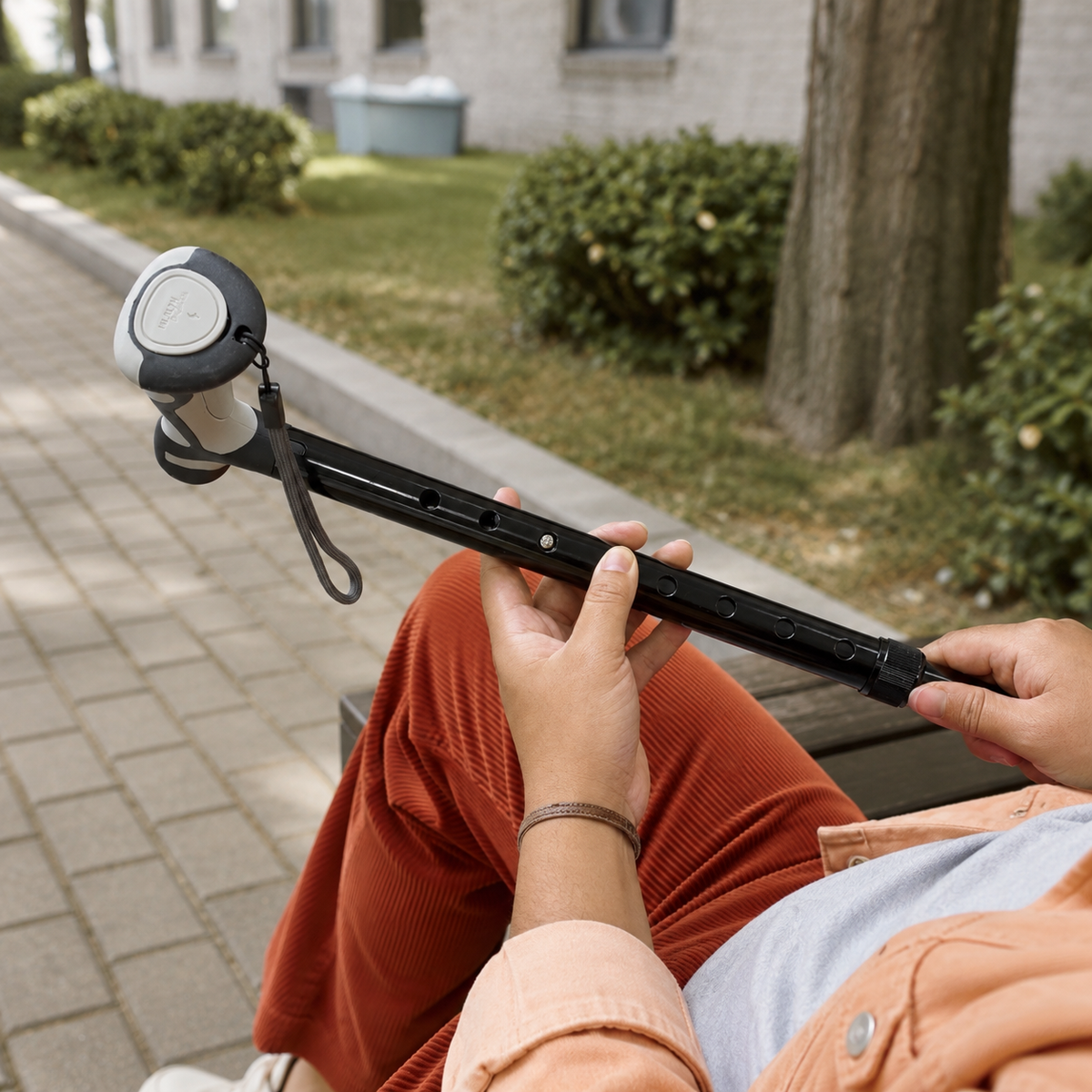
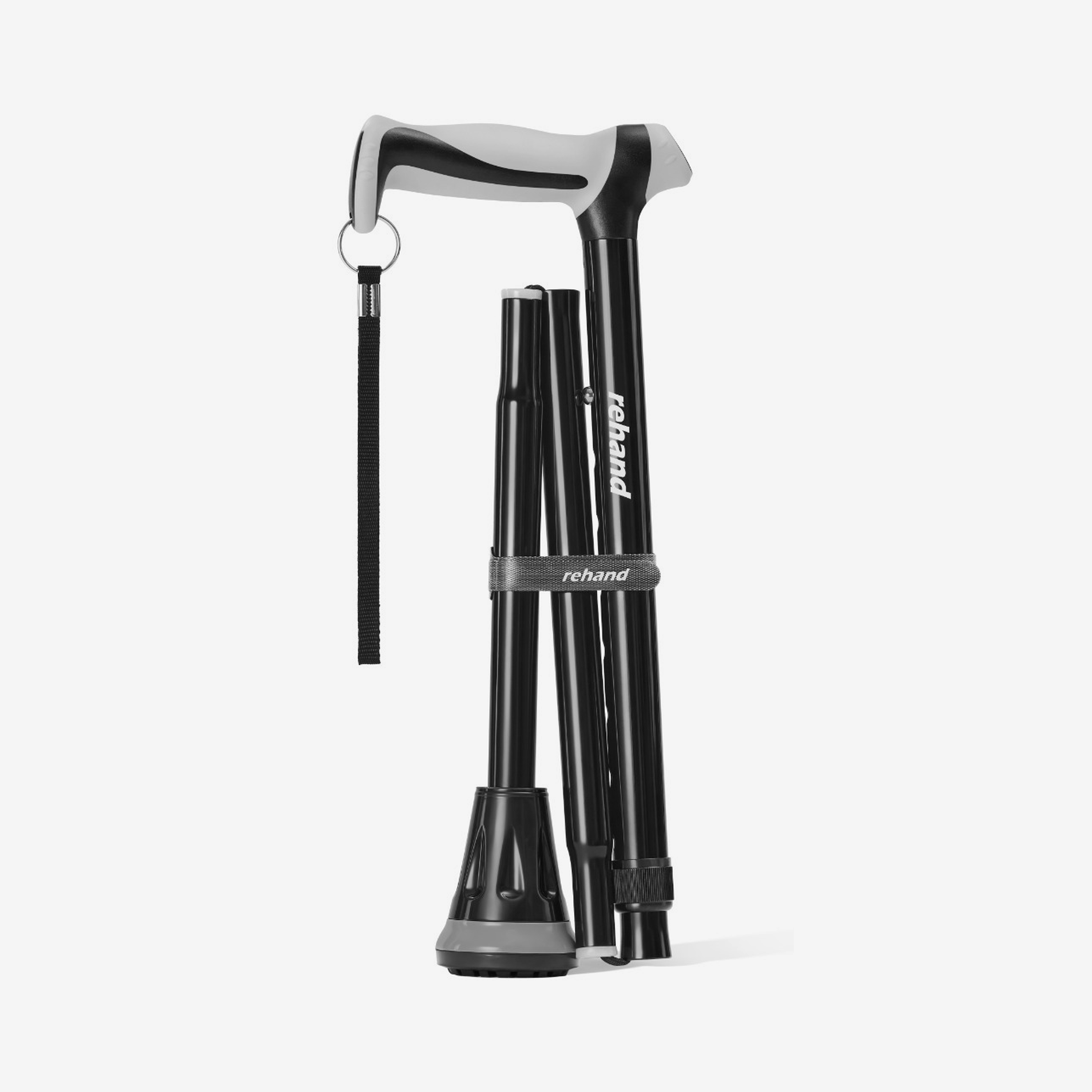
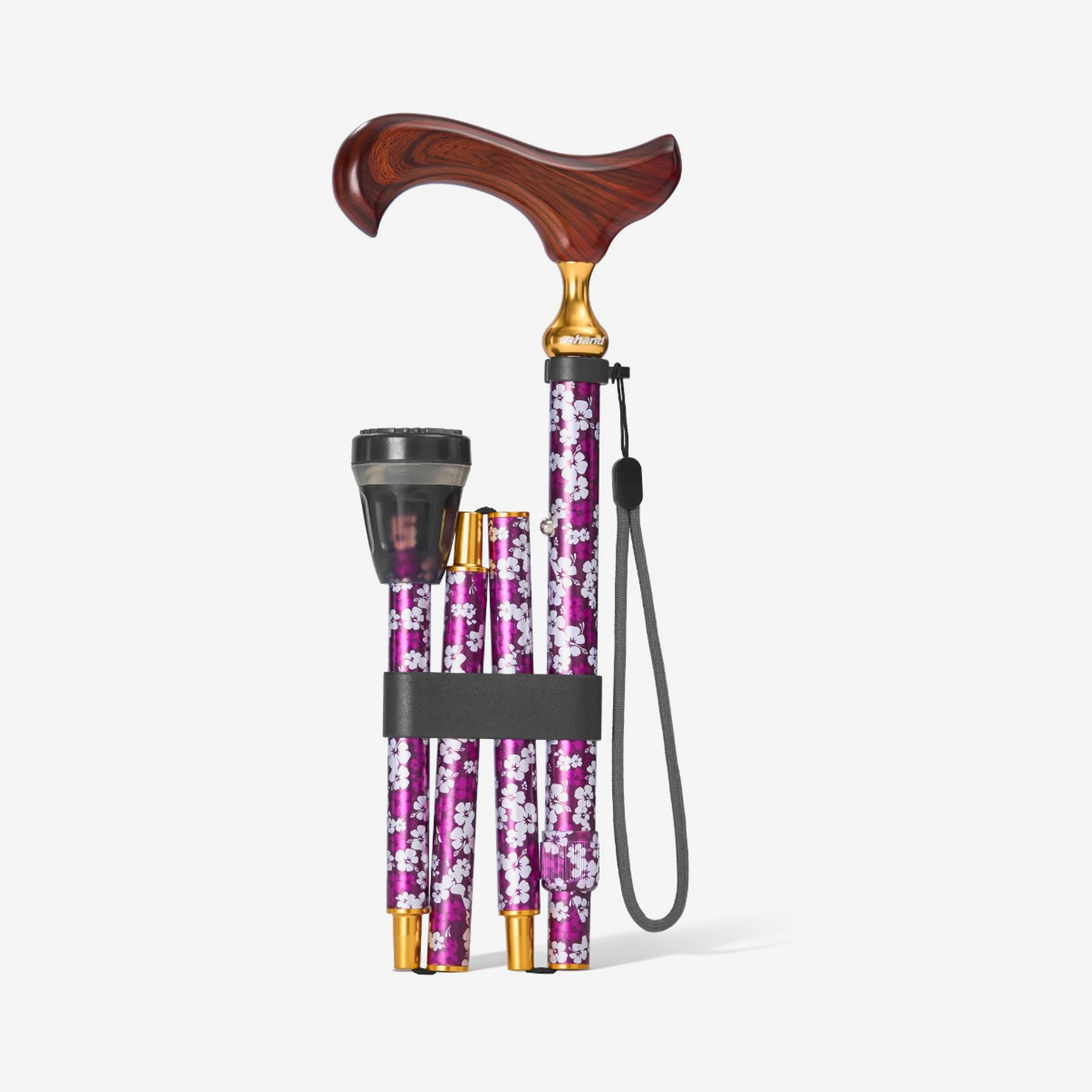
whether it folds;
-
whether the folded sections remain secured;
-
whether the cane can stand on its own on a firm level surface;
-
whether the handle catches on shelves or door handles; and
-
whether you can reach it before standing up.
Never leave a cane across a walkway or balance it where it can fall. If the cane folds, follow the model instructions and recheck every section after unfolding. Do not walk with a shaft section partially separated or with a damaged internal cord.
7. Decide whether you need a single-tip or multi-point base
Mayo Clinic notes that many people do well with a single-tip cane, while a quad cane provides a broader base of support but may be heavier and more difficult to handle.
That trade-off is especially relevant in a small room:
-
a single-tip cane may be easier to place beside furniture;
-
a compact multi-point base may offer a different balance between footprint and contact area;
-
a wider base may need more turning clearance; and
-
a clinician may recommend a different support level than your home layout suggests.
Choose support first, then solve the space problem within the devices that match your needs.
8. Check the product facts before you buy
For any model, verify the exact:
-
adjustment range;
-
user weight capacity;
-
product weight;
-
base style and dimensions;
-
folded size, if applicable;
-
handle shape; and
-
care or moisture limits.
Do not copy a 350-pound rating from one Rehand cane to another. Current Rehand product facts are model-specific: the foldable RH1101 is listed at 350 lb / 160 kg, while some other products have different ratings. A higher capacity does not prove that the cane provides enough clinical support or that it will be easy to maneuver in your home.
9. Test the route after the cane is adjusted
After the cane is set to the correct height, walk the route where you use it most. Check:
-
the narrowest doorway;
-
the tightest turn;
-
the distance between the base and your foot;
-
whether the cane contacts the floor fully; and
-
whether the handle remains comfortable after several turns.
If the cane feels unstable, catches on furniture, or forces you to change your posture, stop and reassess. A professional can help determine whether the issue is the device, the fit, the route, or the level of support needed.
Which cane is usually easiest in a small space?
There is no universal answer. A single-tip folding cane may suit someone who prioritizes a small footprint and portability. A compact self-standing or quad-style cane may suit someone who needs a different support level or wants the cane to remain upright during pauses.
The correct choice depends on the exact base, the user’s fit, the support recommended for them, and the route where the cane will be used.
The bottom line
For narrow hallways, bathrooms, and furniture-dense rooms, compare base footprint, turning clearance, handle height, storage, and the exact support level—not just the product label. Measure your route, verify the current PDP specifications, and test the adjusted cane on the surfaces and turns you actually use.
Browse the Rehand walking cane collection, then compare the exact base style, height range, folded size, and user weight capacity on the model page before ordering.
Sources
-
Mayo Clinic — Tips for choosing and using canes, accessed September 22, 2026.
-
American Academy of Orthopaedic Surgeons — How To Use Crutches, Canes, and Walkers, accessed September 22, 2026.
-
National Institute on Aging — Preventing Falls at Home: Room by Room, accessed September 22, 2026.
-
Carex — Heavy Duty Small Base Xtra Quad Cane, accessed September 22, 2026.
-
Drive Medical Small Base Quad Cane, accessed September 22, 2026.
-
Rehand — Walking Canes Collection, accessed September 22, 2026.