
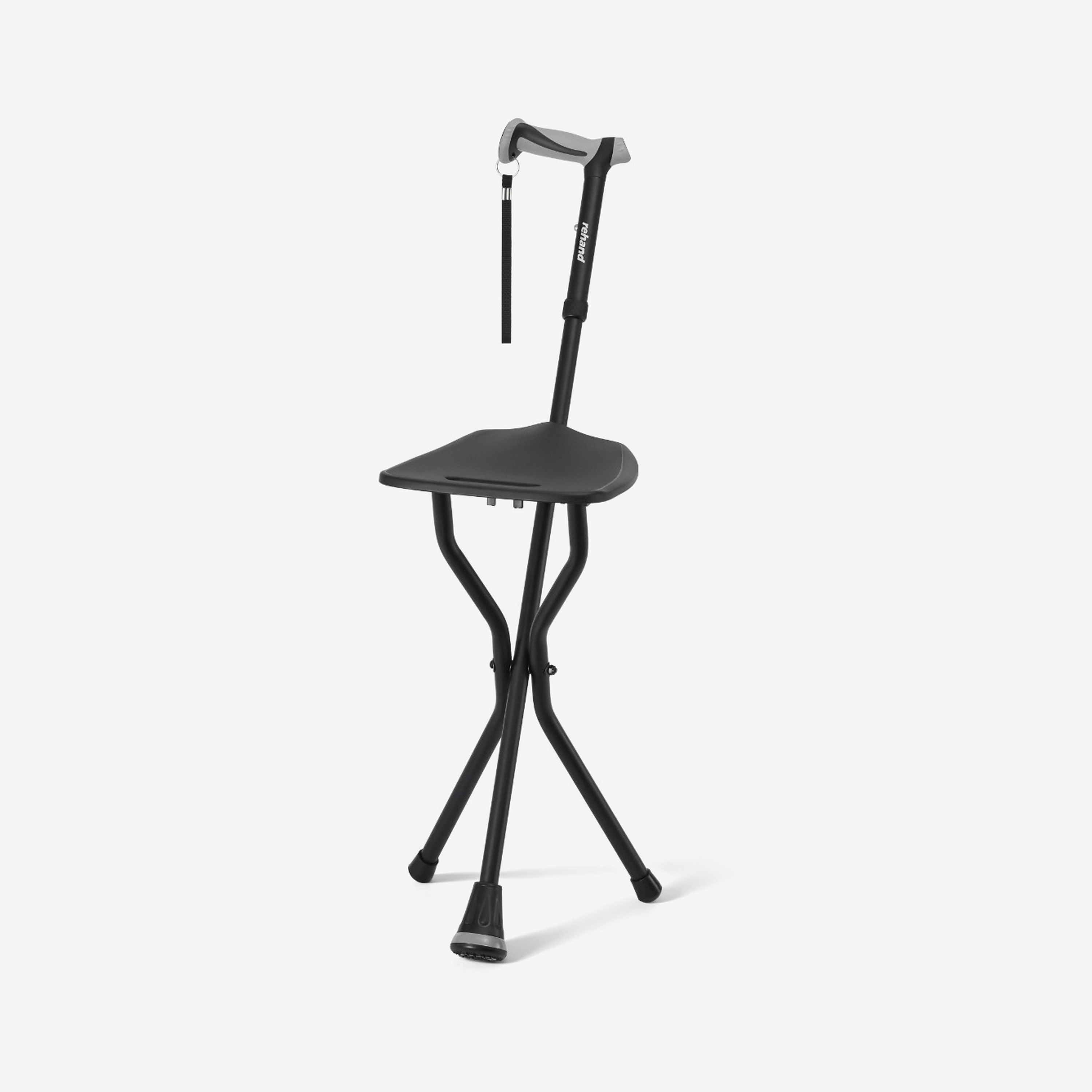

A walking cane with a seat combines a cane for walking with a small fold-out stool for planned rest stops. A regular cane has no seating function. If you often find yourself looking for a place to sit, the added seat may be useful. But the cane must still fit your walking needs, and the seat must be set up exactly as the manufacturer instructs on a suitable surface. It is not an ordinary chair that can be opened anywhere.
Before buying, walk through these seven checks. The right answer depends on both parts of the device: how it works as a cane, and how you would use the seat.
1. Decide what problem the seat solves
Think about specific outings: waiting at an outdoor event, stopping on a level path, or visiting a place where seats are not reliably available. If you rarely need to sit during a trip, a regular cane may be simpler to carry. If you need frequent seated rests, the seat feature deserves a closer look—but also compare it with an appropriate rollator or other mobility aid if you need substantially more walking support. Cleveland Clinic lists fold-out seats as a cane feature while emphasizing the need to select the correct cane type and fit. Read its cane guidance.
The seat is for resting after you have stopped. It does not replace a clinician's assessment of dizziness, new weakness, repeated falls, or how much weight you may place on a leg.
2. Check walking height before seat size
Measure while wearing your usual shoes. With your arm relaxed, the handle should be near your wrist crease; when holding it, your elbow should have a comfortable slight bend. Mayo Clinic recommends checking both wrist height and elbow bend. See its fitting guide.
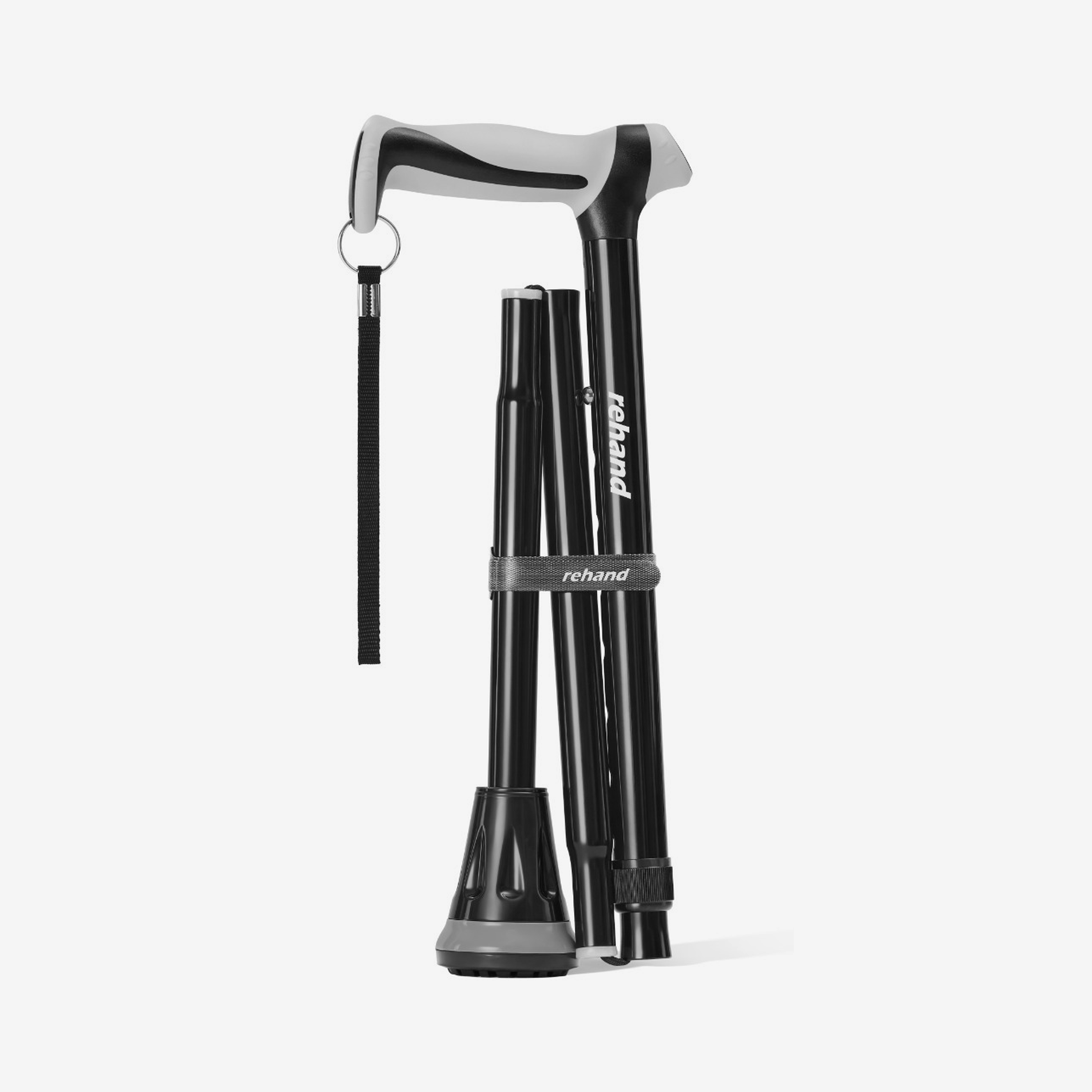
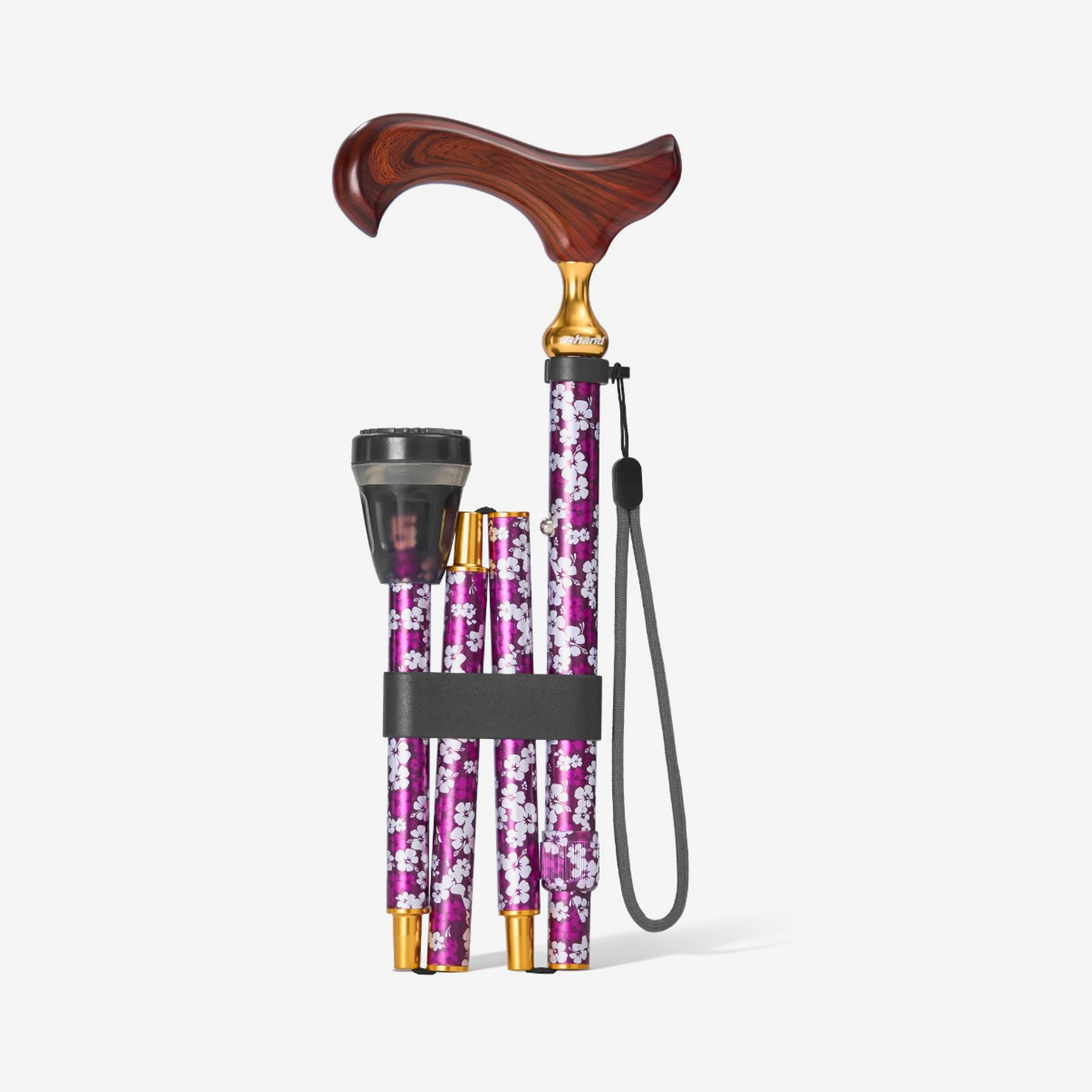
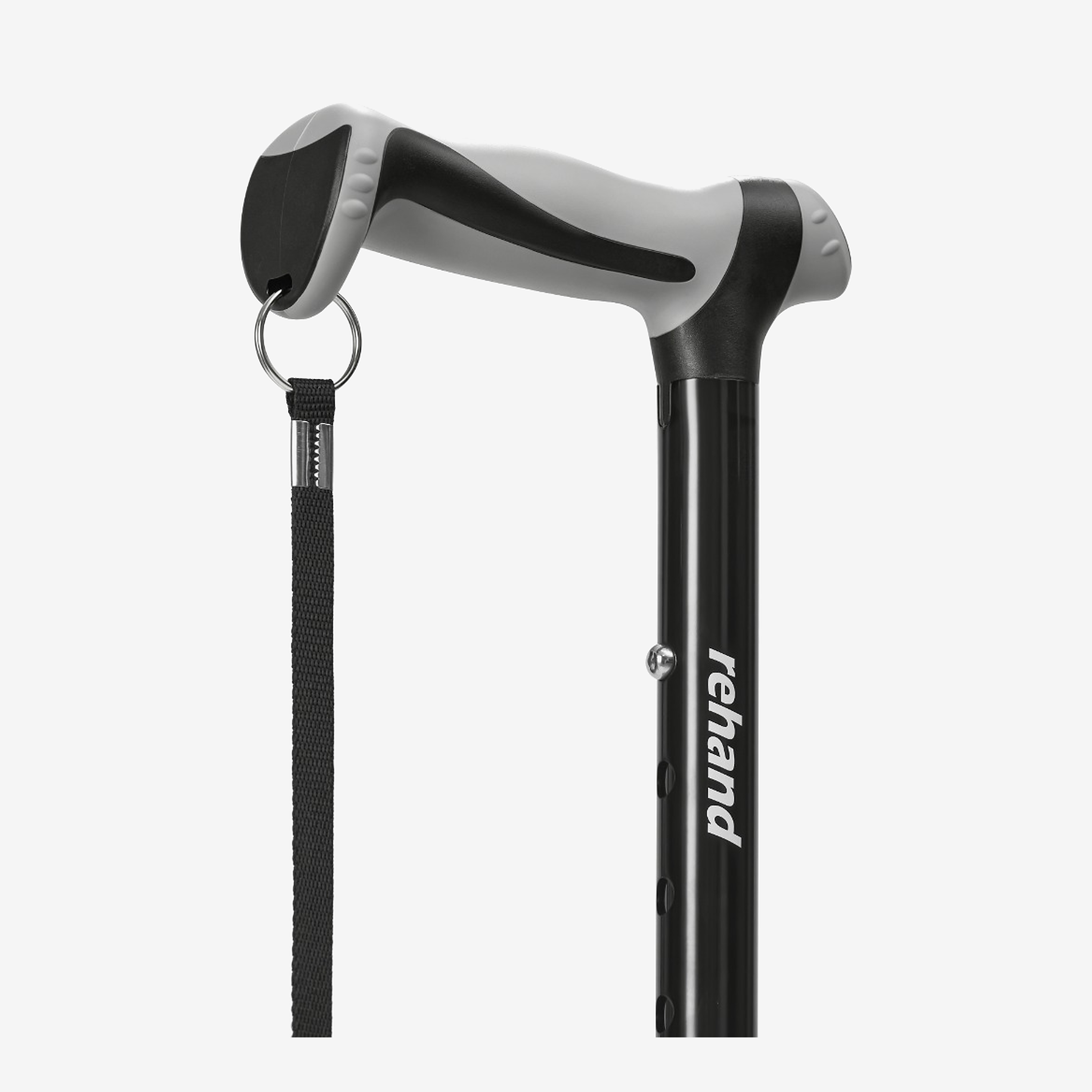
The Rehand Walking Cane with Seat lists four height settings from 33.5 to 37.5 inches. The Rehand Foldable Walking Cane lists eight settings from 31 to 38 inches. Those are product ranges, not a promise of fit for every person. Compare your measured height with the exact variant and confirm that the handle feels right in your hand. Our Fit Guide can help you organize that check.
3. Check whether the seating surface is available and suitable
A seat cane needs more room when opened than when carried. Before relying on it for an outing, identify places with firm, level, non-slippery ground and space for the legs and your feet. The Rehand seat-cane user guide says not to unfold the seat on steep slopes, loose gravel, or muddy wet grass. Its seat instructions also specify sitting straddling the seat while facing the handle, with the handle between your legs; do not sit with your back to the handle like a standard chair.
Do not assume a bench-height seat or a leaning position is safe simply because the cane can open. Practice the manufacturer's full setup and sitting sequence in a controlled setting before taking it out.
4. Think through sitting down and standing up
The ability to walk with a cane does not automatically mean you can lower yourself onto a small portable stool and rise from it comfortably. Check the seat height and footprint, how you will position your feet, and whether you need another person's help. If a clinician has advised a particular transfer technique, follow that advice. Do not pull on an unattended cane to stand.
If the seat makes you feel uncertain when lowering or rising, a more conventional fixed chair or a different mobility aid may fit the outing better. This is a decision about your actual setting and abilities, not a reason to force yourself to use the seat feature.
5. Compare what you carry all day
The Rehand Walking Cane with Seat weighs 2.4 lb (1.09 kg) and has a 10.4 × 9.3-inch seat. Those numbers do not tell you whether its folded shape feels comfortable in your hand, fits the available storage space, or brushes against your leg. A regular cane may be less complicated to carry and place during quick errands. Try the folded seat-cane configuration and review the instructions for locking and unfolding it.
If your main issue is packing a standard folding cane for a trip, see our separate folding walking cane travel checklist. This article focuses on the additional seat decision.
6. Inspect the walking tip and the seat mechanism
Before walking, confirm that the height lock and folded seat are secure. Before sitting, confirm the seat is fully open and all support points are placed as the manual directs. Look for bent tubing, loose joints, cracks, worn rubber contact surfaces, or unusual movement. If something is damaged, stop using that function and contact the manufacturer rather than trying to improvise a repair.
Mayo Clinic recommends replacing a cane tip when its tread is worn or it becomes stiff. That guidance applies to the floor-contact parts of either type of cane; replacement components must match the particular model. Read the cane-tip inspection guide.
7. Compare the exact model, not the category label
“Cane with seat” covers different designs. Check each manufacturer's walking-height range, seat dimensions, setup orientation, allowed surface, product weight and stated capacity. Follow the lower, verified capacity for the particular model and intended mode of use; if the product page gives conflicting figures, ask the manufacturer for the correct specification before relying on either number.
The Rehand Walking Cane with Seat has a stated weight capacity of 350 lb (159 kg). Capacity is only one part of product selection; users should also confirm the walking-height range, seat dimensions, setup orientation, surface requirements, and whether this type of mobility aid fits their individual support needs.
Which one fits your outing?
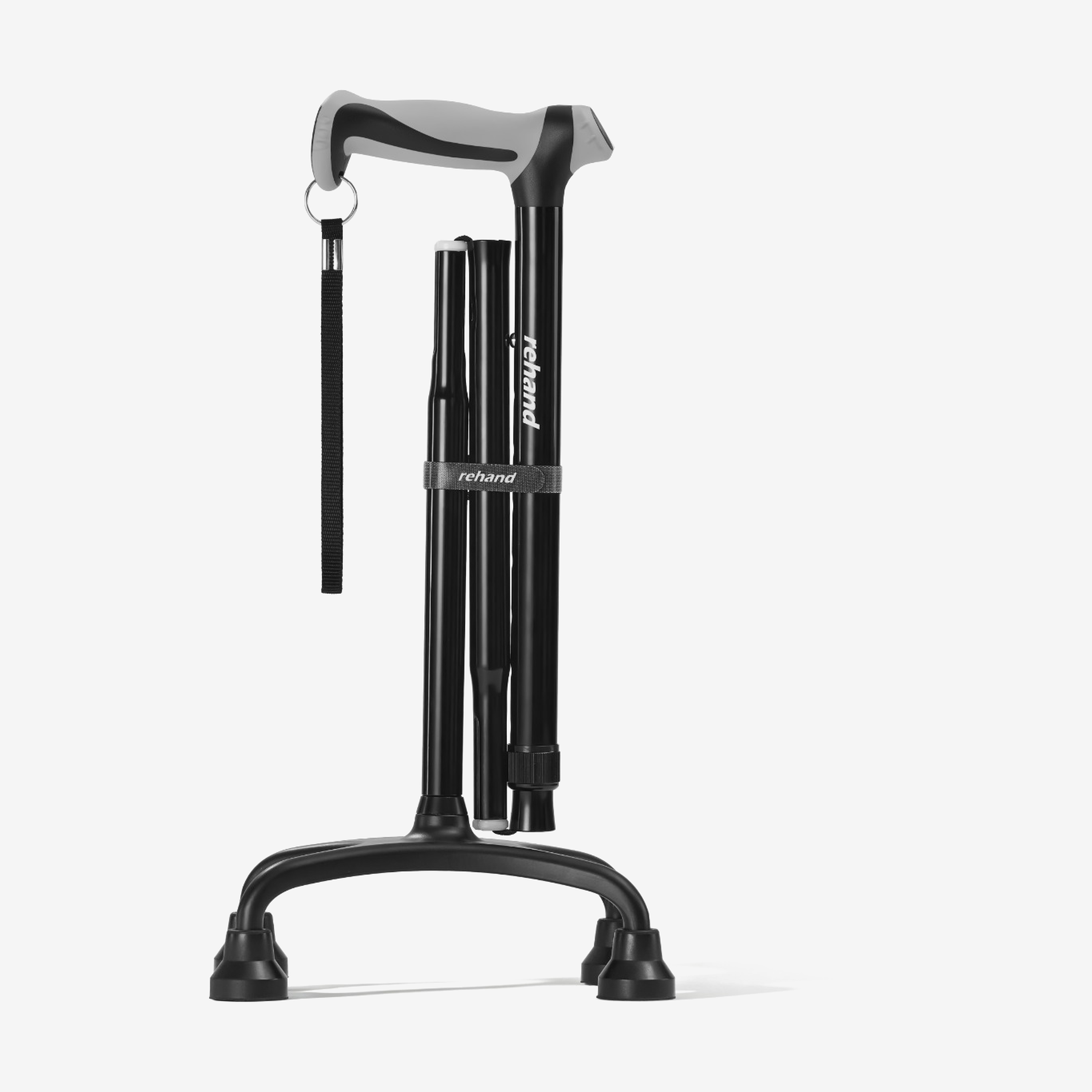
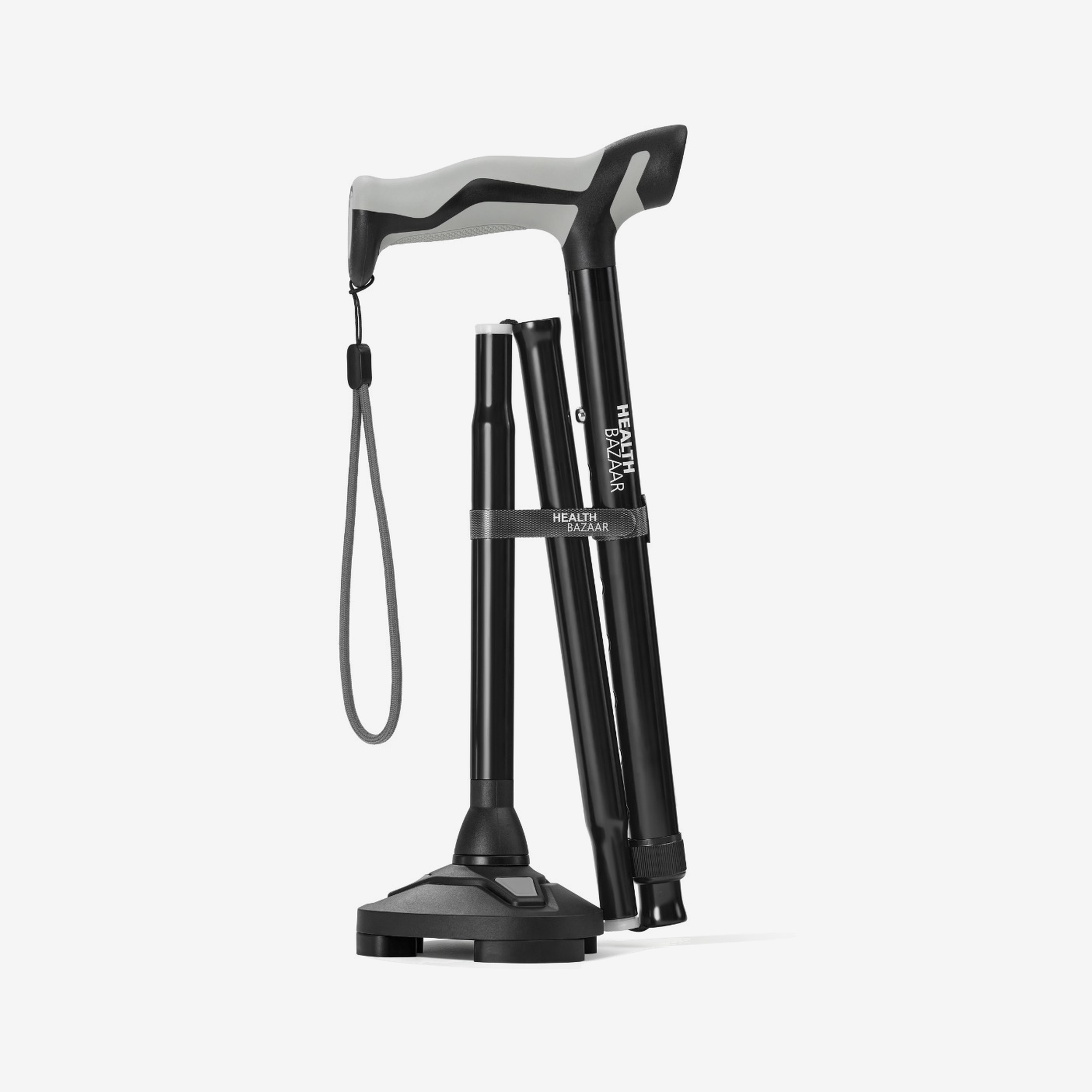
Consider a seat cane when you already have a suitable cane fit, can set up and use its seat as instructed, and have predictable firm, level places for planned rests. Consider a regular cane when you do not need the seat function or prefer a simpler walking device. Ask a clinician which mobility aid fits your needs if you depend on substantial support, have trouble with transfers, or have new symptoms.
Compare the Rehand Walking Cane with Seat with the walking cane collection, then read the manual for the exact model you choose.