
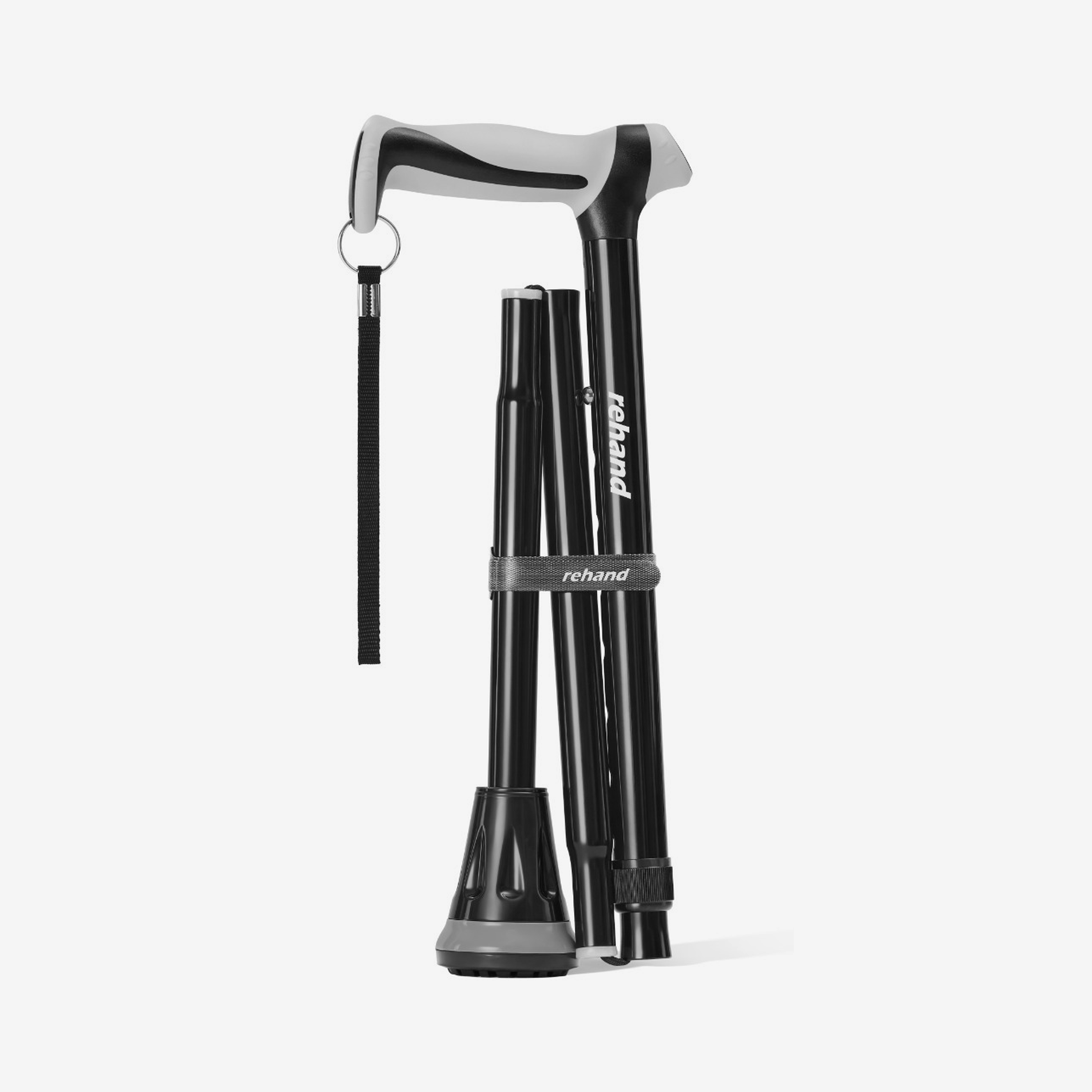
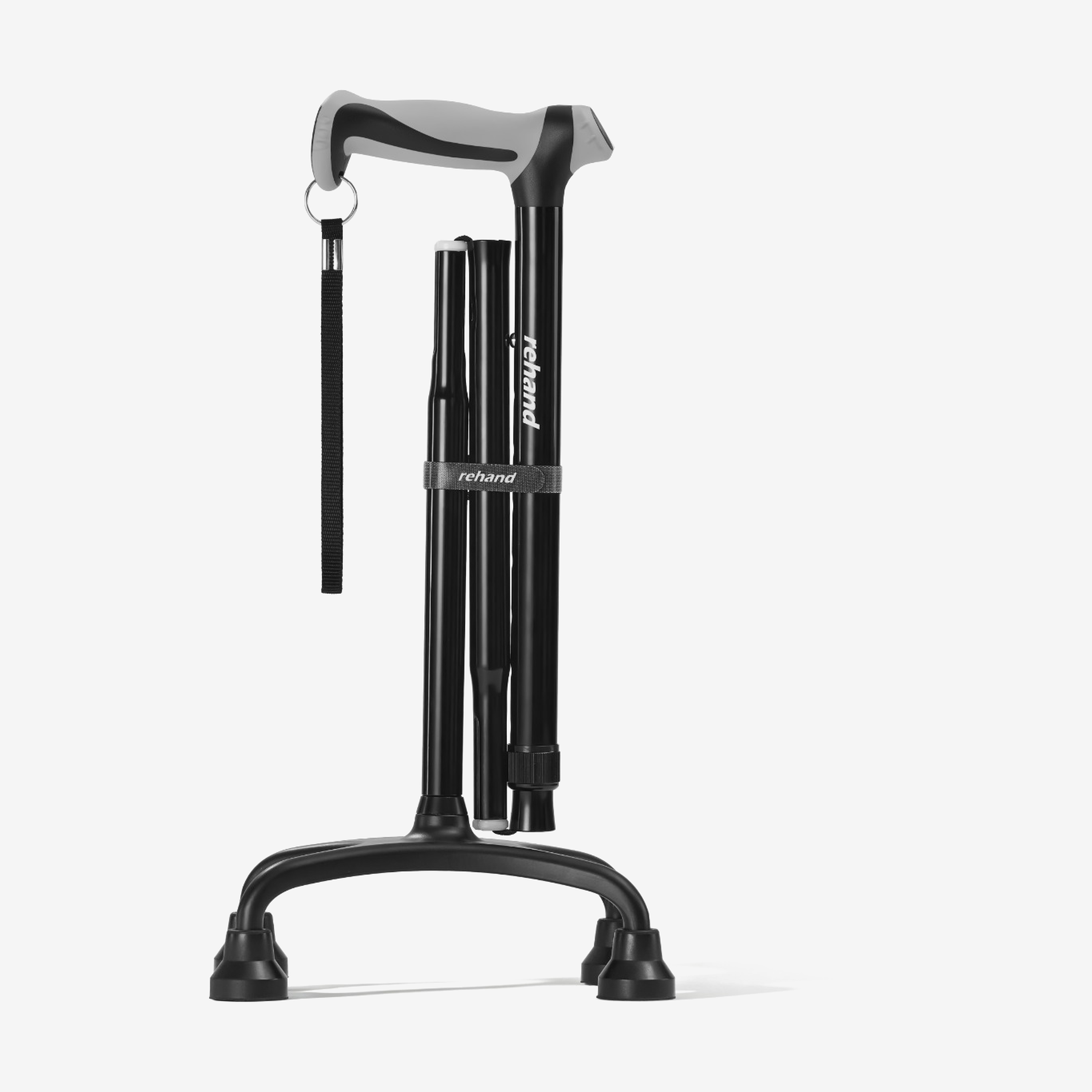
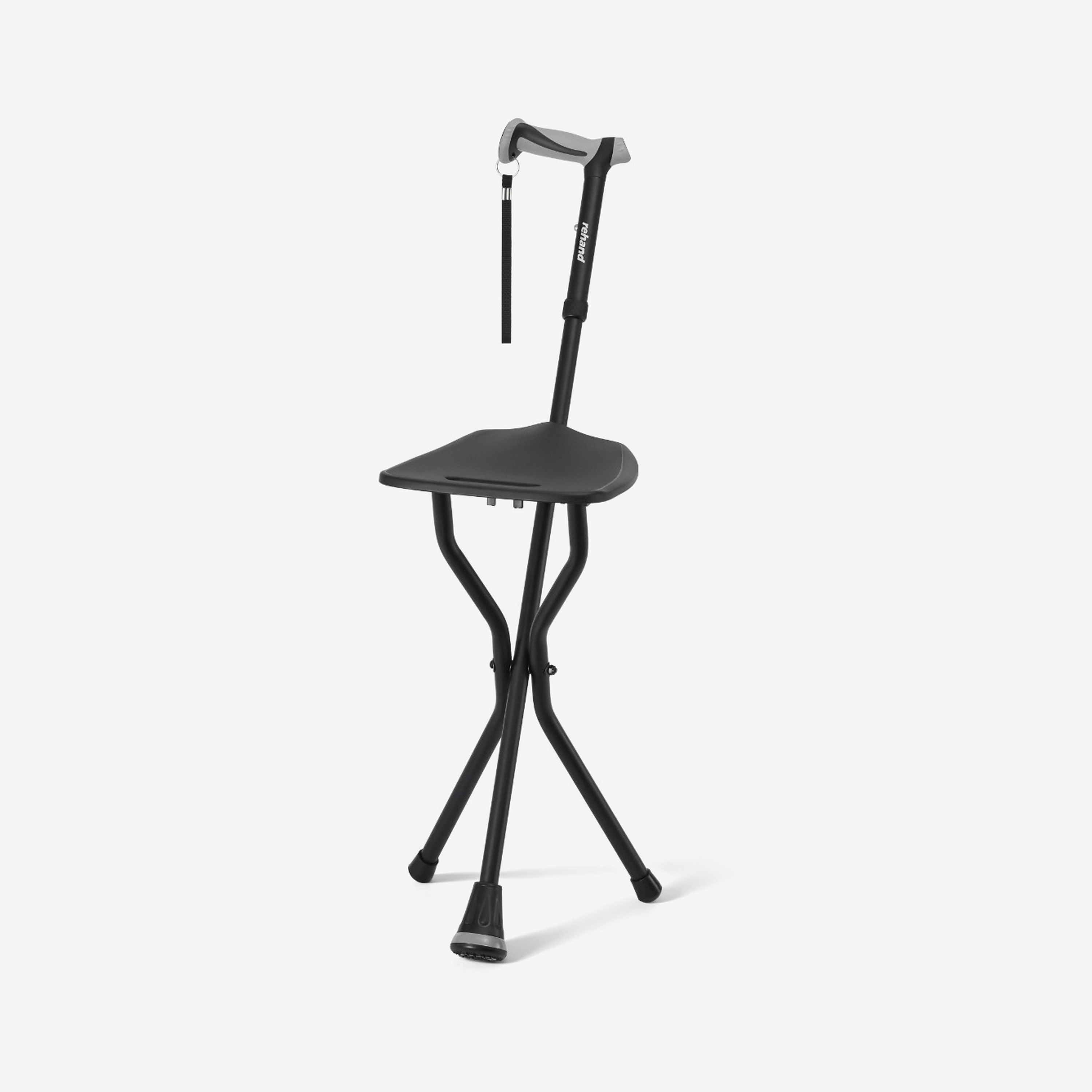
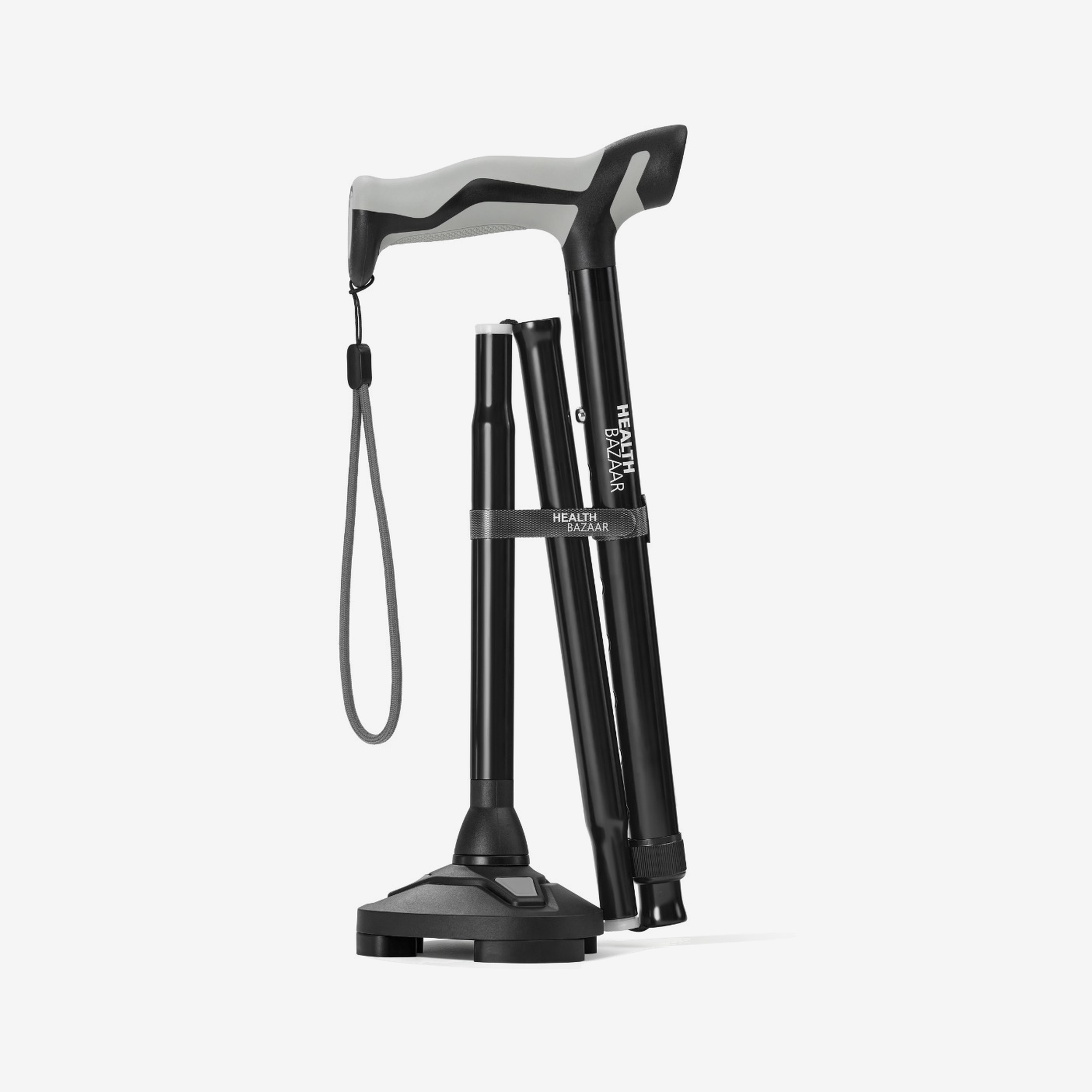
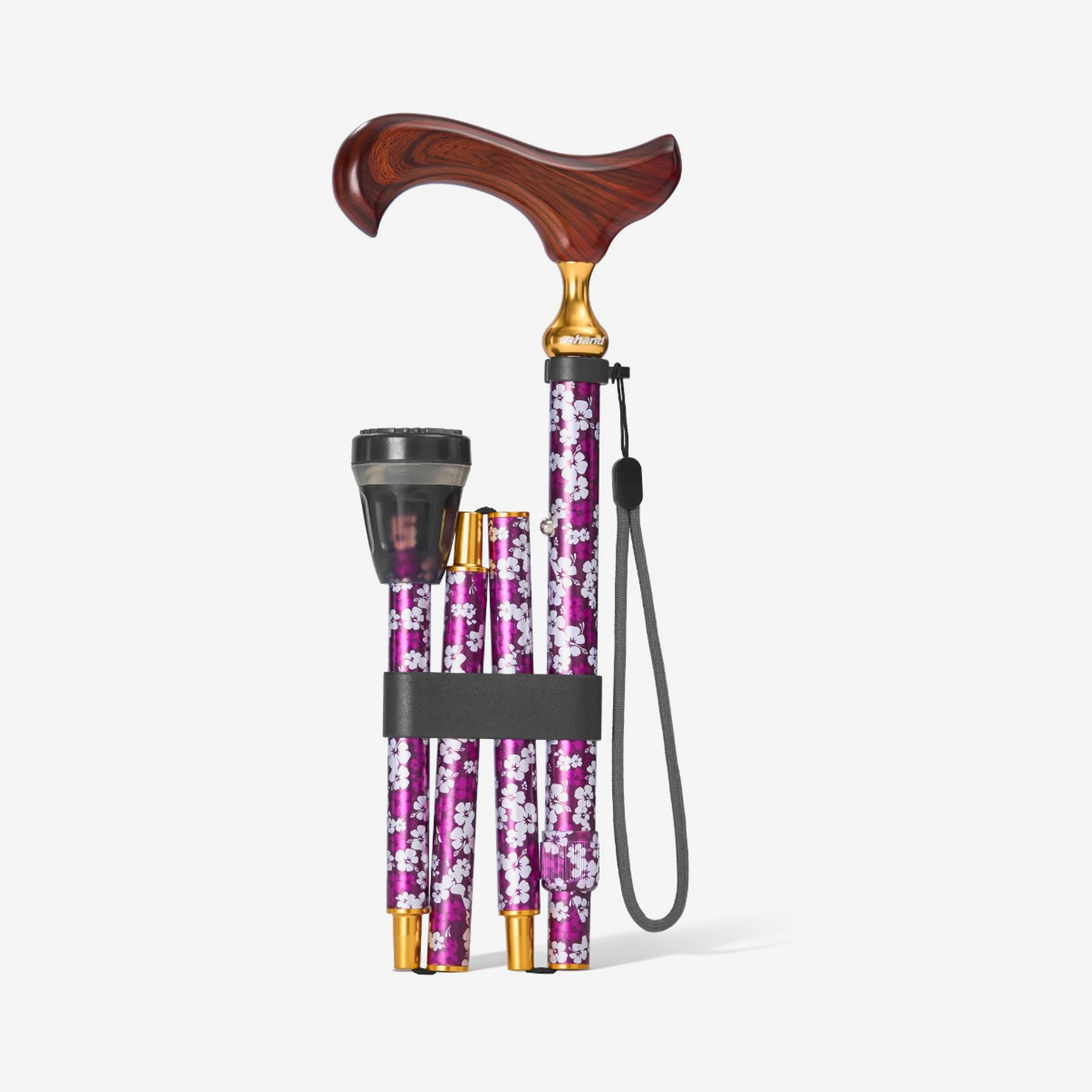

A folding walking cane can be convenient for flights, road trips, appointments, and everyday outings because it collapses into a smaller package when it is not in use. But “travel-ready” does not automatically mean that a cane fits you, suits your walking needs, or will work with every airline and storage space.
Before you buy or pack one, check the factors that affect both everyday use and travel: fit, folded size, weight, grip, tip condition, locking points, access during the trip, and the rules that apply to your route.
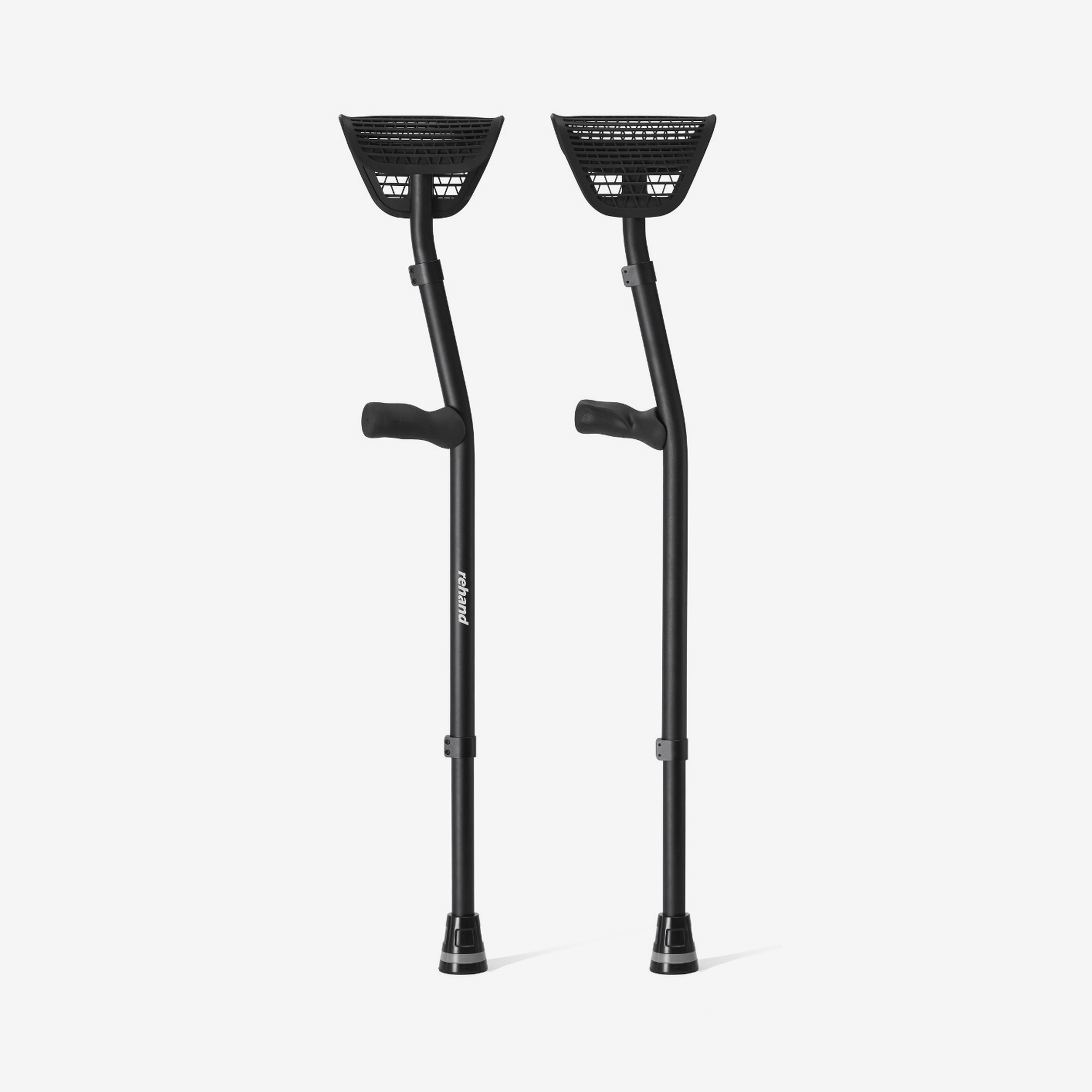
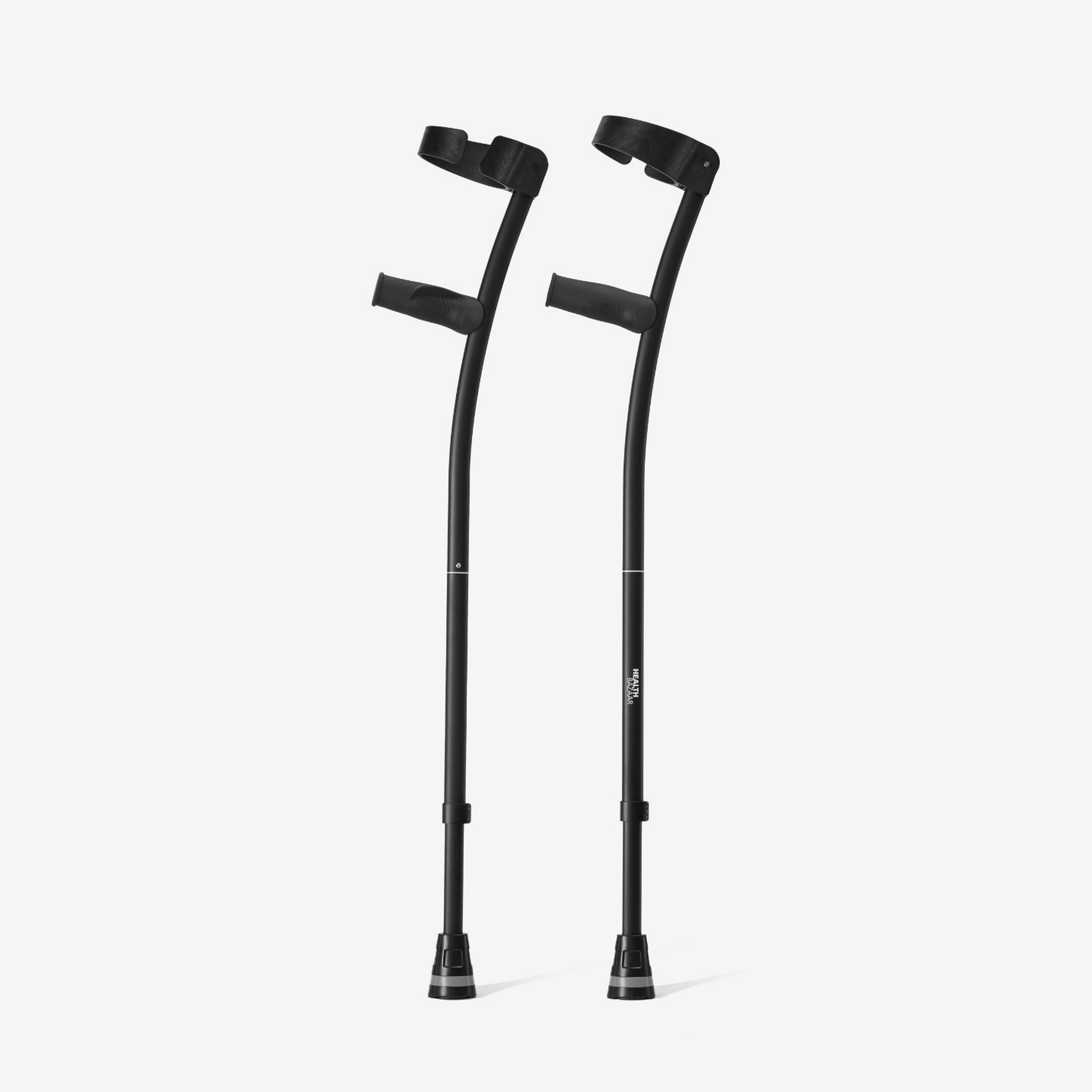
This guide is for planning and product comparison. If a clinician has prescribed a particular device, gait pattern, or weight-bearing restriction, follow that guidance first. A folding cane is not a substitute for crutches or a walker when you have been told to limit weight on a leg.
1. Confirm That a Cane Is the Right Type of Mobility Aid
Start with the device category, not the suitcase.
A cane typically provides one additional point of contact with the ground. It may be appropriate for some people with mild balance difficulty, weakness on one side, or a need for limited extra support. A walker or crutches may provide a different level or pattern of support.
Ask yourself:
-
Have I been told how much weight I may place on each leg?
-
Can I walk with a cane without leaning heavily on it?
-
Do I need one point of contact or a broader base?
-
Have I practiced the correct gait pattern?
-
Will I face stairs, long terminal distances, uneven pavement, or crowded spaces?
If the answer is unclear, ask a physical therapist, occupational therapist, physician, or other qualified professional to assess the device and fit before the trip.
2. Measure the Cane in the Shoes You Will Wear
Portability cannot compensate for poor fit. The American Academy of Orthopaedic Surgeons and Mayo Clinic both advise using the wrist crease as a practical fitting reference: when you stand upright with your arm relaxed, the top of the cane should be around the crease of your wrist, and your elbow should remain slightly bent when you hold the handle.
Measure while wearing the shoes you expect to use most often. A thick travel shoe, boot, or different heel can change the setting that feels appropriate. If you switch footwear during the trip, recheck the fit rather than assuming the same setting will work.
Use the detailed walking cane height guide for a complete measuring and fit-check process. For a quick product comparison, use the Rehand Fit Guide.
3. Compare the Adjustment Range, Not Just the Number of Settings
Two canes can both be described as “adjustable” while covering different height ranges. Review the minimum height, maximum height, and spacing between settings. The cane should fit the actual user within the manufacturer’s stated range.
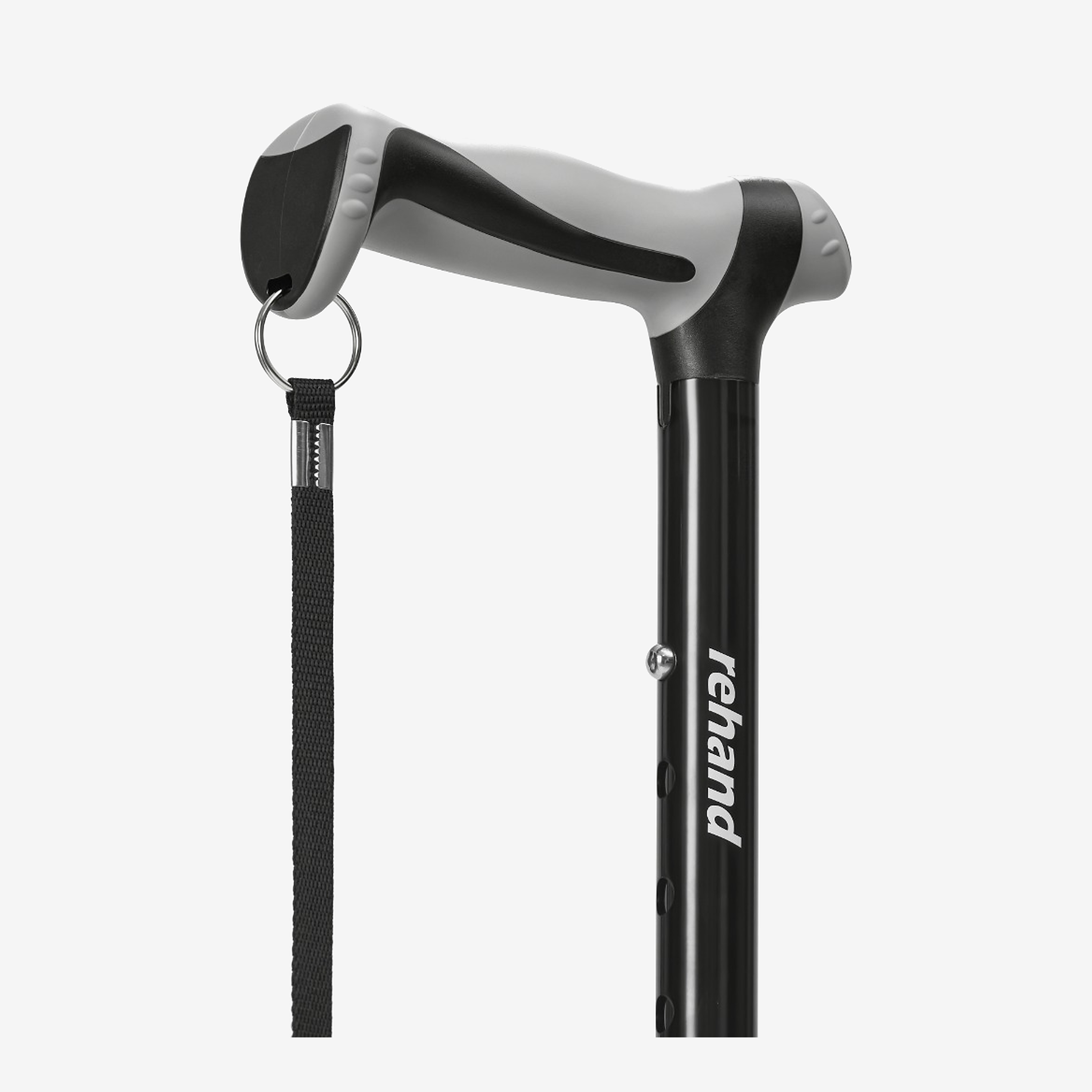
Do not confuse discrete adjustment holes with stepless adjustment. For example, the current Rehand Foldable Walking Cane uses eight defined height settings from 31 to 38 inches. It should be described as an eight-level adjustable cane, not a stepless cane.
After changing the height:
-
Confirm that the push button is fully seated in the intended hole.
-
Tighten any locking ring according to the manual.
-
Apply light downward pressure before walking.
-
Listen and feel for movement that suggests the setting is not secure.
Always follow the instructions for your exact model.
4. Check the Folded Size Against the Bag You Will Actually Use
“Compact” is not a standard measurement. Look for a stated folded length, then compare it with the internal dimensions of your tote, backpack, carry-on, vehicle compartment, or storage pouch.
Measure the bag rather than relying on its marketing category. A cane that fits diagonally in a large suitcase may not fit in a day bag. Also account for the handle and rubber tip, which can make the package wider than the folded shaft.
The current Rehand Foldable Walking Cane folds to about 14 inches and includes a travel bag. That fact applies to this named model; do not assume every folding cane has the same folded length or accessories.
5. Decide Whether the Cane’s Weight Is Manageable
A lighter cane may be easier to carry when folded, but weight alone does not establish fit, durability, or suitability. Review the complete specification rather than choosing the lowest number.
Consider how the cane will be handled throughout the day:
-
Can you lift it in and out of the bag without strain?
-
Can you control it while boarding a vehicle?
-
Is the handle comfortable for the expected walking time?
-
Can you fold and unfold it without losing your balance?
The named Rehand model weighs about 1.3 pounds. Compare that figure with other models, but test the handle and setup process as well as the scale weight.
6. Inspect Every Joint and Locking Point
Many folding canes use connected shaft sections and an internal cord. Before each travel day, assemble the cane on a stable surface and confirm that every section is fully seated.
Use this inspection sequence:
-
Look for cracks, dents, corrosion, or bent shaft sections.
-
Make sure each joint is fully inserted and aligned.
-
Confirm that the height-adjustment button is visible and locked.
-
Tighten the locking collar if the model includes one.
-
Apply light pressure and check for unexpected separation or movement.
-
Stop using the cane if a joint, cord, button, or shaft is damaged.
Do not attempt an unapproved field repair with tape, glue, or mismatched parts. Use the manufacturer’s support channel and model-specific replacement guidance.
7. Check the Rubber Tip Before You Leave
The tip is the part of the cane that contacts the ground. Travel can expose it to polished terminal floors, hotel tile, wet entrances, pavement, and other changing surfaces.
Inspect the tip for:
-
worn tread;
-
cracks or hardening;
-
uneven wear;
-
looseness at the shaft; and
-
debris lodged in the contact surface.
Replace a worn or damaged tip with a compatible part before the trip. A listed weight capacity does not guarantee traction on every surface, and no cane should be marketed as preventing falls.
If you use a quad or self-standing base, confirm that all contact points sit flat on a level floor and that the broader base will not interfere with your feet or luggage.
8. Pack It Where You Can Reach It
If you need the cane to move through a terminal, station, hotel, or rest stop, packing it deep inside checked baggage defeats the purpose of a folding design.
Plan the handoff points:
-
Will you use the cane through security?
-
Where will it be placed while you are seated?
-
Can you reach it before standing up?
-
Who will help if it must be screened separately?
-
Is the storage pouch easy to open without balancing unsupported?
Secure the folded sections with the supplied strap or compatible fastener so they do not open inside the bag. Keep the rubber tip reasonably clean before placing it next to clothing or electronics.
Do not place a cane where it can obstruct an aisle, exit, or another traveler. Ask airline or transportation staff where an assistive device should be stored.
9. Check Current Security and Airline Rules
For travel in the United States, the Transportation Security Administration currently states that blunt-tipped walking sticks may be carried in carry-on or checked baggage and must be screened. Sharp-tipped walking sticks are restricted from carry-on baggage. The final decision remains with the TSA officer at the checkpoint.
That is a rule about the item and screening process—not a certification of a particular Rehand product. Do not describe a cane as “TSA approved.”
Airlines, aircraft, airports, and international authorities may have additional requirements for storage, boarding, batteries, or mobility assistance. Before departure:
-
Check the current TSA or national security guidance for each country.
-
Review the airline’s assistive-device policy.
-
Contact the airline if the storage location or allowance is unclear.
-
Allow extra time for screening.
-
Keep model information and support contact details available.
If you need help navigating the airport, ask the airline about mobility assistance before the travel date.
A Two-Minute Pre-Trip Cane Check
Run this checklist before leaving home and again after the cane has been stored or handled by someone else:
-
The cane is the correct device for my current instructions.
-
The height matches my wrist-crease fit in today’s shoes.
-
Every shaft section is fully seated.
-
The adjustment button and locking ring are secure.
-
The handle and strap are intact.
-
The rubber tip is clean, tight, and not worn through.
-
The cane opens and folds as the manual describes.
-
The folded cane fits the intended bag or storage space.
-
I can reach the cane before standing.
-
I checked current security and airline rules.
Frequently Asked Questions
Is a folding cane better than a standard cane for travel?
A folding cane is usually easier to store, but that does not make it universally better. A standard cane may feel simpler or more rigid to some users. Choose based on fit, support needs, daily use, structure, and professional guidance—not portability alone.
Can I bring a folding walking cane on a plane in the United States?
TSA currently allows blunt-tipped walking sticks in carry-on or checked baggage after screening. Airline storage rules and international requirements can differ. Check current official guidance before each trip; do not rely on a product claim that says “TSA approved.”
Should I pack my cane in checked baggage?
If you need the cane in the terminal or immediately after landing, checked baggage may leave it unavailable. Ask the airline how your mobility aid can be screened and stored while remaining accessible when needed.
Does a folding cane have to fit inside my carry-on?
Assistive-device policies can differ from ordinary baggage rules, and storage depends on the aircraft and airline. Confirm the policy directly rather than assuming that folded size alone decides whether the cane can travel in the cabin.
How often should I inspect a folding cane?
Inspect the joints, adjustment mechanism, shaft, handle, strap, and tip before use, after rough handling, and whenever the cane feels or sounds different. Follow the inspection and replacement instructions in the model’s user manual.
The Bottom Line
The best folding walking cane for travel is not simply the smallest one. It should fit the user, assemble securely, have an intact tip, fit the intended storage space, and remain accessible when needed. Current transportation rules and professional mobility instructions come before travel marketing claims.
Next step: Compare the current Rehand walking cane collection, confirm your wrist-crease fit, and review the exact product manual before purchasing or traveling.
Verifiable Sources
-
Transportation Security Administration, “Walking Sticks,” accessed August 25, 2026: https://www.tsa.gov/travel/security-screening/whatcanibring/items/walking-sticks
-
American Academy of Orthopaedic Surgeons, “How To Use Crutches, Canes, and Walkers,” accessed August 25, 2026: https://orthoinfo.aaos.org/en/recovery/how-to-use-crutches-canes-and-walkers/
-
Mayo Clinic, “Tips for choosing and using canes,” updated July 30, 2026, accessed August 25, 2026: https://www.mayoclinic.org/healthy-lifestyle/healthy-aging/in-depth/canes/art-20548206
-
Rehand Foldable Walking Cane, current PDP accessed August 25, 2026: https://rehand.com/products/rehand-walking-cane
-
Rehand Fit Guide, accessed August 25, 2026: https://rehand.com/pages/fit-guide

