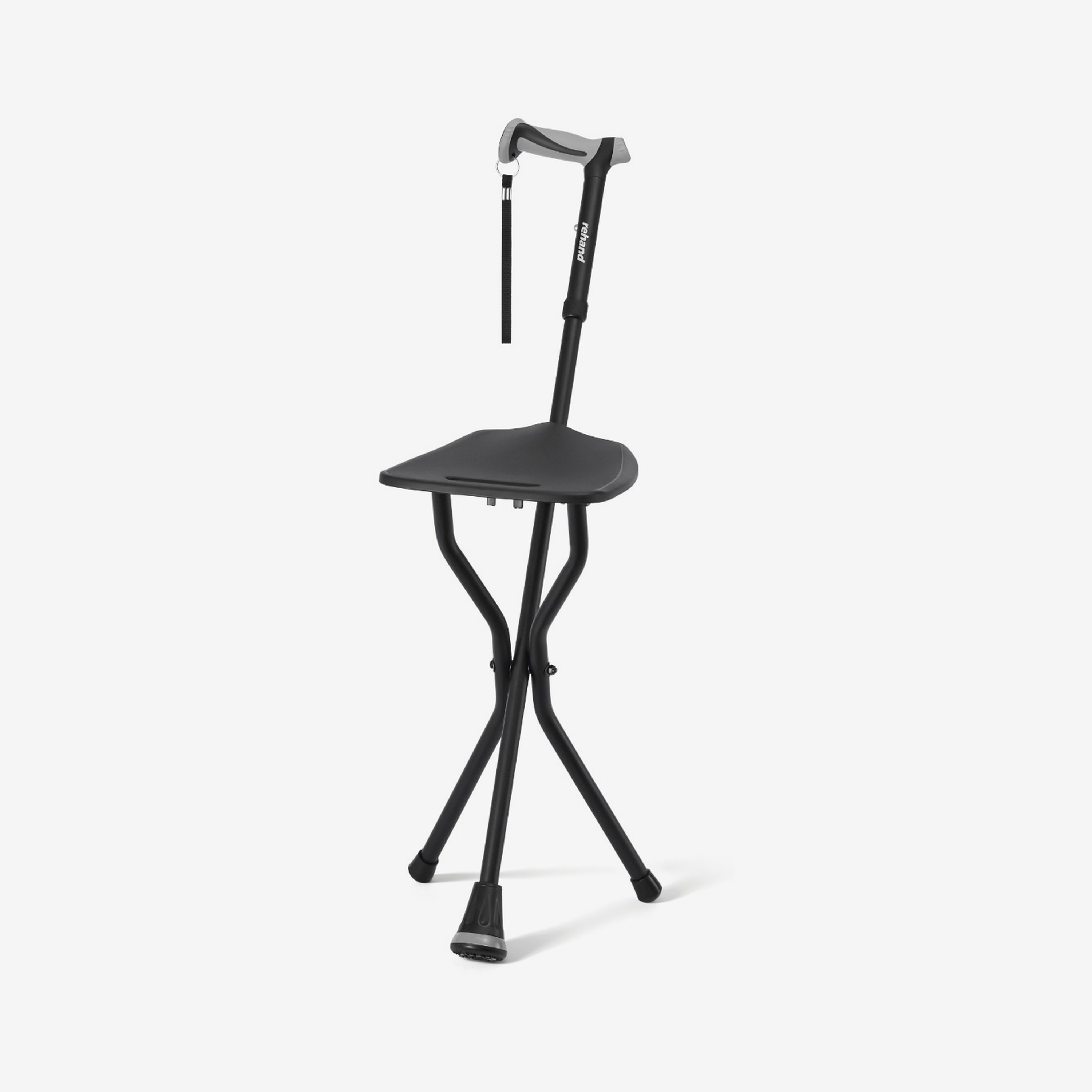
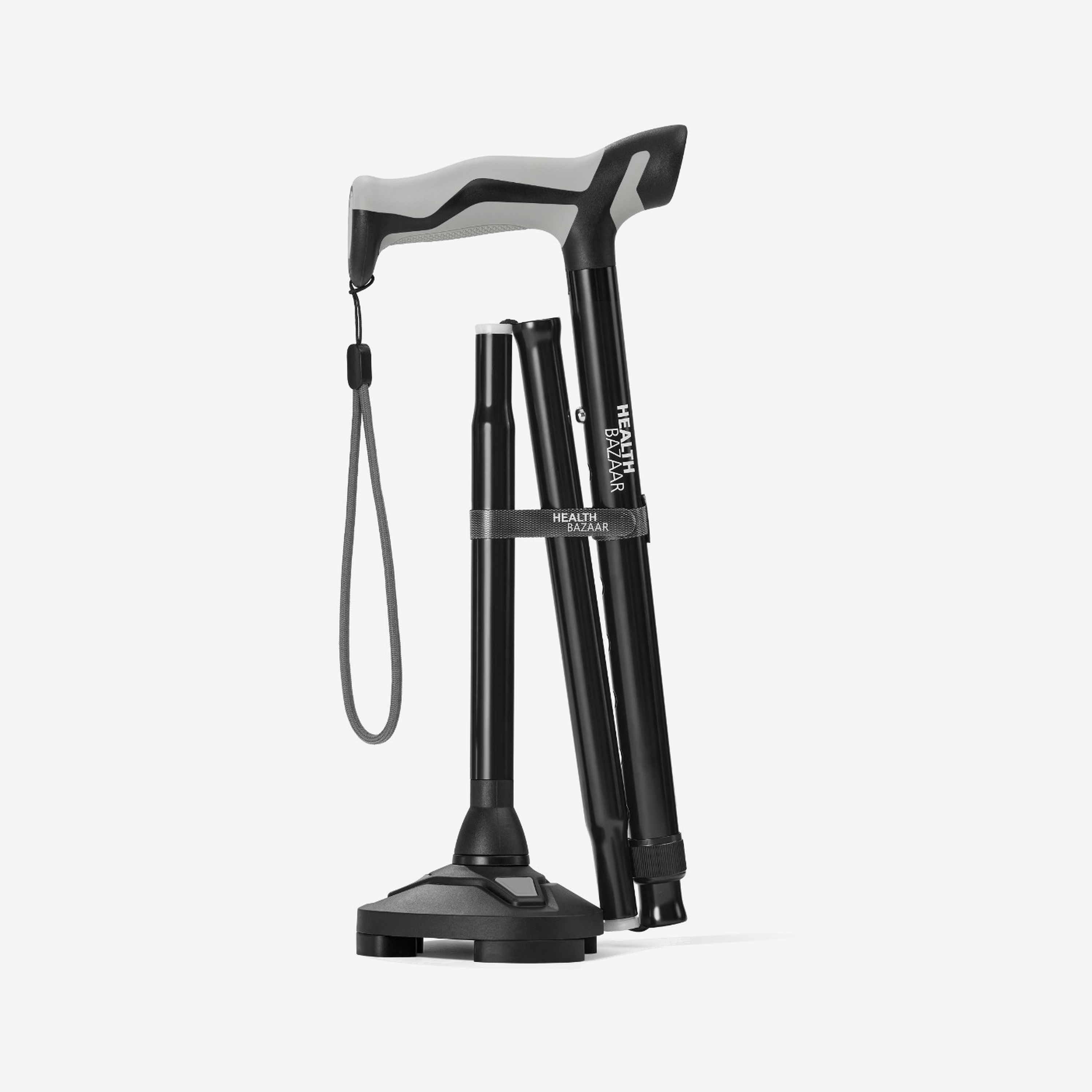
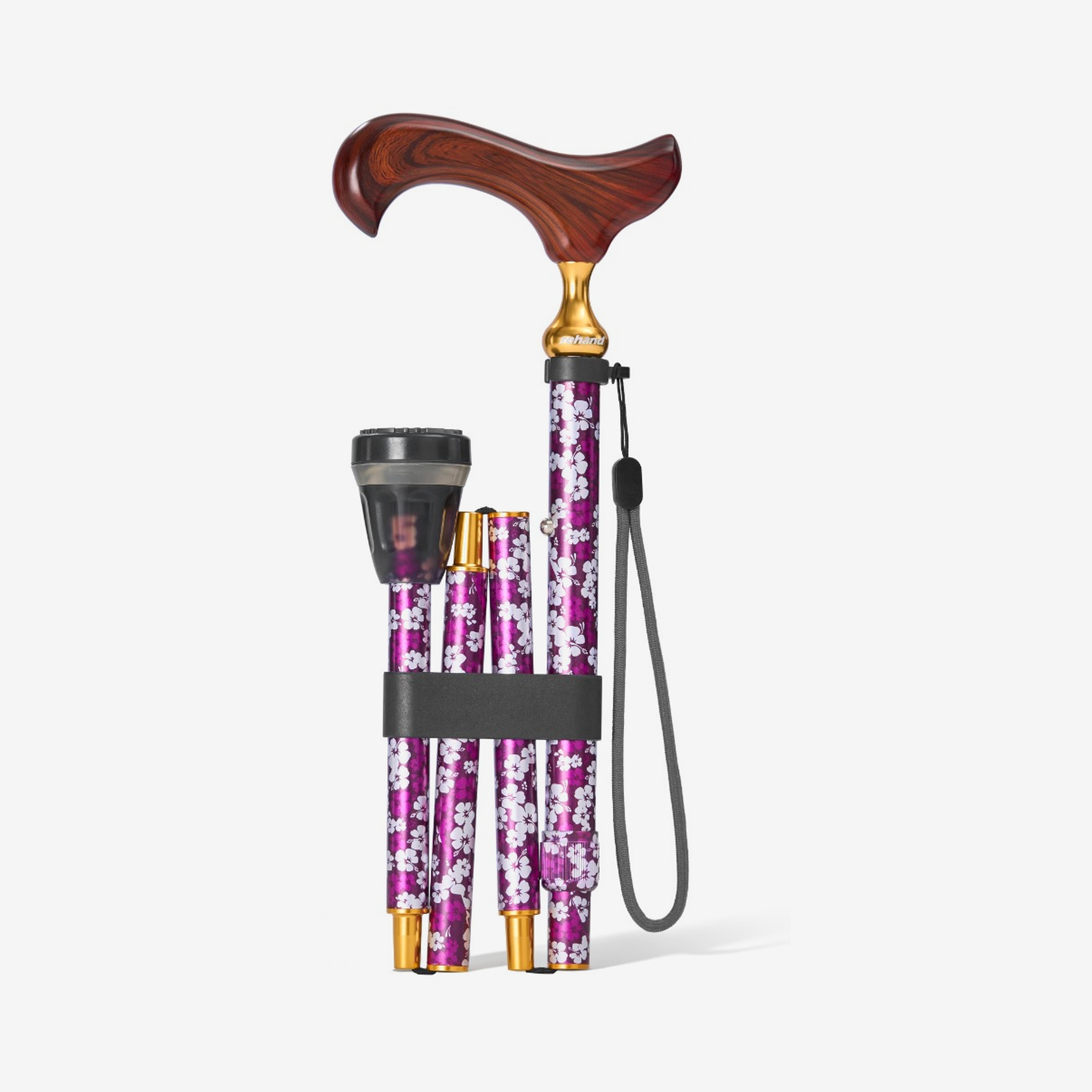
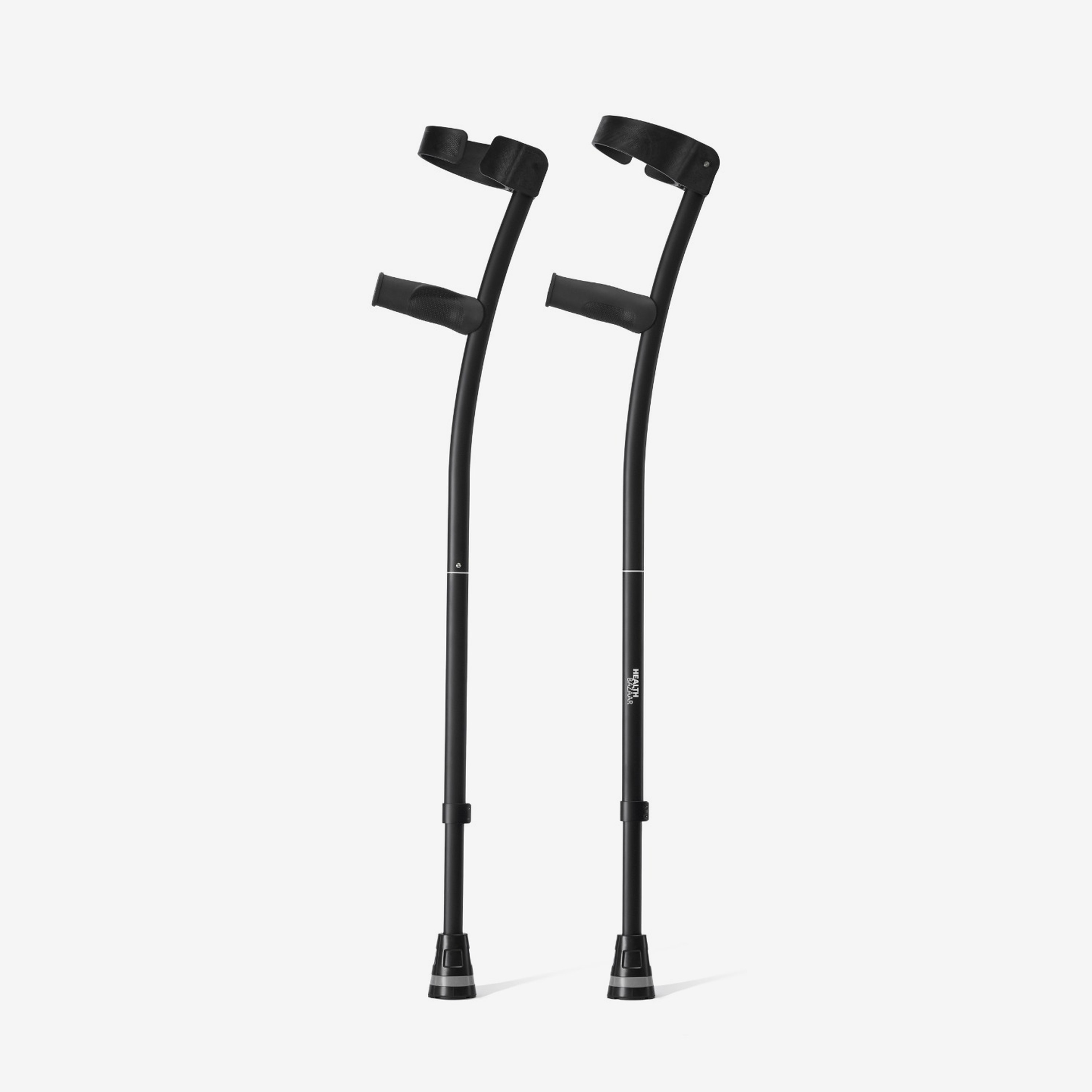
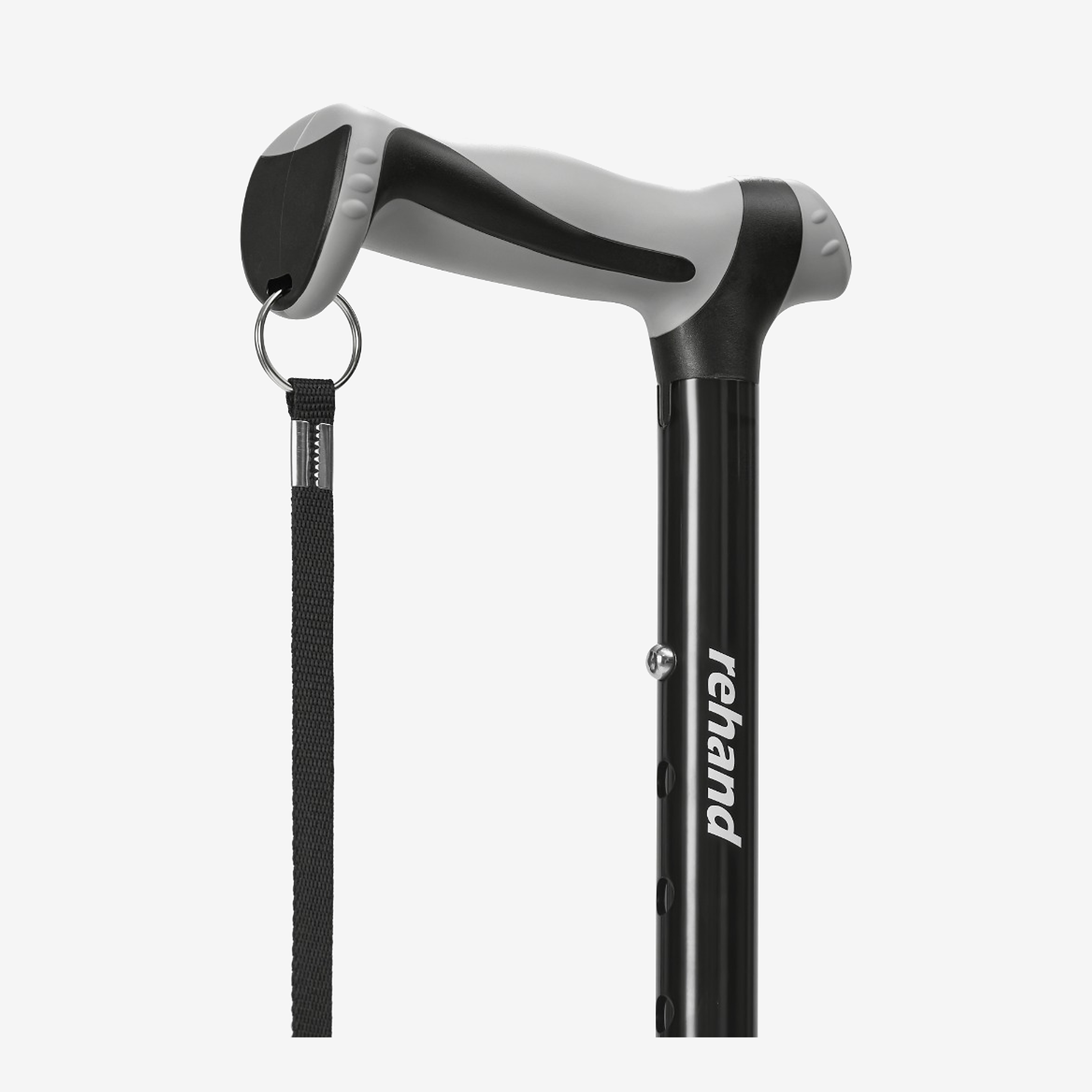

You may use a walking cane during light rain if the cane is in good condition, the route is manageable, and you take extra care—but a cane does not make wet pavement, tile, leaves, ice, or standing water safe. Inspect the tip before leaving, keep your grip and hands as dry as possible, slow down, and avoid the trip when the weather or surface conditions exceed your abilities.
1. Decide Whether the Trip Can Wait
Start with the weather and the route, not the product label. Heavy rain, lightning, flooding, freezing rain, strong wind, poor visibility, and unfamiliar uneven paths can make a short trip much harder.
If you already have significant weakness, dizziness, pain, or balance difficulty, ask a clinician whether a cane provides enough support for the conditions. MedlinePlus notes that people with substantial pain, weakness, or balance problems may need a different mobility aid.
2. Inspect the Rubber Tip Before Leaving
Look for:
- worn or smooth tread;
- cracking, splitting, or missing rubber;
- a tip that rotates or pulls off;
- dirt, stones, leaves, or moisture trapped around the base;
- uneven contact with the floor.
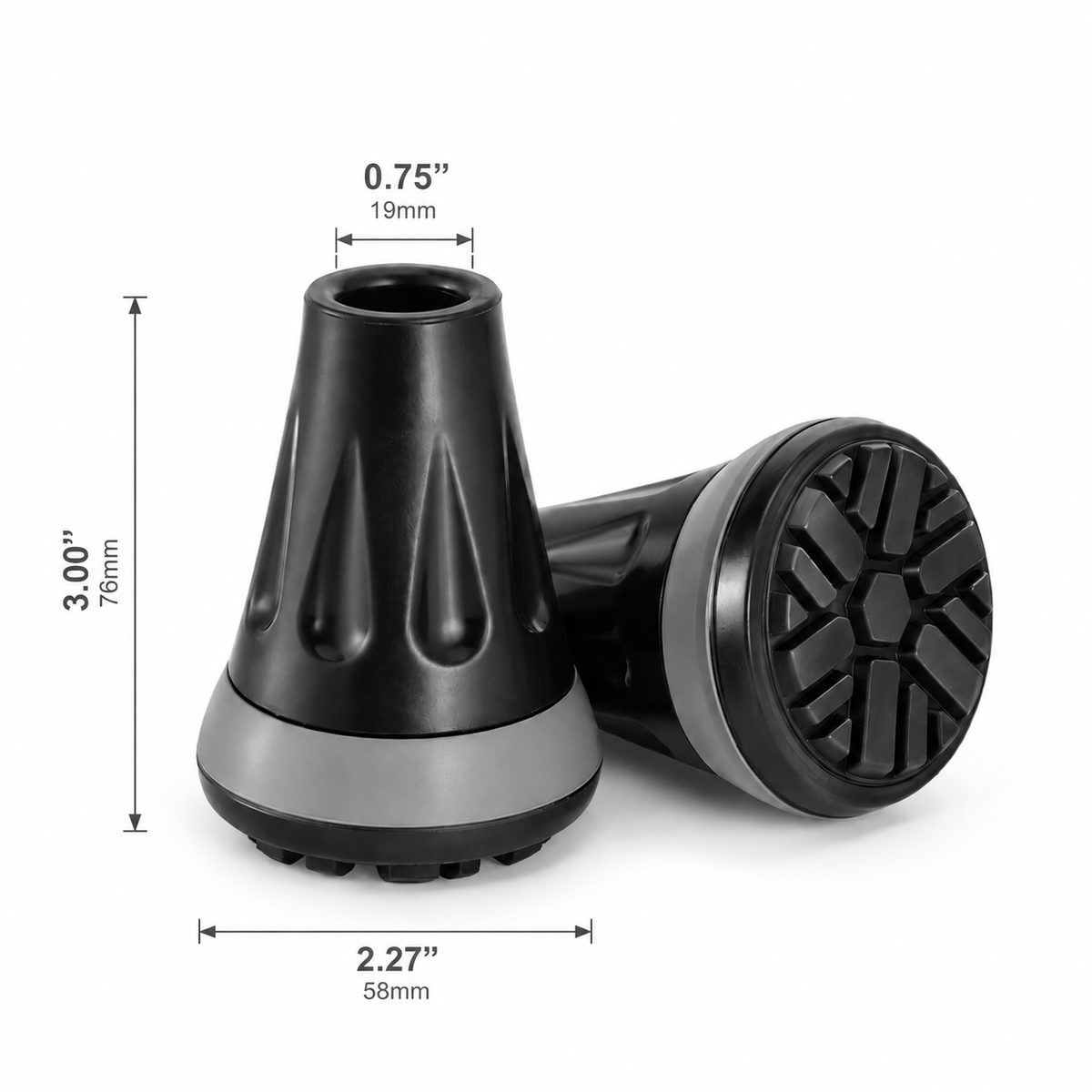
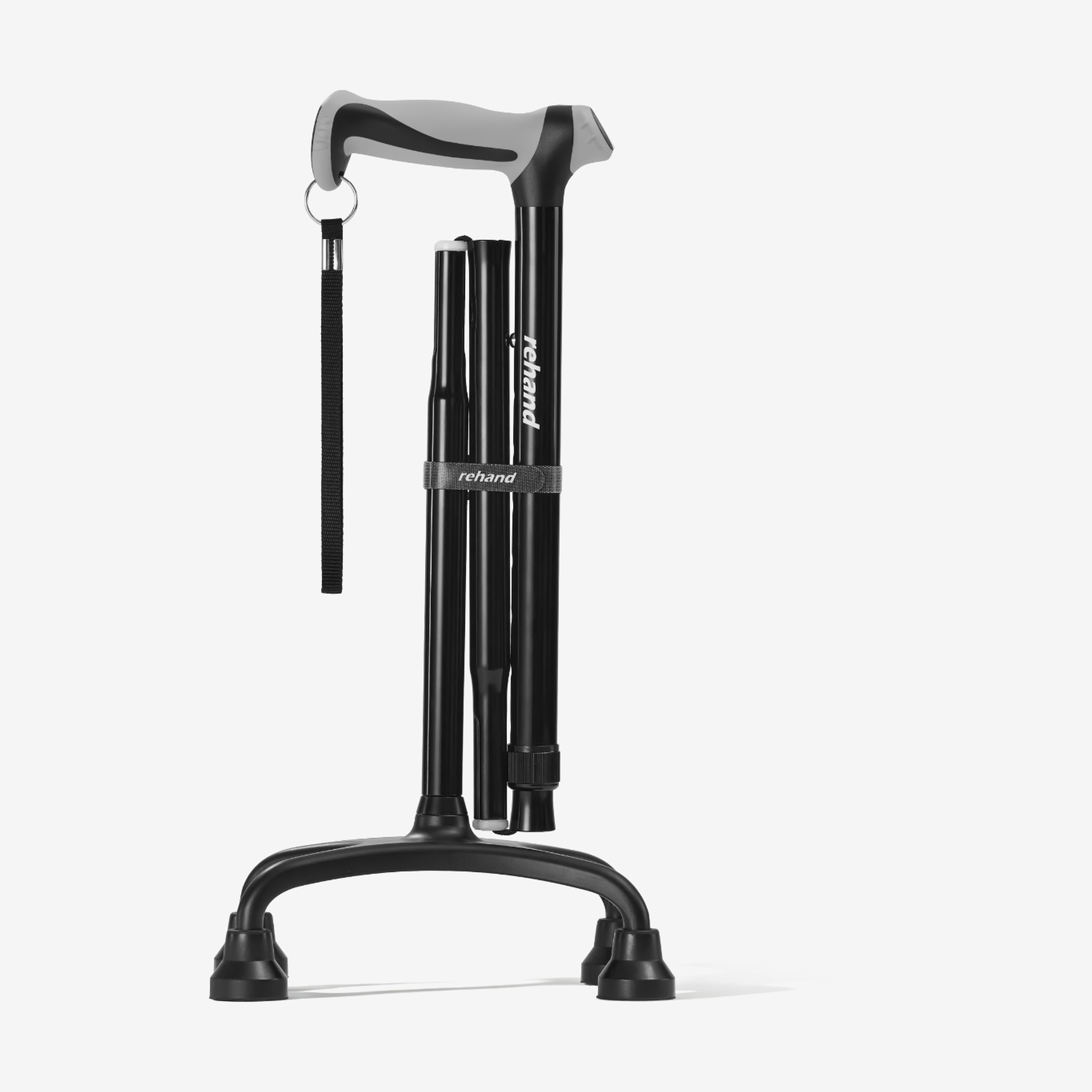
MedlinePlus recommends checking cane tips daily and replacing worn tips. If a removable tip is damaged, use the correct model and size. If a Rehand fixed multi-point or pivoting base is loose, do not pull it apart or glue it—stop using the cane and contact support.
3. Treat Every Surface Change as a New Condition
Wet concrete may feel different from wet tile. Painted lines, metal plates, ramps, fallen leaves, mud, polished store entrances, and the first few steps inside a building may be especially slick.
Pause before moving from outdoors to indoors. Wipe the cane tip when practical and look for water carried onto the floor. CDC home-safety guidance emphasizes keeping walking surfaces clear and dry; the same principle matters when entering a lobby, store, or home.
4. Keep Your Grip Available
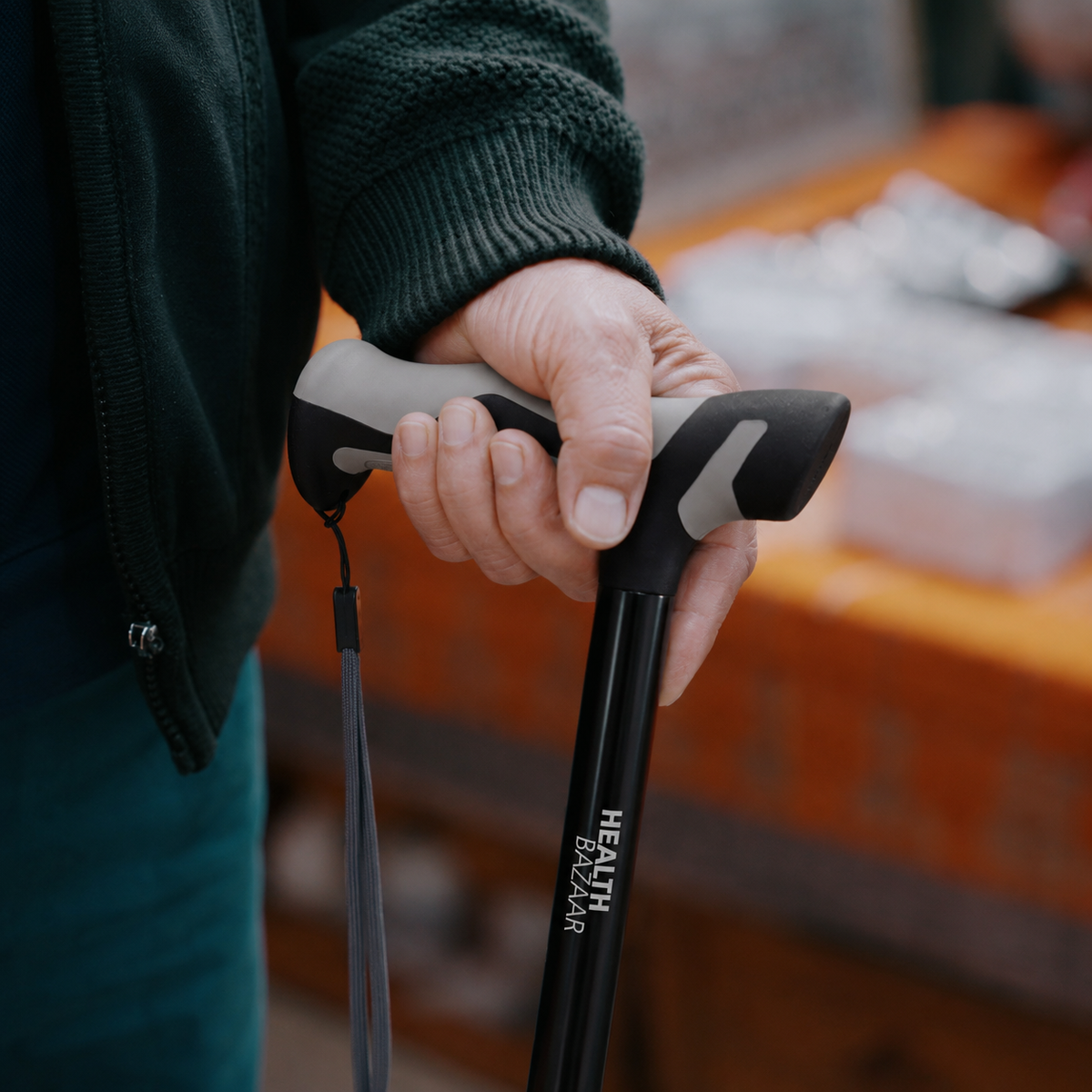
An umbrella, bag, phone, and cane can compete for the same two hands. Do not overload your cane hand or allow shopping bags to change your grip.
Use a small backpack or cross-body bag when appropriate. MedlinePlus similarly recommends a small backpack, fanny pack, or shoulder bag to keep hands available while walking. If an umbrella makes it difficult to control the cane, choose a waterproof jacket or wait for better conditions.
5. Slow Down and Shorten the Route
Rain is not the time to rush. Take shorter, deliberate steps and allow more time for doors, curbs, ramps, and surface transitions. Look ahead rather than only at your feet.
Do not use the cane to test deep water, unstable mud, or a flooded curb. Avoid shortcuts over grass, loose gravel, or slopes when a maintained route is available.
6. Check Visibility
Rain and gray skies can reduce visibility for you and for drivers. Wear visible outerwear and use established sidewalks and crossings. A cane with a light may illuminate the ground immediately ahead, but it does not replace street lighting, reflective clothing, or careful route selection.
Never describe a lighted cane as preventing falls. Lighting is a visibility feature, not a guarantee of safety.
7. Dry and Recheck the Cane Afterward
When you return:
- Wipe the shaft, handle, wrist strap, joints, and tip with a soft cloth.
- Let the cane air-dry fully in an open position.
- Do not store a damp folding cane in its bag.
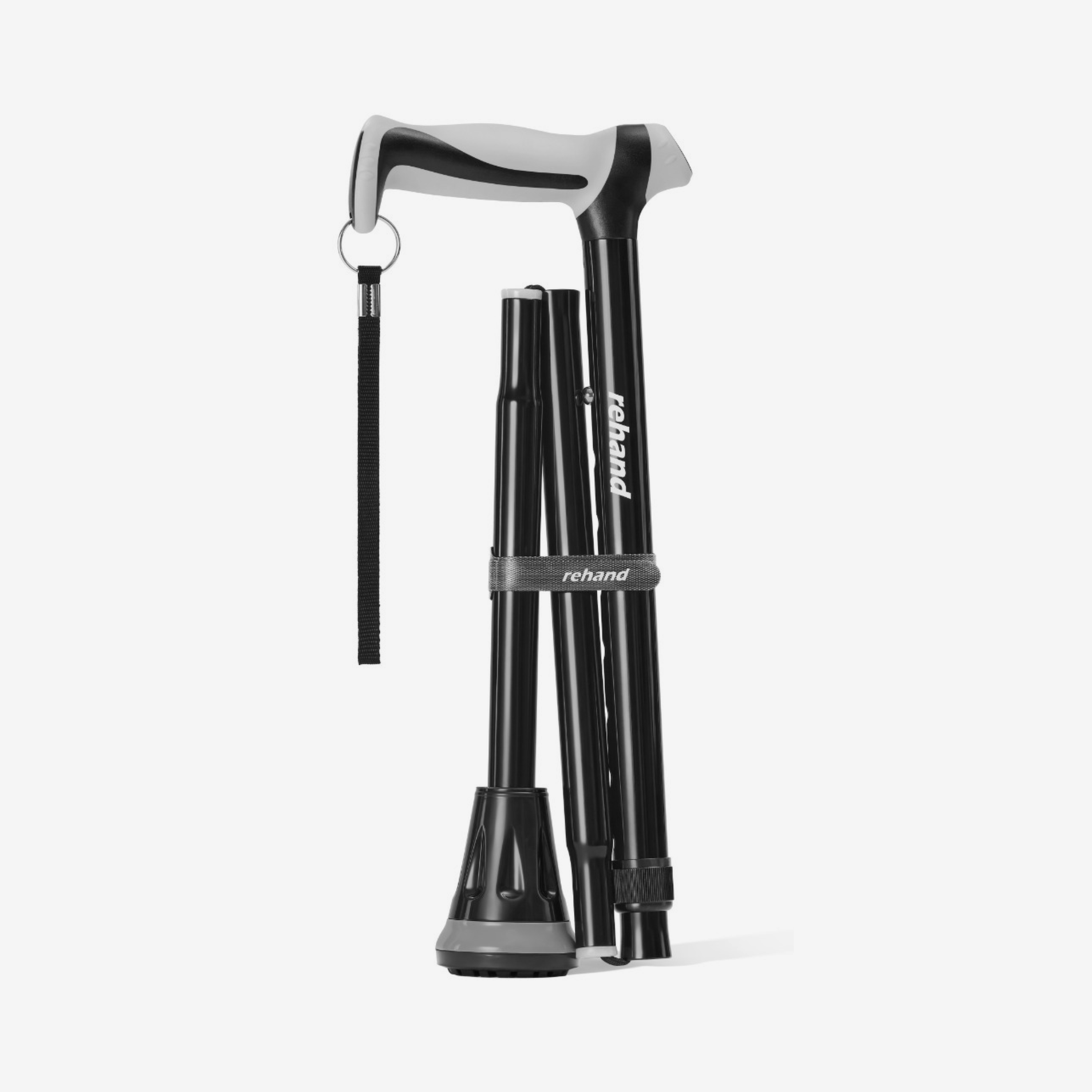
- Check folding joints, the height button, locking collar, and base for trapped debris.
- Stop using the cane if you find cracking, corrosion, a loose joint, or an insecure base.
Follow the model’s care instructions. “Waterproof” or “water-resistant” claims apply only to the specific tested component and rating; they do not mean the entire cane can be submerged or left wet.
What About Ice or Freezing Rain?
Standard rubber tips are not a universal solution for ice. Ice-specific attachments may change the way a cane contacts the ground and must be compatible with the cane and the user’s needs. Ask the manufacturer and a qualified clinician before adding an attachment. When ice is present, postponing the trip or arranging assistance may be the safer choice.
Quick Wet-Weather Checklist
- Is the trip necessary now?
- Is the rubber tip clean, secure, and unworn?
- Can you keep at least one hand free for the cane?
- Are there sheltered, maintained routes?
- Can you avoid wet tile, leaves, mud, ice, and standing water?
- Is visibility adequate?
- Can you dry and inspect the cane afterward?
CTA
Preparing for everyday errands? Compare Rehand walking canes and review the model-specific User Manuals before your next trip.
Sources
- MedlinePlus, “Using a Cane,” reviewed April 1, 2025; accessed October 13, 2026: https://medlineplus.gov/ency/patientinstructions/000343.htm
- CDC STEADI, “Check for Safety: A Home Fall Prevention Checklist”; accessed October 13, 2026: https://www.cdc.gov/steadi/pdf/patient/customizable/checkforsafety-brochure-final-customizable-508.pdf
- Rehand User Manuals; accessed October 13, 2026: https://rehand.com/pages/user-manuals