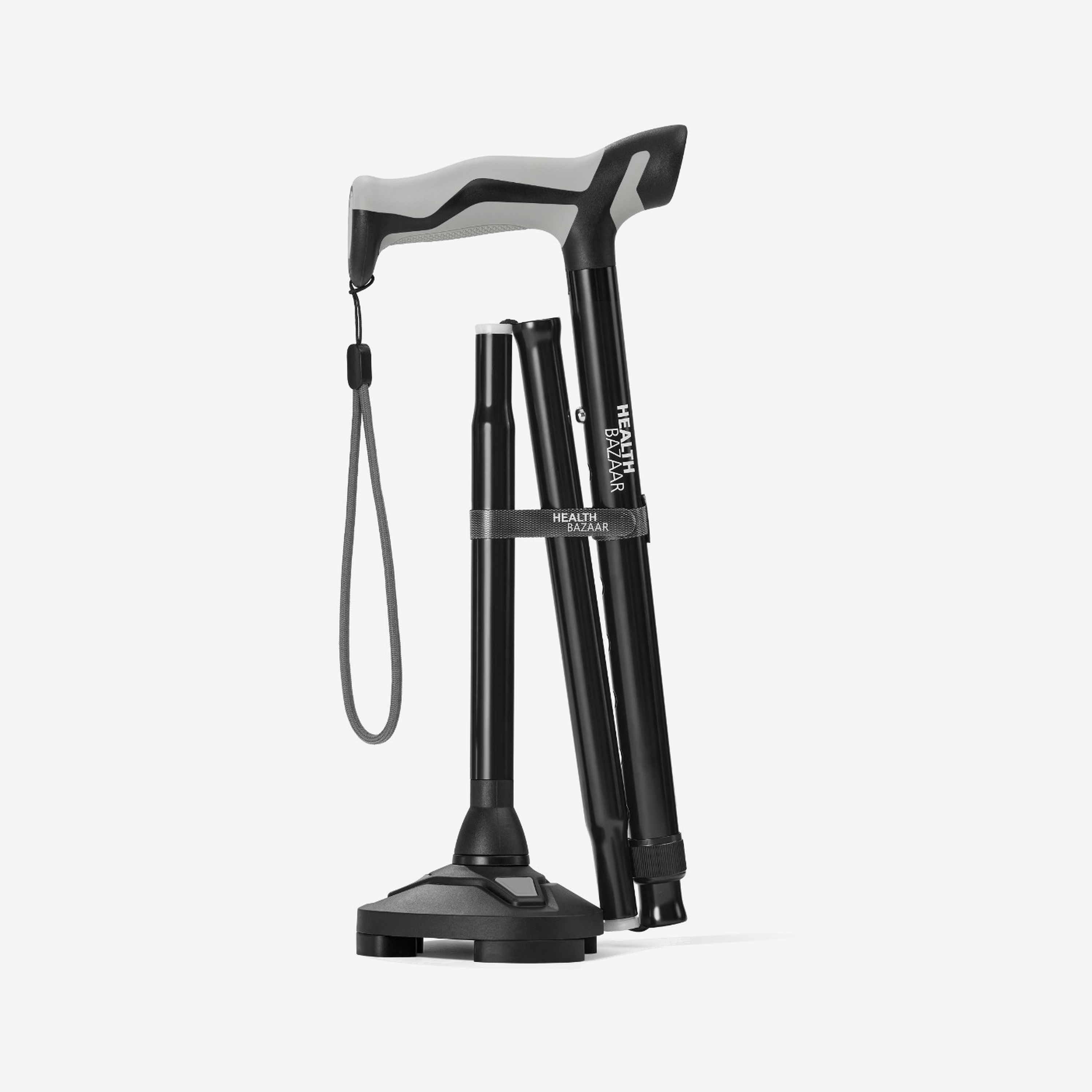
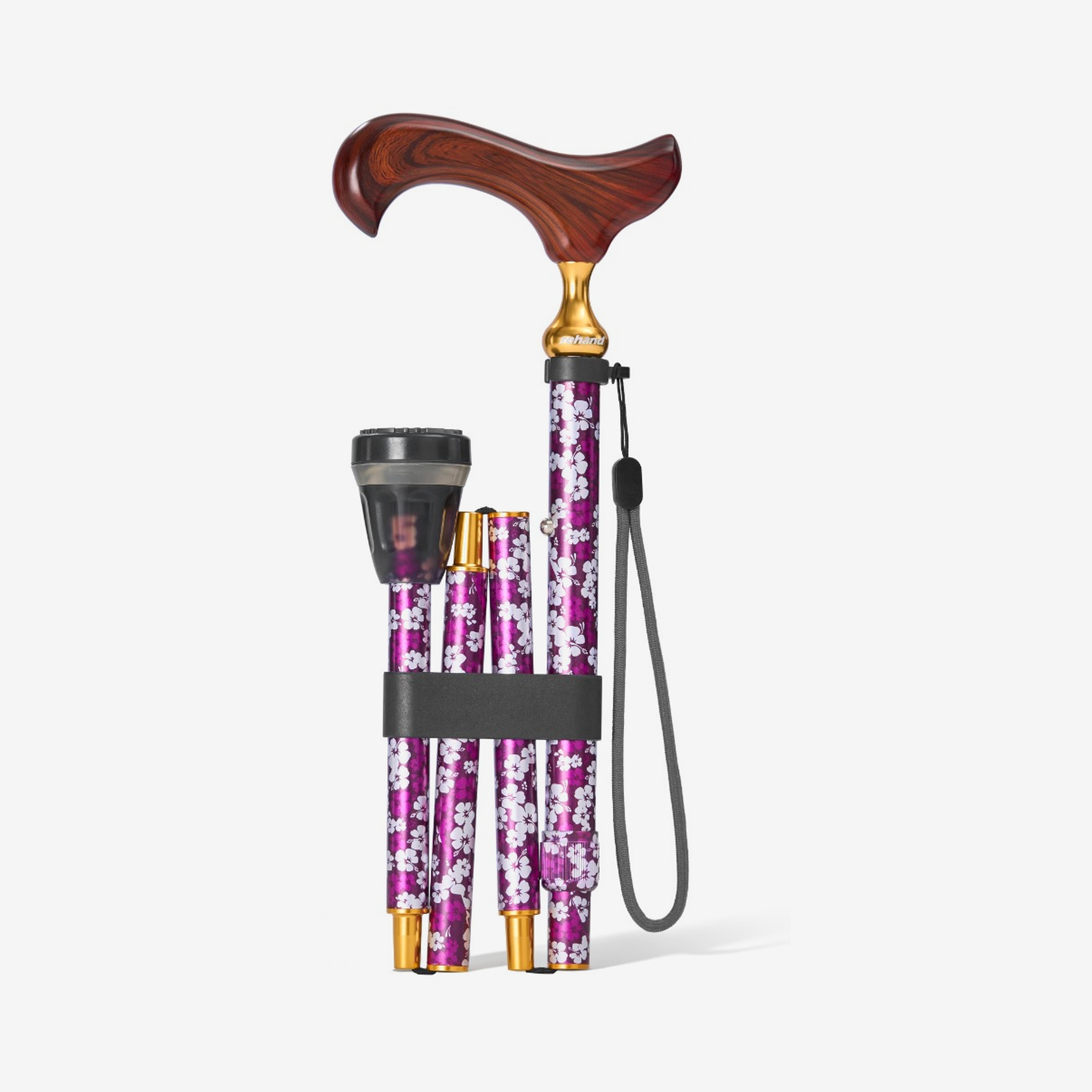
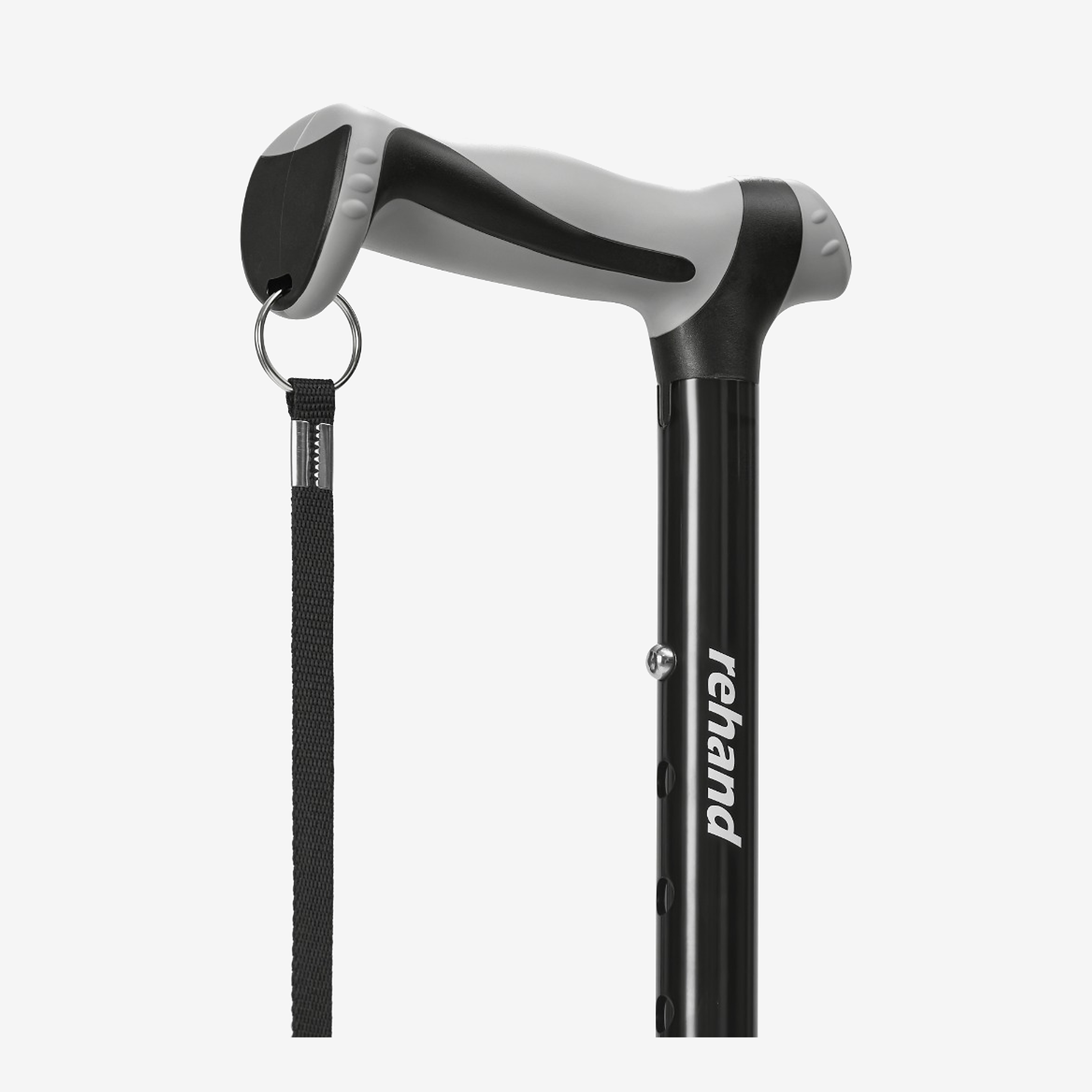

Store a folding walking cane only after it is clean, dry, fully inspected, and secured in its folded position. Choose a location where the cane will not be crushed, become a trip hazard, or be left out of reach when you need to stand. Follow the exact model instructions because folding joints, straps, bags, and electronic parts differ.
Inspect before you put it away
Storage should not hide a problem. Open the cane and check the handle, shaft, section joints, height button, collar, and ground-contact tip. The AHRQ cane inspection checklist calls for checking the handle and shaft, secure hardware, height adjustment, and clean, even tips. If a part is cracked, loose, missing, or worn, pause use and contact the manufacturer instead of storing it for later.
Our folding-cane inspection guide provides a complete pre-use check. The Rehand User Manuals remain the source for the exact folding sequence.
Clean visible dirt and let the cane dry
Wipe ordinary surface dirt according to the model's care instructions. Pay attention to the tip, because grit or moisture can transfer into a storage bag or onto floors. Do not fold a wet cane directly into a closed bag. Let exterior surfaces dry first, and keep moisture away from charging ports or electronics on models that include them.
Cleaning cannot repair worn rubber or a loose joint. If the cane uses a compatible removable tip, measure and match it before ordering. The Rehand 3/4-Inch Replacement Cane Tips fit compatible single-tip canes with a removable 3/4-inch push-on tip; they do not fit Rehand self-standing, quad, cane-seat, or factory-installed specialty bases.
Secure the folded sections
Fold the cane only as the manual describes. Keep fingers clear as sections separate, then use the supplied fastener or storage method to contain the folded pieces. Do not wrap the internal cord around the shaft, force joints apart, or use tape as a repair.
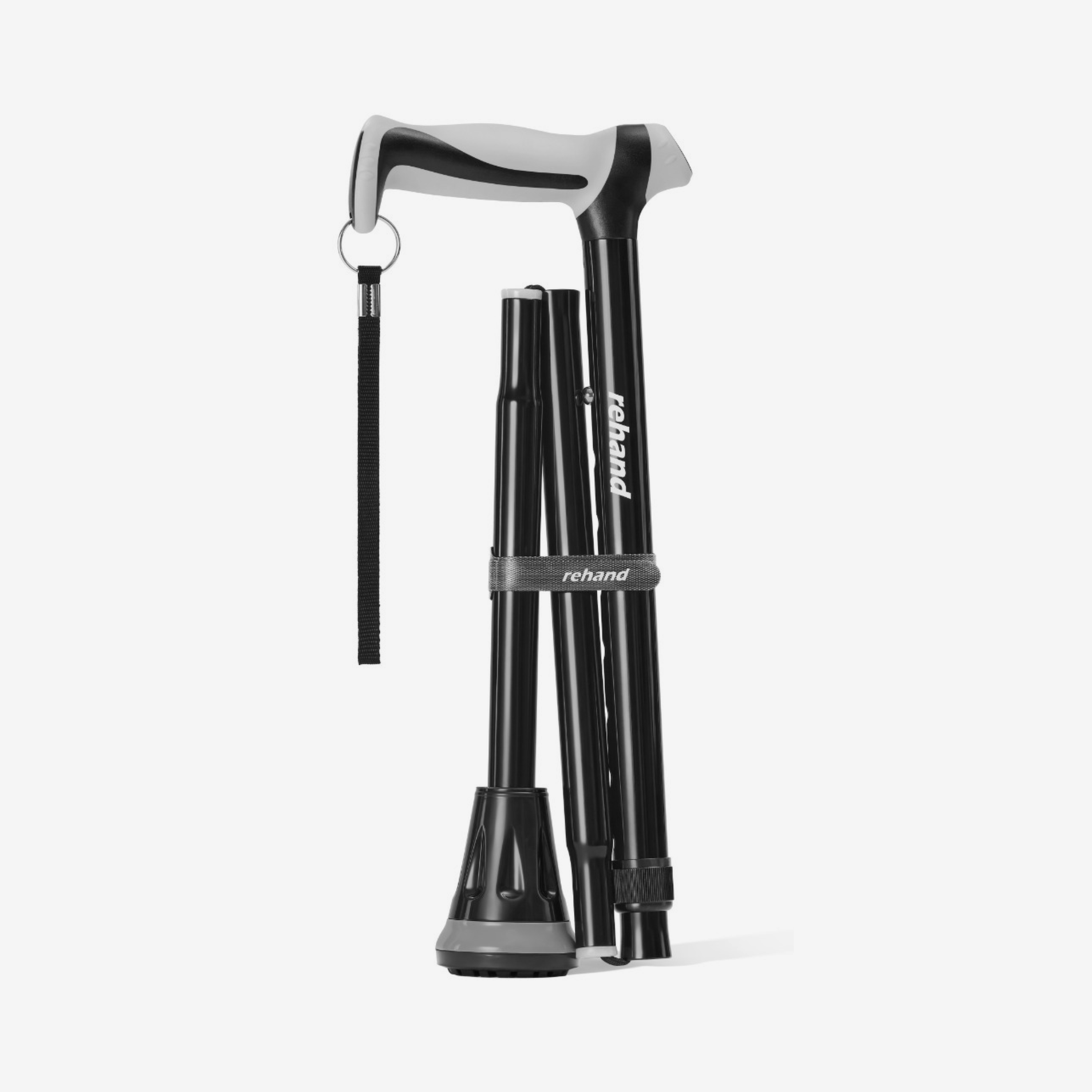
The current Rehand Foldable Walking Cane folds to a published 14 inches and includes a travel bag and fastener tape. Those accessories and dimensions are model-specific. Confirm what is included with your color and order before relying on a bag for a trip.
At home: keep it accessible without creating a hazard
A closet shelf, drawer, or dedicated storage point may work if the cane is protected and easy to retrieve. Avoid leaving it loose on the floor, behind a chair, or under bedding. If you need the cane to stand, do not store it across the room. Plan how you will reach it before rising.
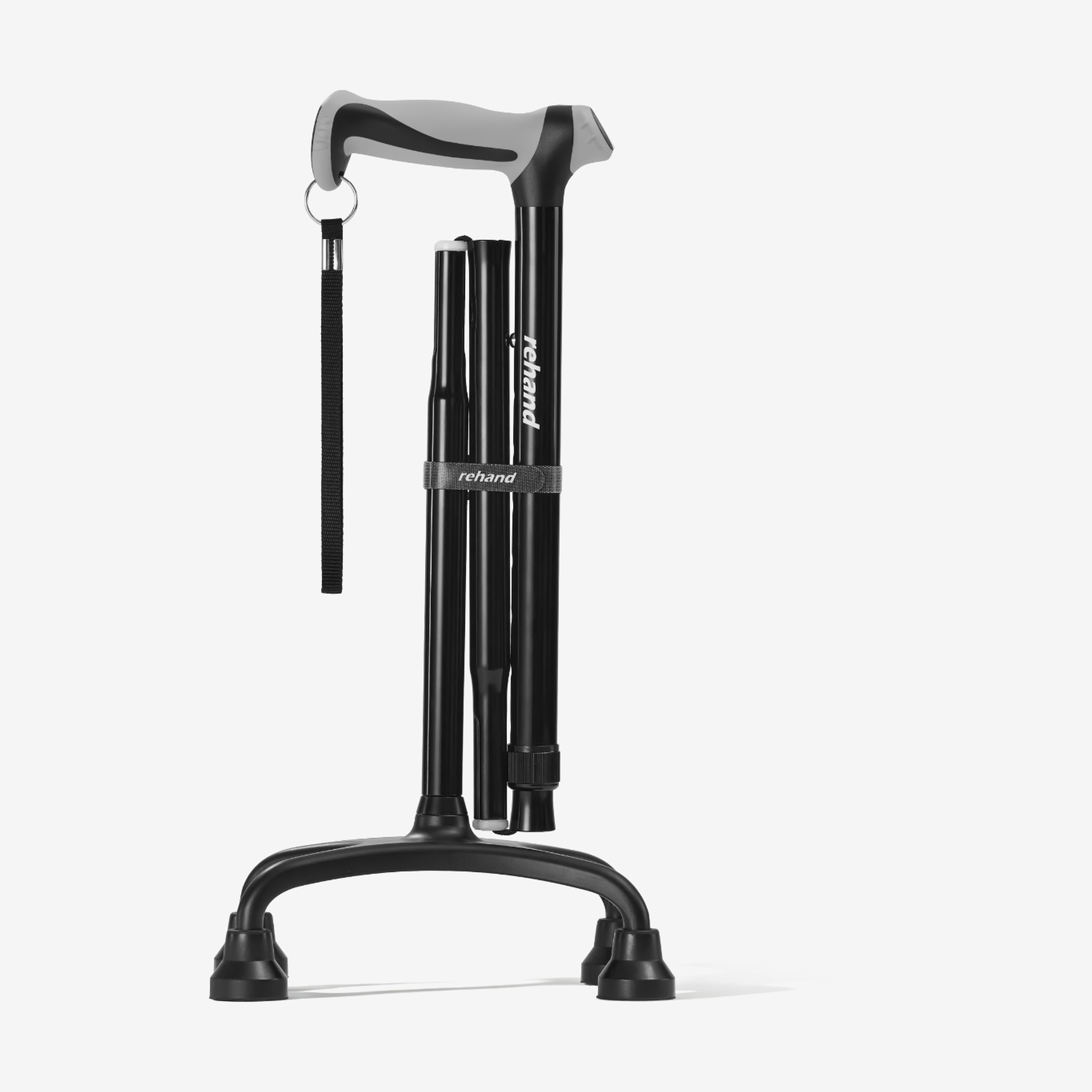
If the cane is stored upright while open, position it where it cannot be knocked over or block a walkway. A self-standing feature does not guarantee that a cane will remain upright when bumped.
In a car: contain the cane and plan the handoff
Place a folded cane in a bag or contained area where it cannot roll under pedals, shift around the cabin, or be crushed by luggage. Do not leave it loose in the driver's footwell. Before getting out, decide how the cane will be moved from storage into your hand without overreaching or standing unsupported.
Vehicle layouts and transfer needs differ. If you have difficulty reaching the cane, ask a PT or OT to review the exact sequence with your vehicle rather than improvising.
Before using it again
Remove the cane from storage and open every section fully. Confirm the height lock, collar, joints, handle, and tip before placing weight through the device. If the cane was stored after rain, in a crowded trunk, or under other items, inspect it again even if it looked fine earlier.
Next step: Create one consistent storage location, keep the model manual nearby, and perform the same opening and inspection sequence every time.
Sources
- Agency for Healthcare Research and Quality, Engineer Cane/Walker Inspection, accessed October 20, 2026.
- Rehand, Foldable Walking Cane, Replacement Cane Tips, and User Manuals, accessed October 20, 2026.