
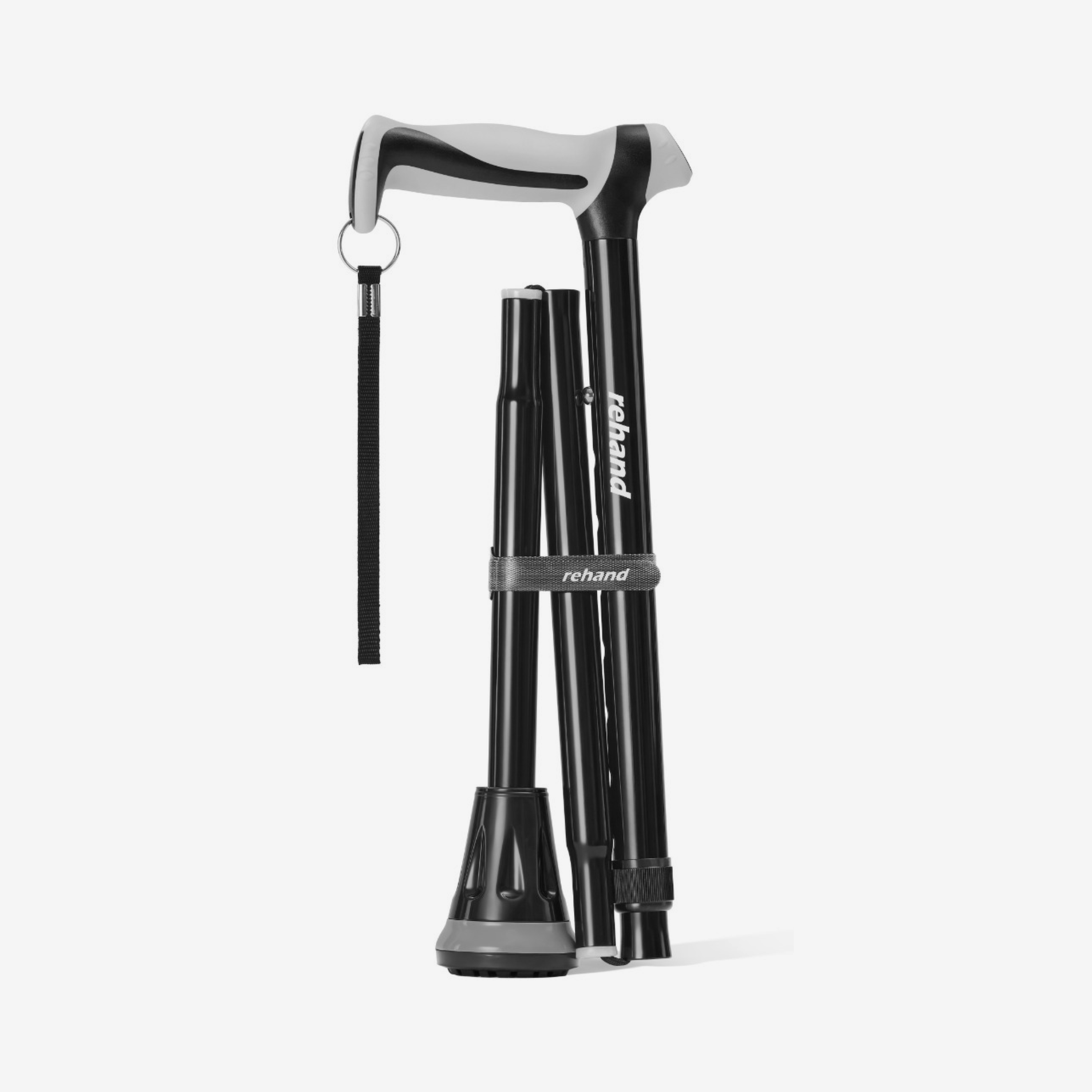
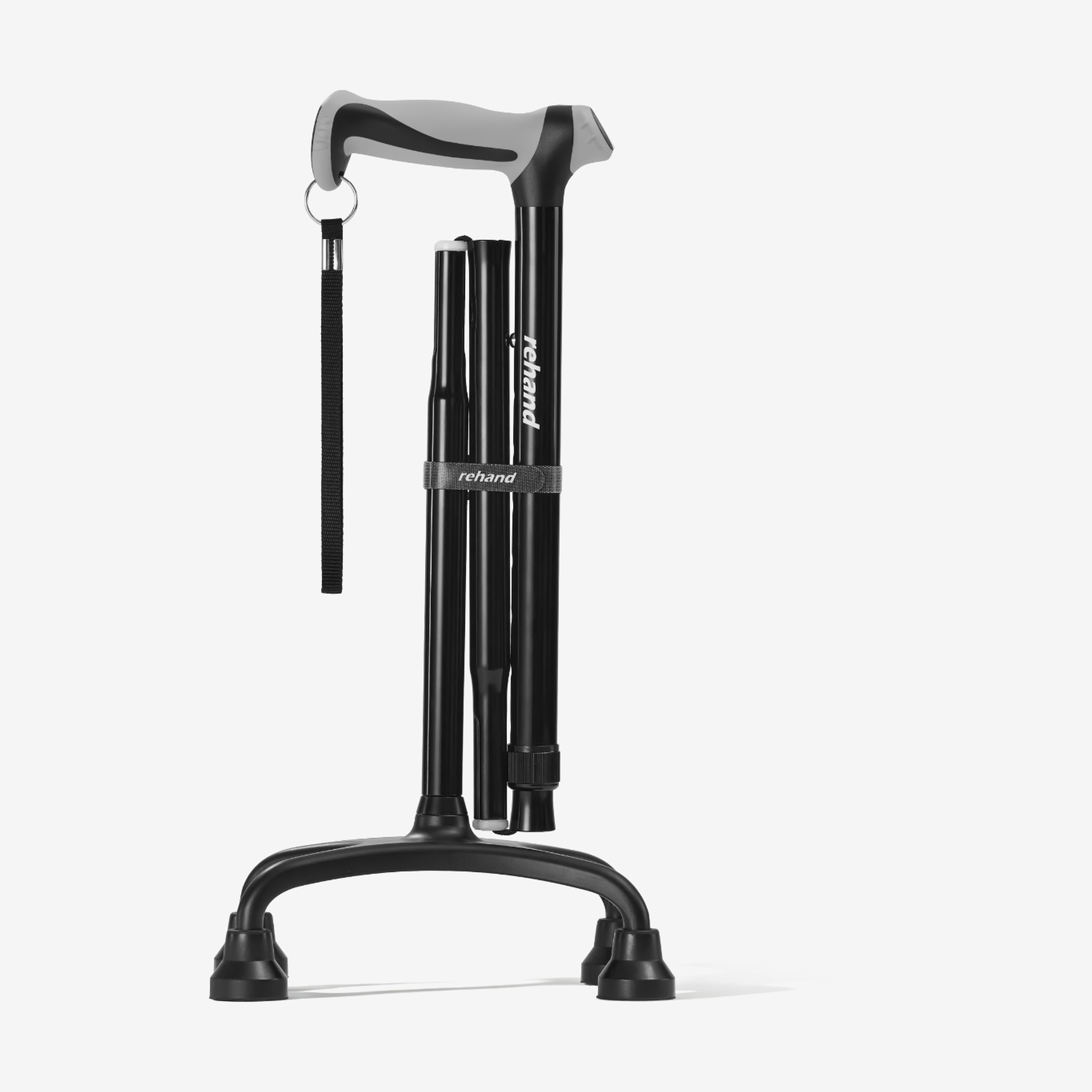
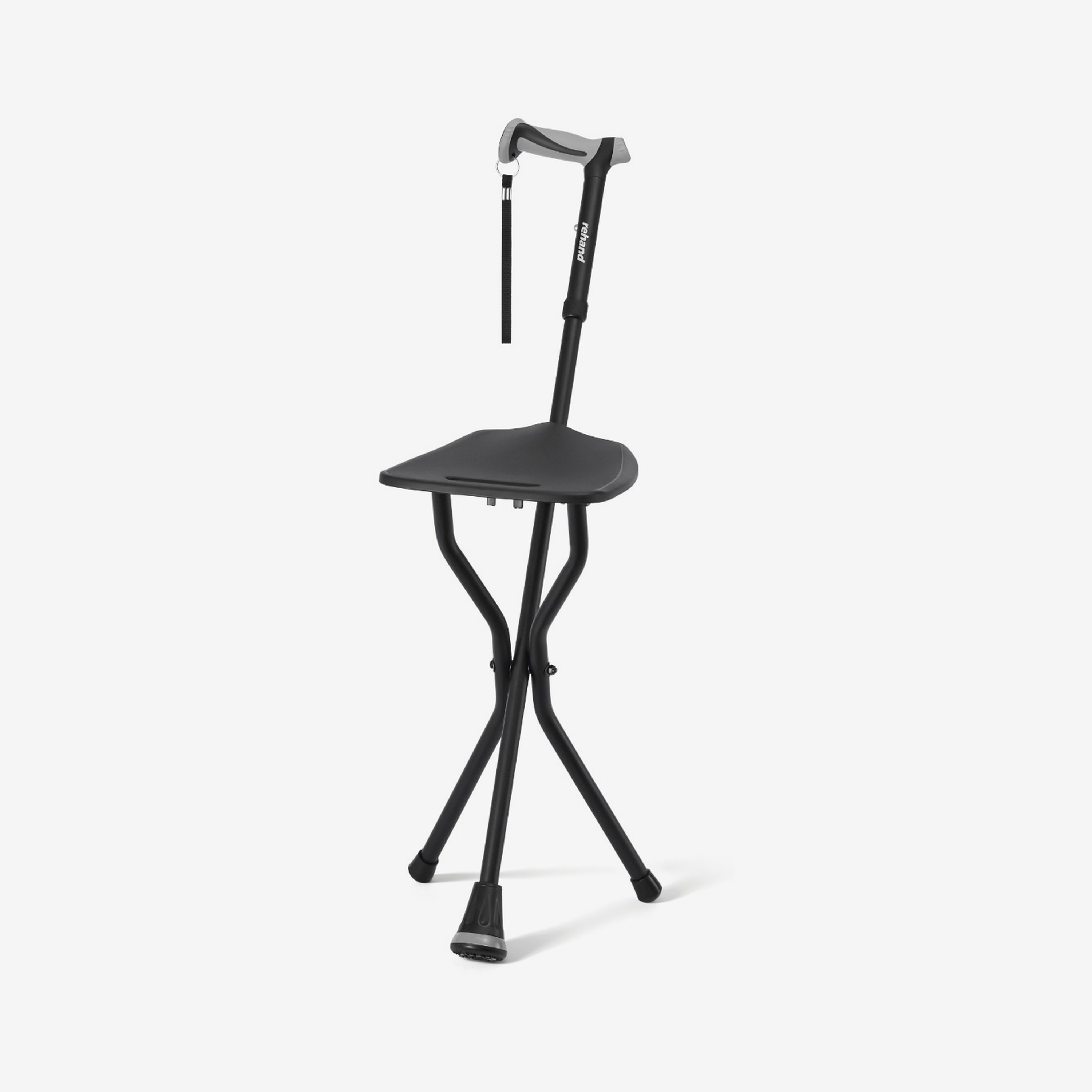
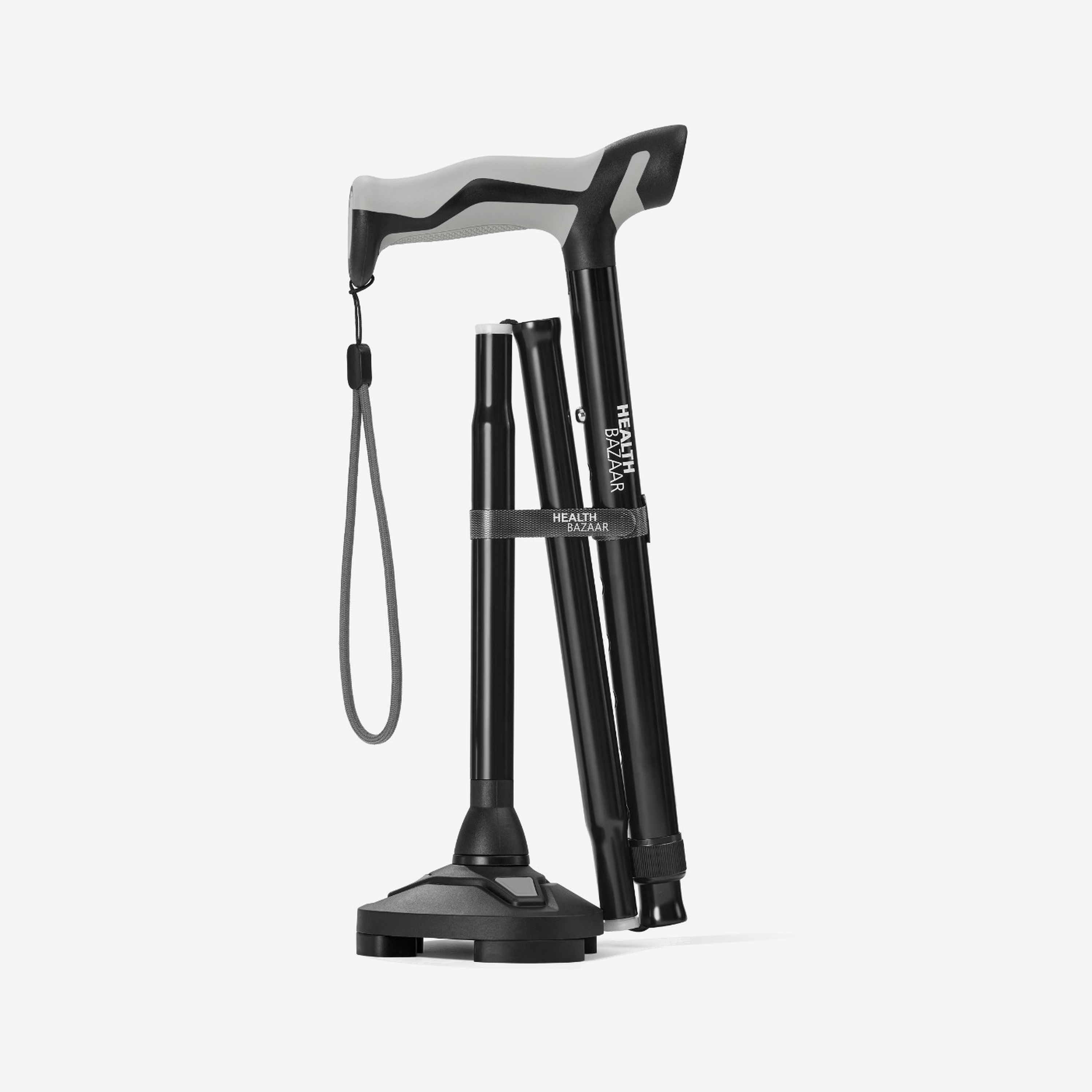
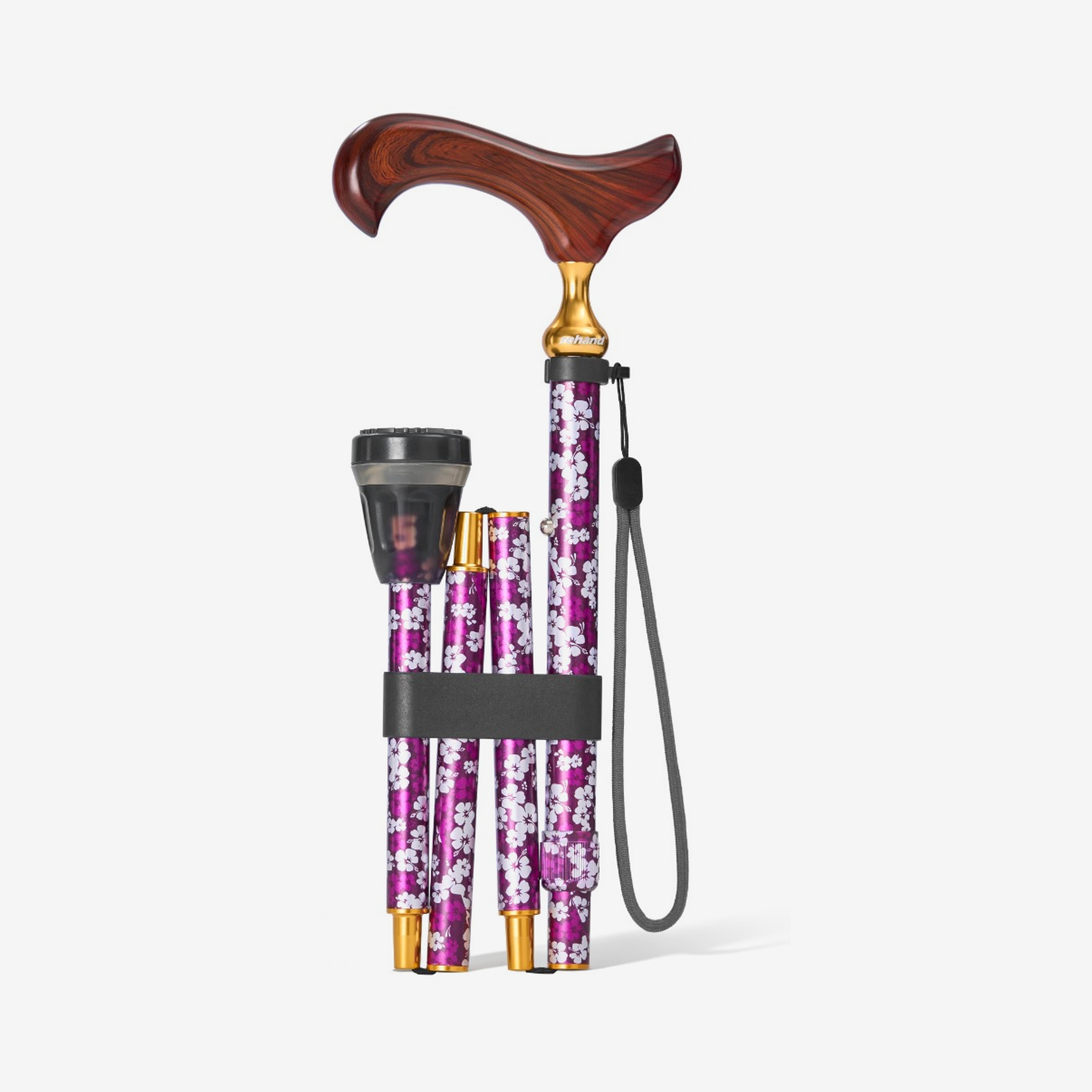
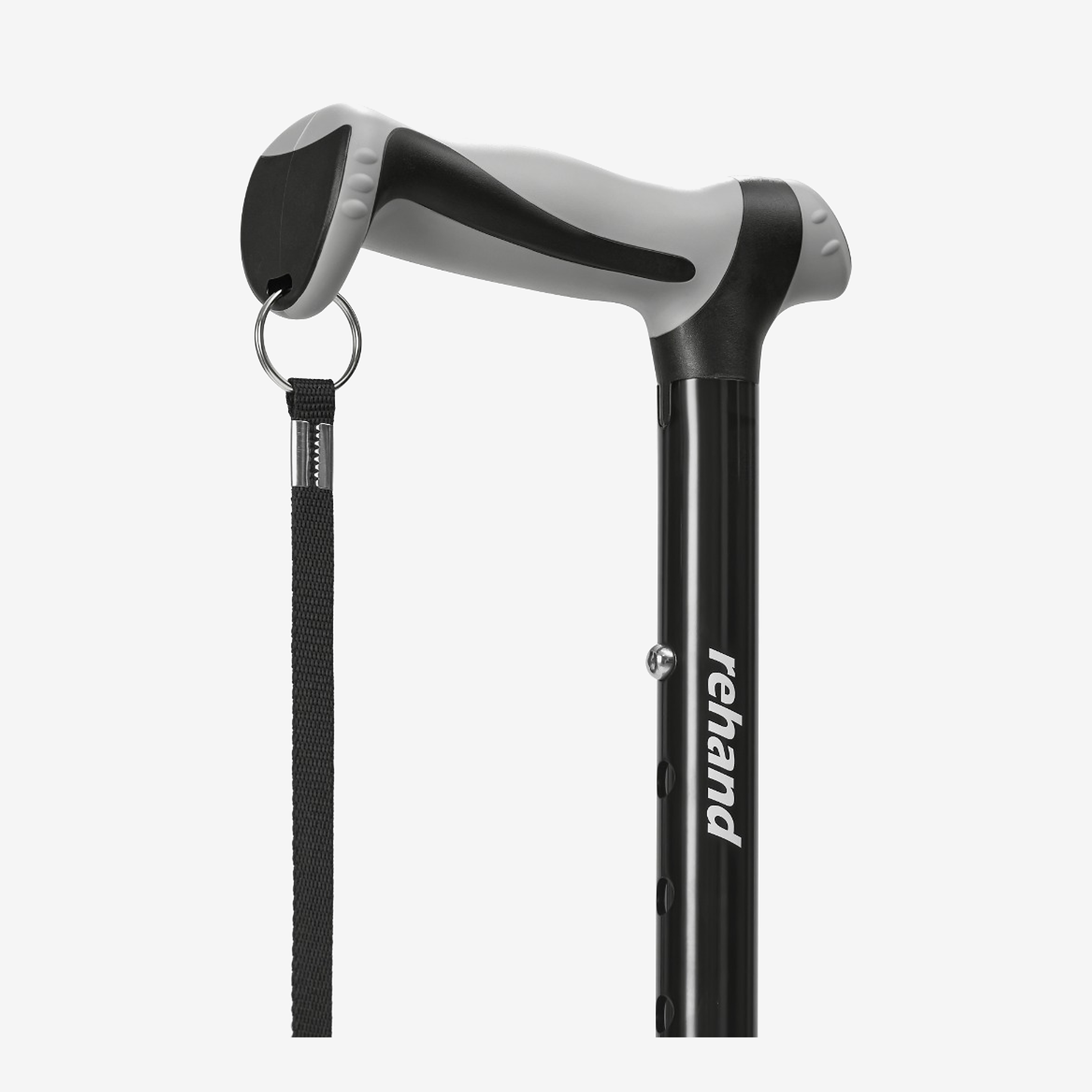

Before using a self-standing cane, place the base on a firm, level surface and check that every contact point sits evenly. Look for debris, wear, cracks, looseness, or restricted pivot movement. A cane that can stand by itself may still tip when bumped or placed on an uneven surface, so self-standing should be treated as a convenience feature rather than a guarantee.
1. Identify the exact base
Do not assume every multi-point cane uses the same construction. The current Rehand Self-Standing Walking Cane uses a four-prong 360-degree pivot base. Its User Manual explains how to position the base and inspect the pivot area. A molded quad base, removable single tip, or cane-seat foot is a different assembly.
Rehand specialty bases are factory-installed and are not intended for at-home removal. The separately sold 3/4-Inch Replacement Cane Tips are only for compatible single-tip canes with a removable push-on tip.
2. Check full contact on a level surface
Set the cane upright without loading it. All contact points should rest on the surface as the manual describes. Look from more than one side. If one foot is lifted, the base rocks, or the shaft appears misaligned, stop and inspect before walking.
Do not test the self-standing feature on stairs, slopes, thick uneven carpet, loose gravel, or wet flooring. Even on a level floor, keep the cane within reach and expect it can fall if bumped.
3. Remove hair and visible debris
Hair, thread, dust, or grit can collect around a moving base. The Rehand User Manuals instruct users to check the base and pivot joint for debris that could restrict movement. Remove only visible surface debris using the model's care instructions. Do not open the joint, add lubricant, glue a loose part, or force the base to rotate.
For broader surface care, see How to Clean a Walking Cane. Cleaning is not a repair for a damaged component.
4. Inspect each ground-contact point
Look for worn tread, cracks, hardening, missing pieces, uneven wear, or a loose contact pad. Mayo Clinic advises replacing a rubber cane tip when the tread is worn or the rubber has become stiff. On an integrated multi-point base, contact Rehand Support for the model-specific next step rather than pulling off an individual foot.
Compare the base with current product photos and the manual. Stop using the cane if a contact point is damaged or the completed base no longer sits as intended.
5. Check the pivot without forcing it
On a clean, level surface, gently move the shaft through the normal range described by the manual. The base should move without obvious sticking, grinding, or separation. A pivoting base is designed to articulate; it is not evidence that the cane is suitable for every slope or terrain.
If the base resists movement, makes a new sound, feels loose, or does not return as expected, pause use. Do not solve the problem with tape, household oil, replacement screws, or an unapproved base.
Check the rest of the cane too
Base inspection is only one part of a pre-use check. Confirm that the handle is secure, folding sections are fully seated, the height button is engaged, and the locking collar is tightened as directed. Review the Rehand User Manuals and the Self-Standing Canes Collection for the exact model.
If your cane feels different during use, stop in a safe place and inspect it. Contact Rehand Support with a full-product photo, a close-up of the base, the order or model information, and a description of what changed.
Next step: Make the base check part of every pre-use routine, especially after storage, travel, impact, or exposure to dirt.
Sources
- Rehand, Self-Standing Walking Cane, User Manuals, and Replacement Cane Tips, accessed October 20, 2026.
- Mayo Clinic, Tips for choosing and using canes, updated July 30, 2026; accessed October 20, 2026.
- Agency for Healthcare Research and Quality, Engineer Cane/Walker Inspection, accessed October 20, 2026.