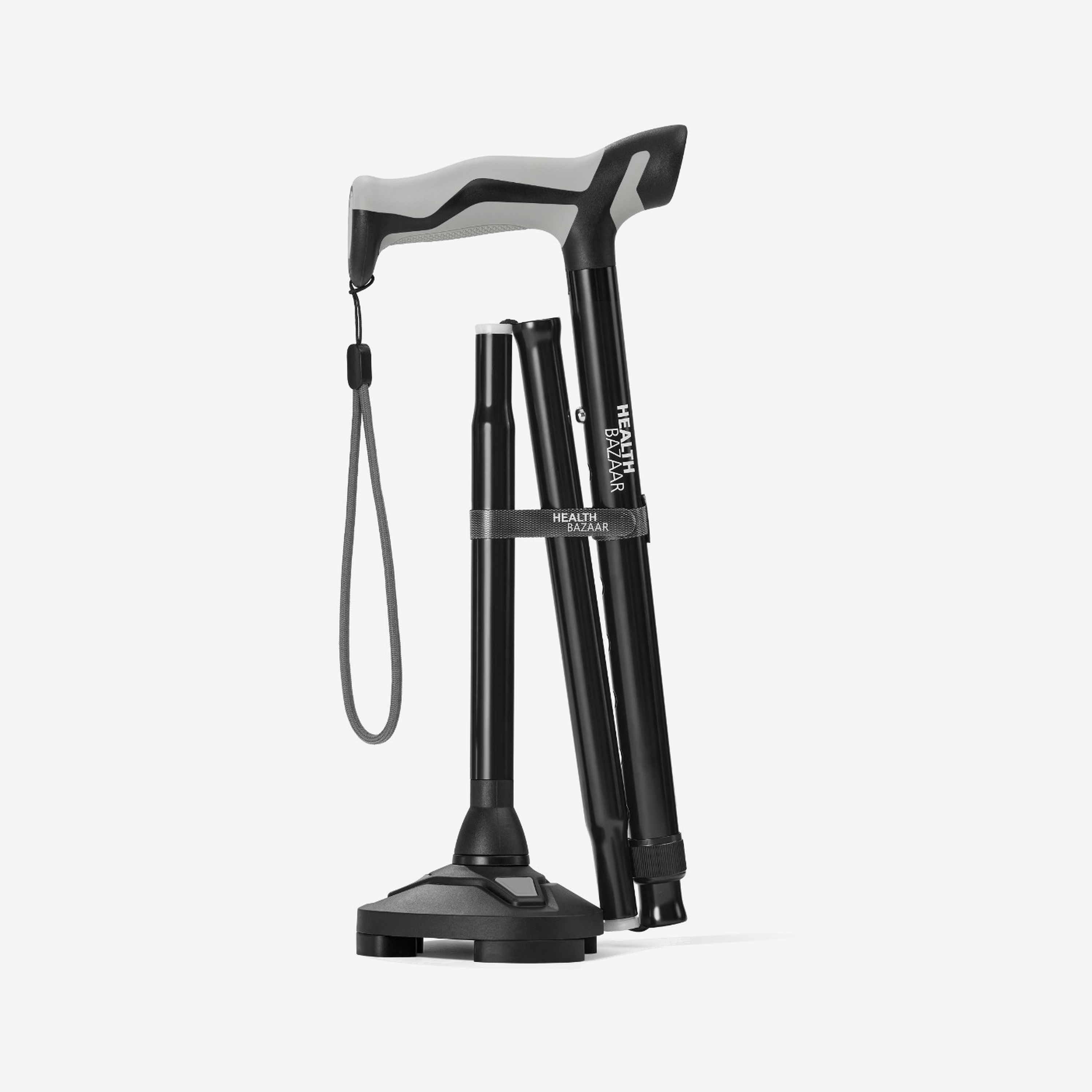
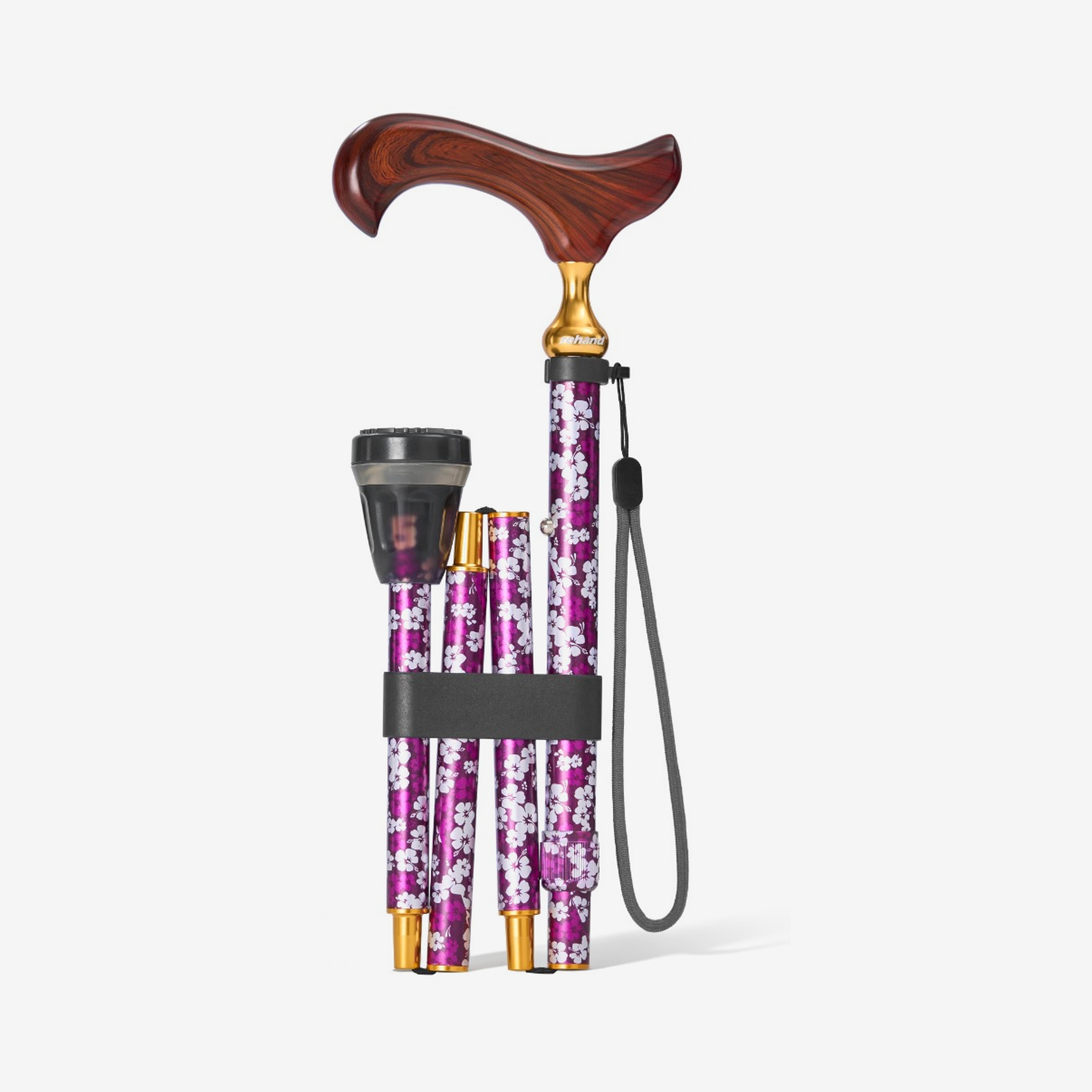

A folding cane is easier to shorten for storage, while a non-folding cane has fewer section joints to assemble and inspect. Neither design is automatically better or safer for everyone. The right choice depends on fit, the support you have been advised to use, where the cane will be stored, and whether you can reliably open and check a folding model.
The main difference is the shaft
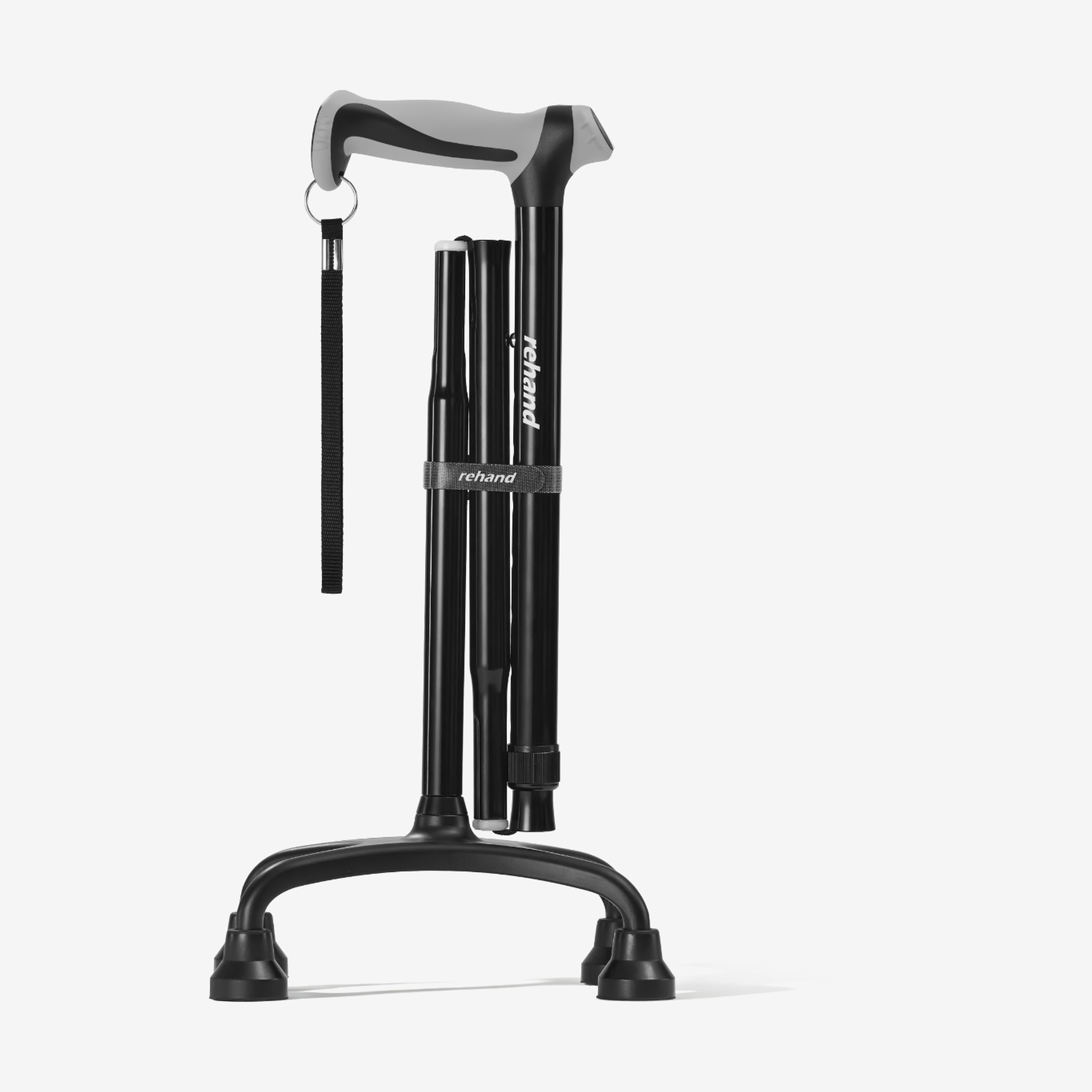
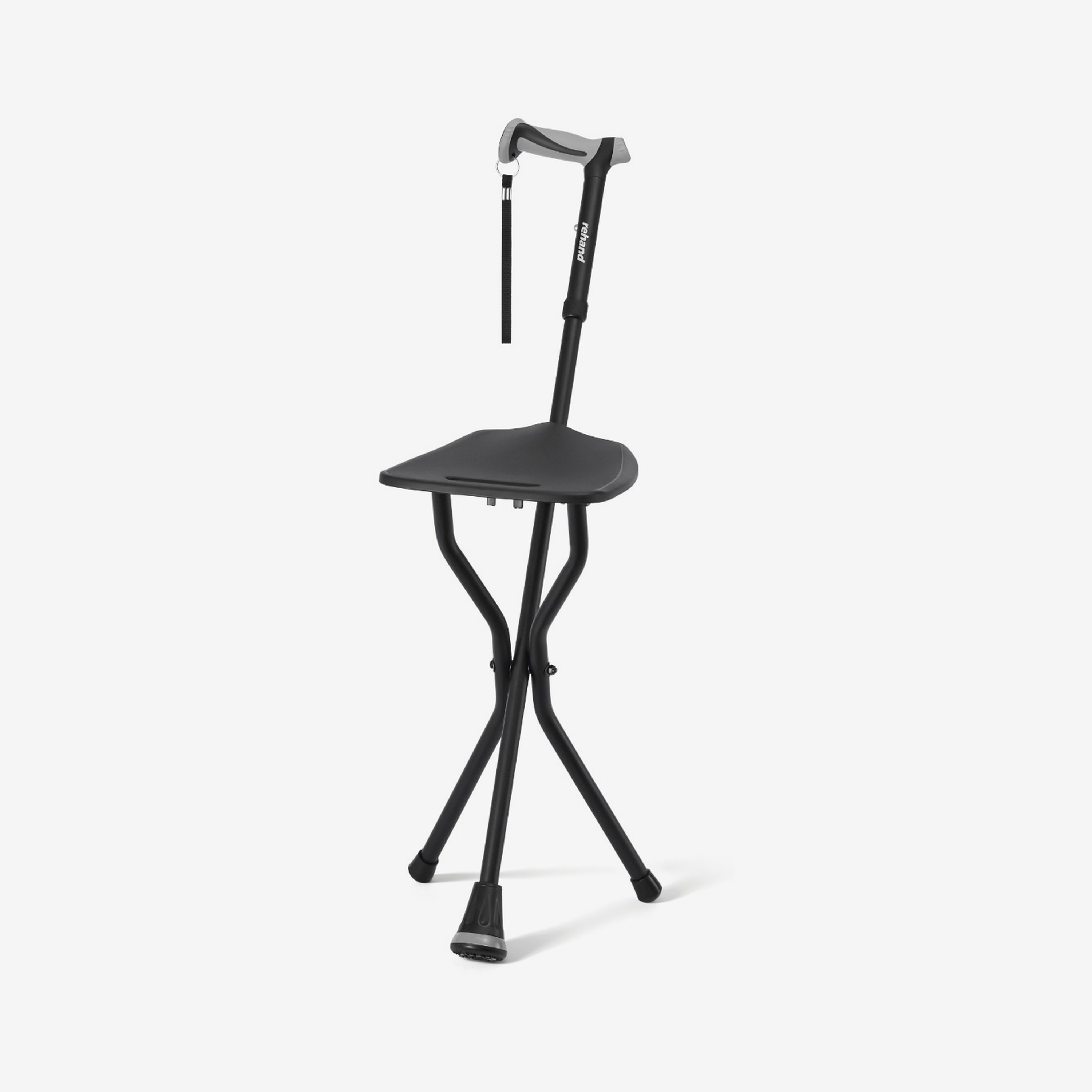
A folding walking cane separates into connected shaft sections so it can collapse into a shorter package. A non-folding cane keeps a continuous shaft. Both designs may still offer height adjustment, different handles, and different ground-contact tips.
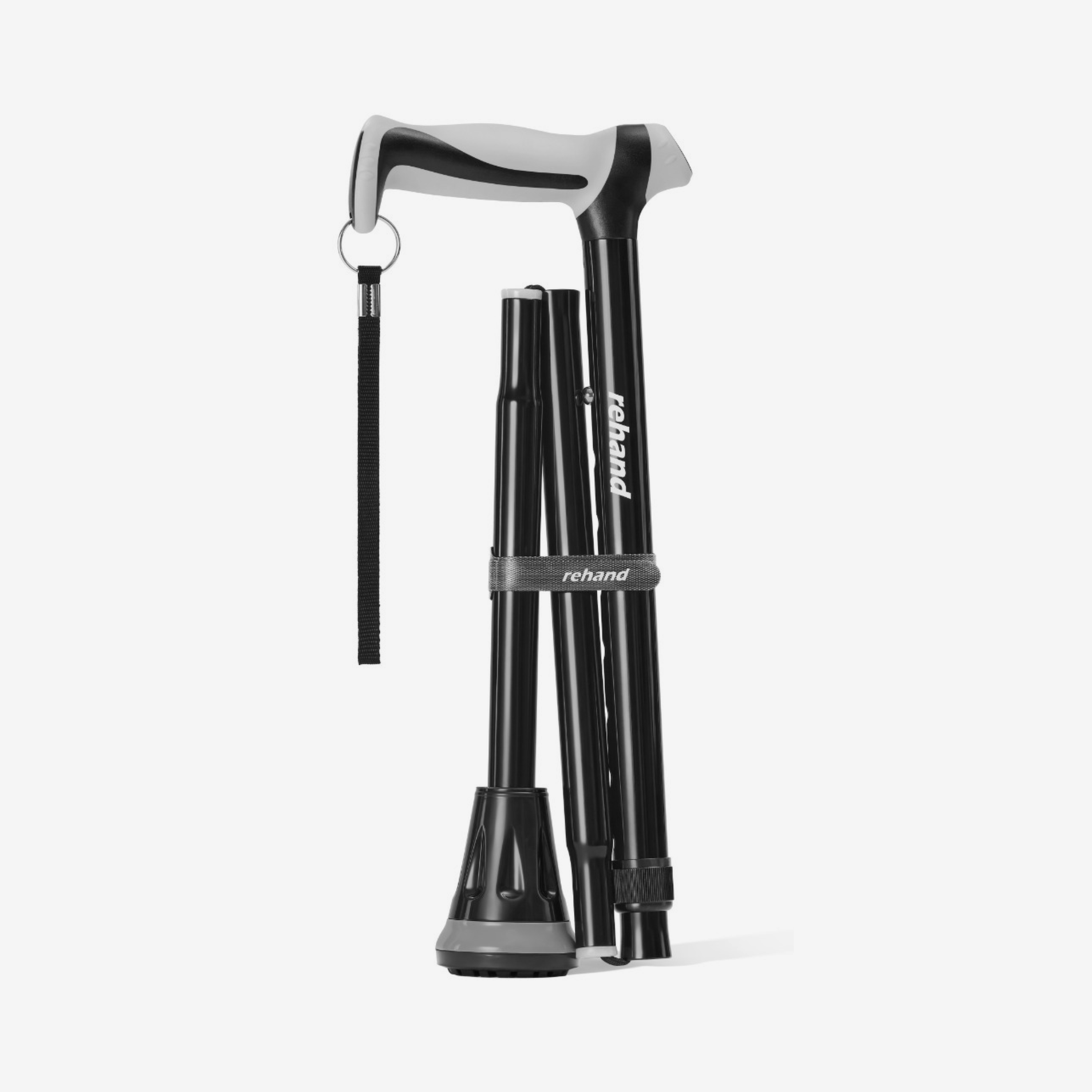
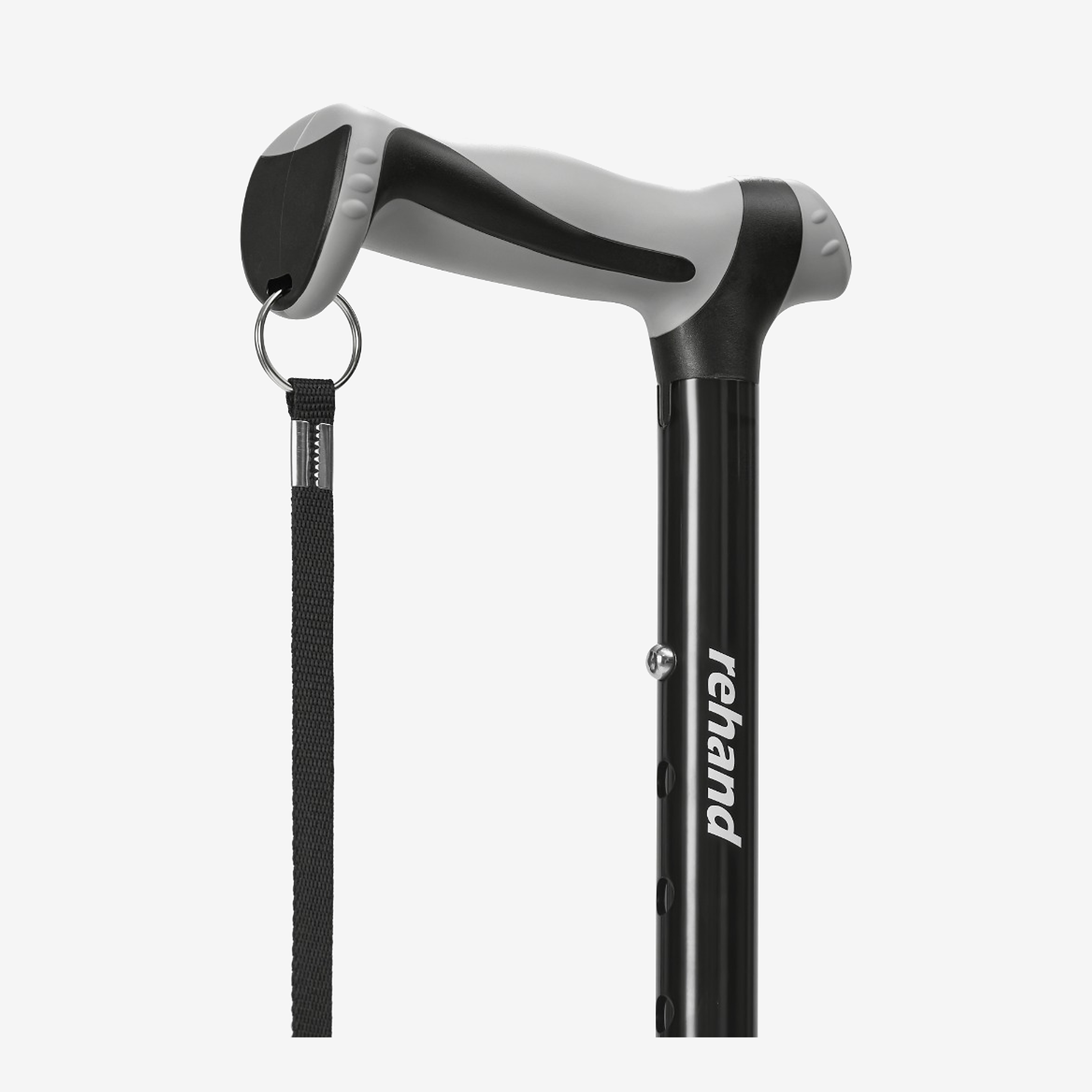
The current Rehand Foldable Walking Cane has four connected sections, eight defined height settings from 31 to 38 inches, and a published folded length of 14 inches. Those facts apply to this model; they should not be copied to every folding cane.
Choose folding when compact storage solves a real problem
A folding cane may suit a routine that includes a car, office drawer, suitcase, or other limited storage space. It can also be useful when the cane must be carried between periods of use. Before choosing it, ask:
- Can I open every section fully and keep my fingers clear?
- Can I confirm that the height button and locking collar are engaged?
- Is the folded size small enough for my actual bag or storage space?
- Will the cane remain accessible when I need to stand or walk?
Compact does not mean “maintenance-free.” Folding joints, the internal connection, height lock, handle, and tip all need inspection. Use the folding-cane inspection checklist before the first use and whenever the cane feels or sounds different.
Choose non-folding when simplicity matters more than compactness
A one-piece shaft removes the task of opening several sections before use. That may appeal to someone who does not need compact storage or finds folding mechanisms difficult to manage. It still needs the same basic fit and condition checks: a secure handle, sound shaft, engaged height adjustment if present, and an intact rubber tip.
Do not assume that a non-folding design is always more rigid or that a folding design is always lighter. Materials, wall thickness, handle shape, height system, and base all affect the finished product. Compare the published specifications of the exact models rather than relying on the category name.
Fit comes before portability
Mayo Clinic recommends using wrist-crease height as a practical starting point: with your arm hanging naturally, the top of the cane should line up near the wrist crease, and the elbow should remain slightly bent while holding the grip. A clinician may give different instructions for your body or condition.
Use the Rehand Fit Guide to review the measurement, then check the exact model range. A cane that folds neatly but does not fit your height or prescribed support needs is not the right purchase.
Compare the whole device, not just the shaft
Before deciding, compare:
| Question | Folding cane | Non-folding cane |
|---|---|---|
| Can it shorten for storage? | Usually yes | Usually no |
| Are there section joints to open? | Yes | No |
| Does it still require fit checks? | Yes | Yes |
| Can it have height adjustment? | Often | Often |
| Can the tip wear out? | Yes | Yes |
| Is it automatically right for travel? | No; check rules and storage | No; check size and rules |
Grip comfort and tip condition also matter. Mayo Clinic notes that a larger grip may be easier for someone who has difficulty grasping, and that a worn or stiff rubber tip should be replaced. Review the Rehand Walking Canes Collection by exact handle, height range, base, folded size, and model instructions.
The bottom line
Choose a folding cane when compact storage is genuinely useful and you can assemble and inspect it consistently. Choose a non-folding cane when a continuous shaft better fits your routine. In either case, confirm fit, support level, grip, tip condition, and professional instructions before prioritizing convenience.
Next step: Compare the published dimensions of the exact cane you are considering, measure your storage space, and review the Rehand User Manuals before use.
Sources
- Mayo Clinic, Tips for choosing and using canes, updated July 30, 2026; accessed October 20, 2026.
- Rehand, Foldable Walking Cane, Fit Guide, and User Manuals, accessed October 20, 2026.