
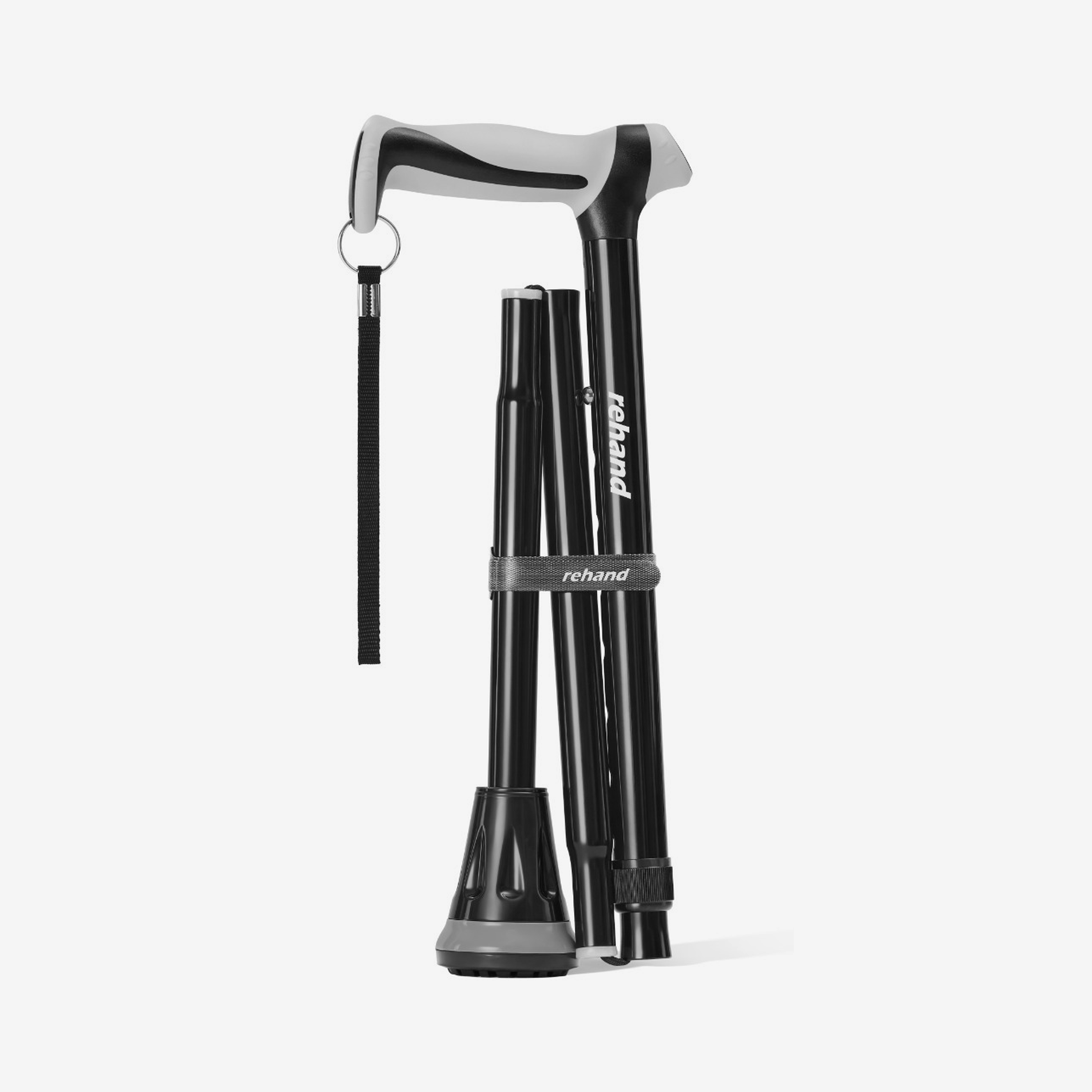
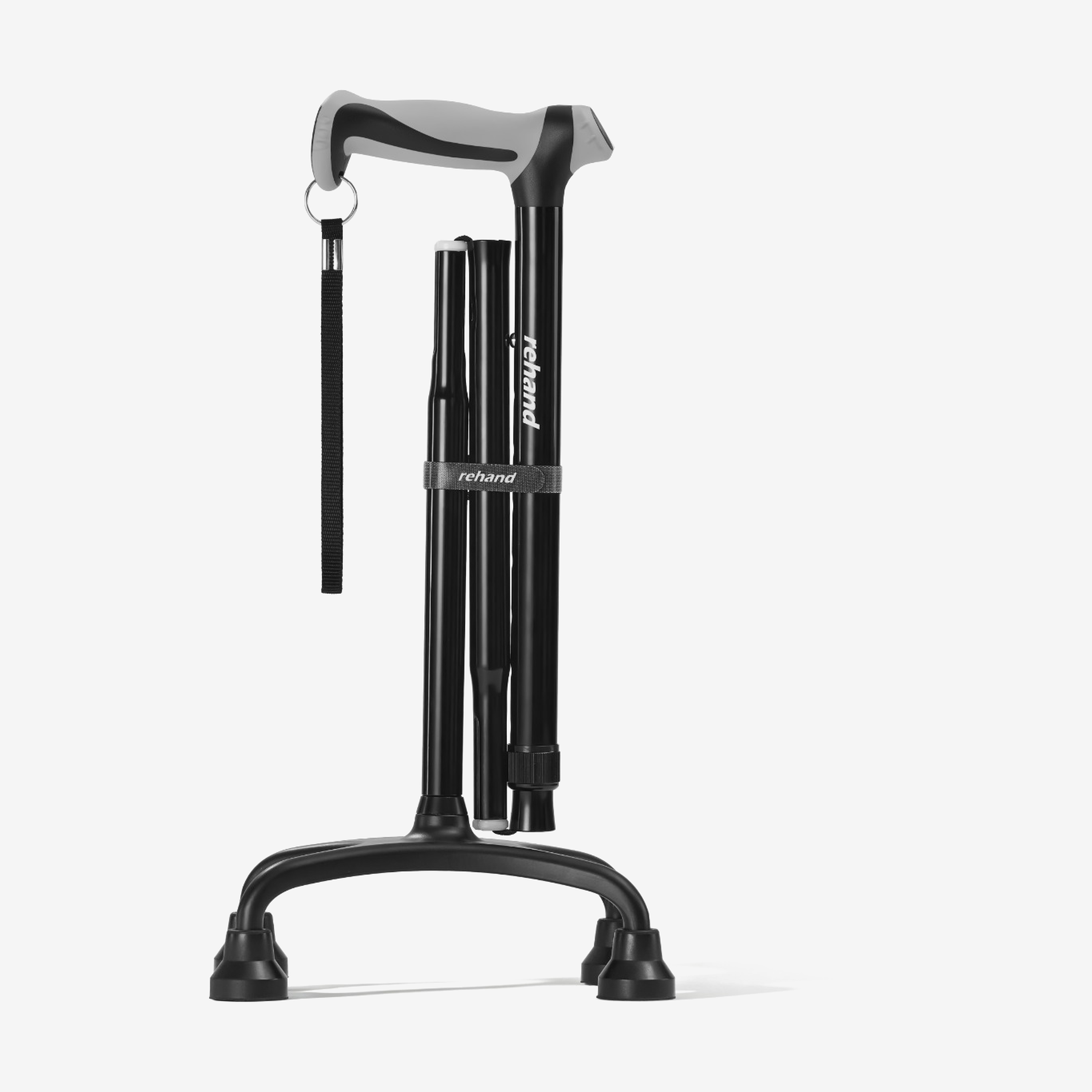
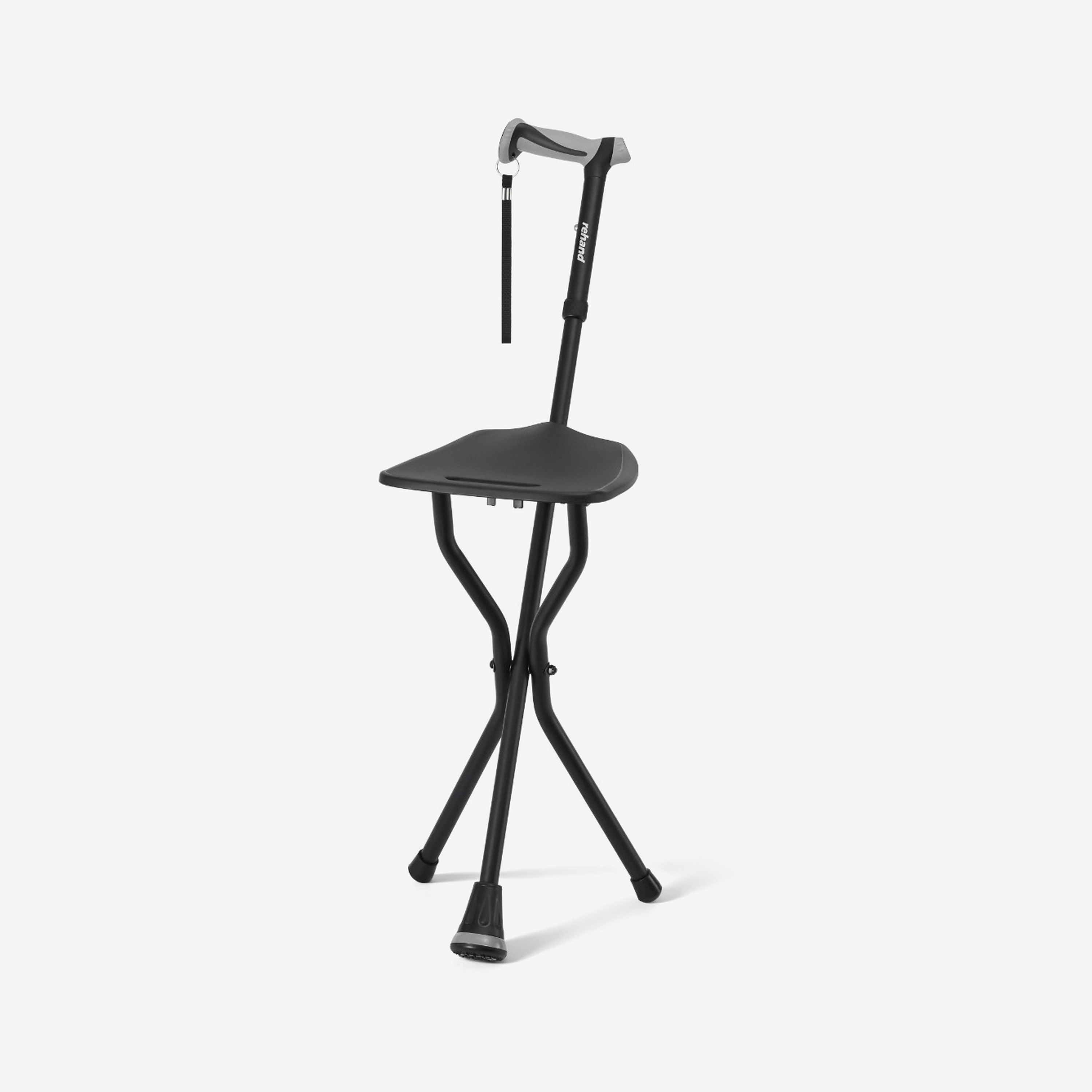
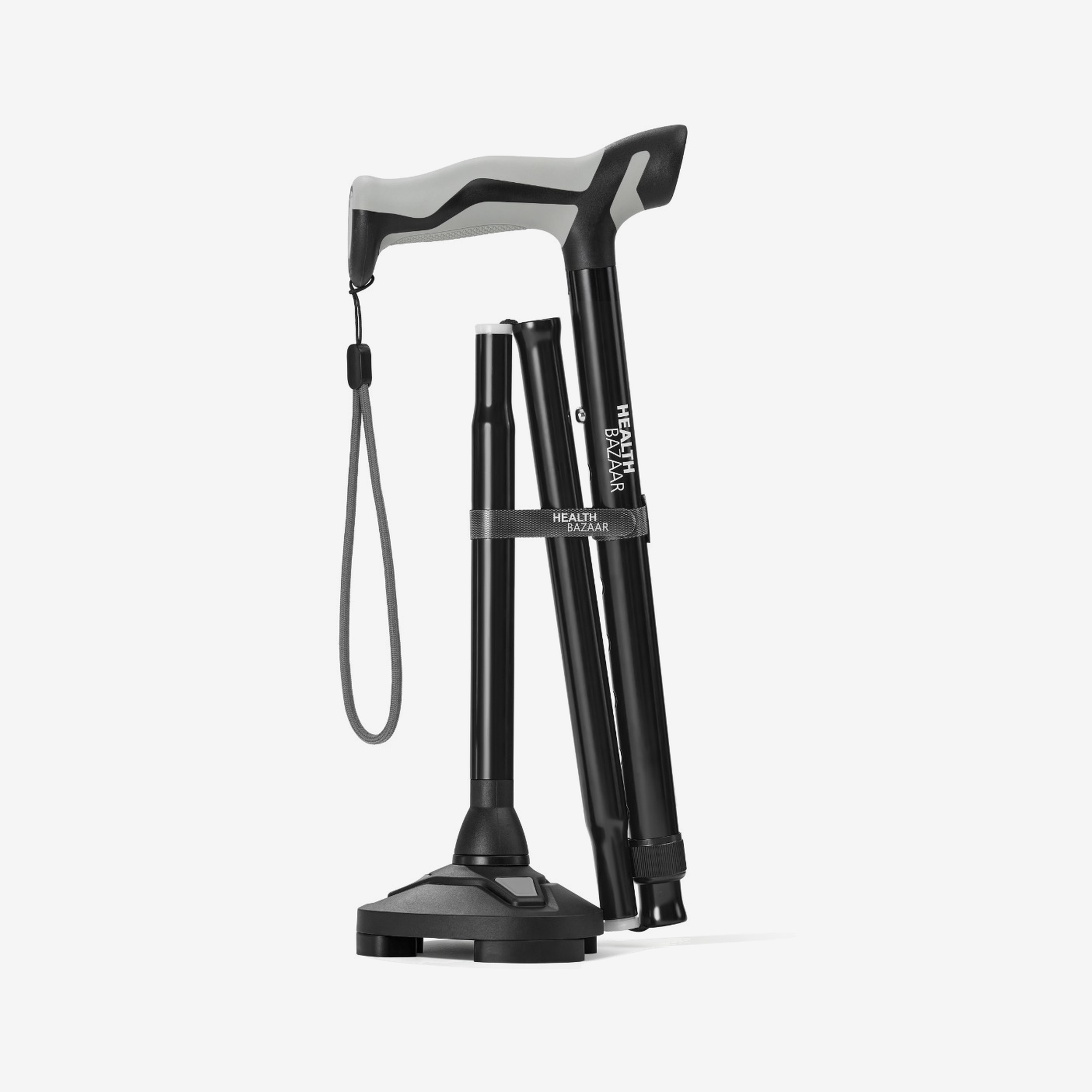

The best walking cane handle is one you can hold comfortably and consistently while the cane remains correctly fitted. Handle shape, grip size, surface material, handedness, and control placement can all affect how the cane feels in daily use.
No handle type is universally best. Start with the amount and type of support recommended for you, then compare grips in your normal walking position rather than choosing by appearance alone.
Quick guide to common cane handles
| Handle type | Typical shape | What to evaluate |
|---|---|---|
| T-shaped or derby-style | Broad horizontal grip with a curved end | Palm contact, finger space, and whether either hand can use it |
| Offset handle | Grip sits over an offset section of the shaft | Grip width, wrist position, and device balance in your hand |
| Palm or anatomical grip | Contoured to match a specific hand | Correct left/right version and whether the contour matches your hand |
| Crook or tourist handle | Curved hook-shaped top | Usable grip area and whether the curve feels secure in your hand |
| C-shaped or multi-level handle | Taller shape with more than one gripping area | Which grip is intended for walking versus standing tasks |
| Soft molded grip | Handle covered in foam, rubber, or TPR-like material | Texture, cleaning, compression, and pressure points |
| Wood handle | Rigid, smooth material | Shape, finish, temperature, and grip comfort |
These names are useful starting points, but manufacturers do not always use them consistently. Evaluate the actual handle dimensions, materials, and instructions for the model you are considering.
Handle shape and grip material are different decisions
A “derby,” “offset,” or “crook” label usually describes shape. Terms such as foam, rubber, thermoplastic rubber (TPR), plastic, or wood describe the material or surface you touch.
Two handles with a similar outline can feel very different if one is narrow and rigid while the other is wider and softly molded. Likewise, two soft grips can differ in texture, firmness, seam placement, and how easily they can be cleaned.
When comparing a cane online, look for both the handle shape and the grip material. Product photography should show the top, side, and underside of the handle so you can see where the palm and fingers rest.
T-shaped and derby-style handles
A T-shaped or derby-style handle offers a horizontal gripping area and is common on adjustable and folding canes. Many versions curve slightly at one end.
Check whether your palm rests across a broad enough area without forcing the wrist sideways. Make sure your fingers can wrap around the grip without pressing into a sharp edge or control button. Some versions are ambidextrous, while others have contours that favor one hand.
This general style may suit shoppers who want a familiar handle on a compact folding cane, but the actual grip size matters more than the label.
Offset handles
An offset cane places the grip above a bend in the shaft. The design changes the relationship between the hand and the shaft, but that does not make every offset handle comfortable for every person.
Compare the grip width, padding, shaft position, and overall cane weight. Hold the cane in the hand recommended for your walking pattern and check whether the wrist can remain in a manageable position. If the cane feels as though it twists or pulls your hand, verify the height and ask a clinician to assess the device.
Avoid treating “offset” as proof that a cane provides more support than another product. Base design, materials, weight capacity, fit, and the user's needs also matter.
Palm and anatomical grips
Palm or anatomical grips are shaped to follow the hand. Some are sold in separate left- and right-hand versions.
The contour can increase the contact area, but it must match the correct hand and feel natural to the individual user. A shape that fits one palm well may create pressure points for another. Confirm the handedness before purchase and test the grip whenever possible.
If you expect to change which hand holds the cane, a hand-specific anatomical grip may be less flexible than an ambidextrous handle.
Crook and tourist handles
Crook or tourist handles have a hook-like curve. The curve may be convenient when hanging or storing the cane, but the usable gripping area can be narrower than it first appears.
Check where your palm actually rests, whether the surface becomes slippery in your normal conditions, and whether the curve changes how you position the wrist. Decorative appearance should not replace fit, structural condition, or the manufacturer's intended use.
C-shaped and multi-level handles
Some canes use a taller C-shaped handle or provide a second gripping point. These designs may separate the regular walking grip from a lower or higher hand position intended for another task.
Read the model instructions carefully. A secondary handle is not automatically a safe replacement for a chair armrest, railing, grab bar, walker, or another person's assistance. Furniture stability, leg strength, balance, and clinical restrictions still matter.
The Rehand Ergonomic Stand-Up Walking Cane, for example, uses a C-shaped grip and multiple height settings. Those are model-specific mechanical features; they should not be generalized to all ergonomic canes.
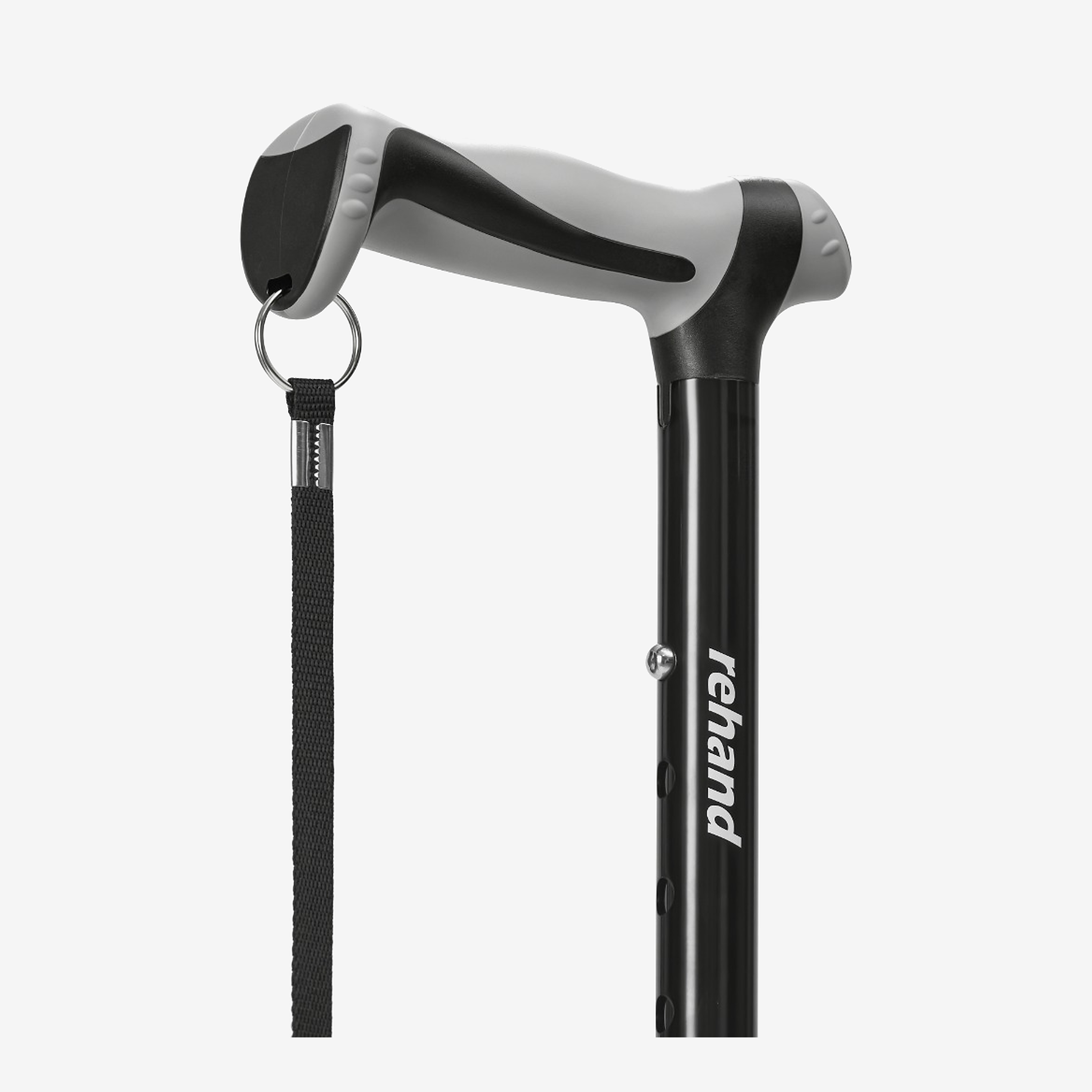
Soft molded grips
Soft molded materials can change texture and pressure distribution compared with a rigid handle. Rehand's Foldable Walking Cane uses a TPR handle, while other models may use foam, rubber-like materials, or layered constructions.
When evaluating a soft grip, check:
-
whether the surface feels secure with dry hands;
-
whether seams or edges press into the palm;
-
whether the material compresses too much for your preference;
-
how the manufacturer recommends cleaning it; and
-
whether the grip shows tears, looseness, or deterioration.
Do not assume that “ergonomic” guarantees comfort. It describes a design intention, not a universal result.
Wood handles
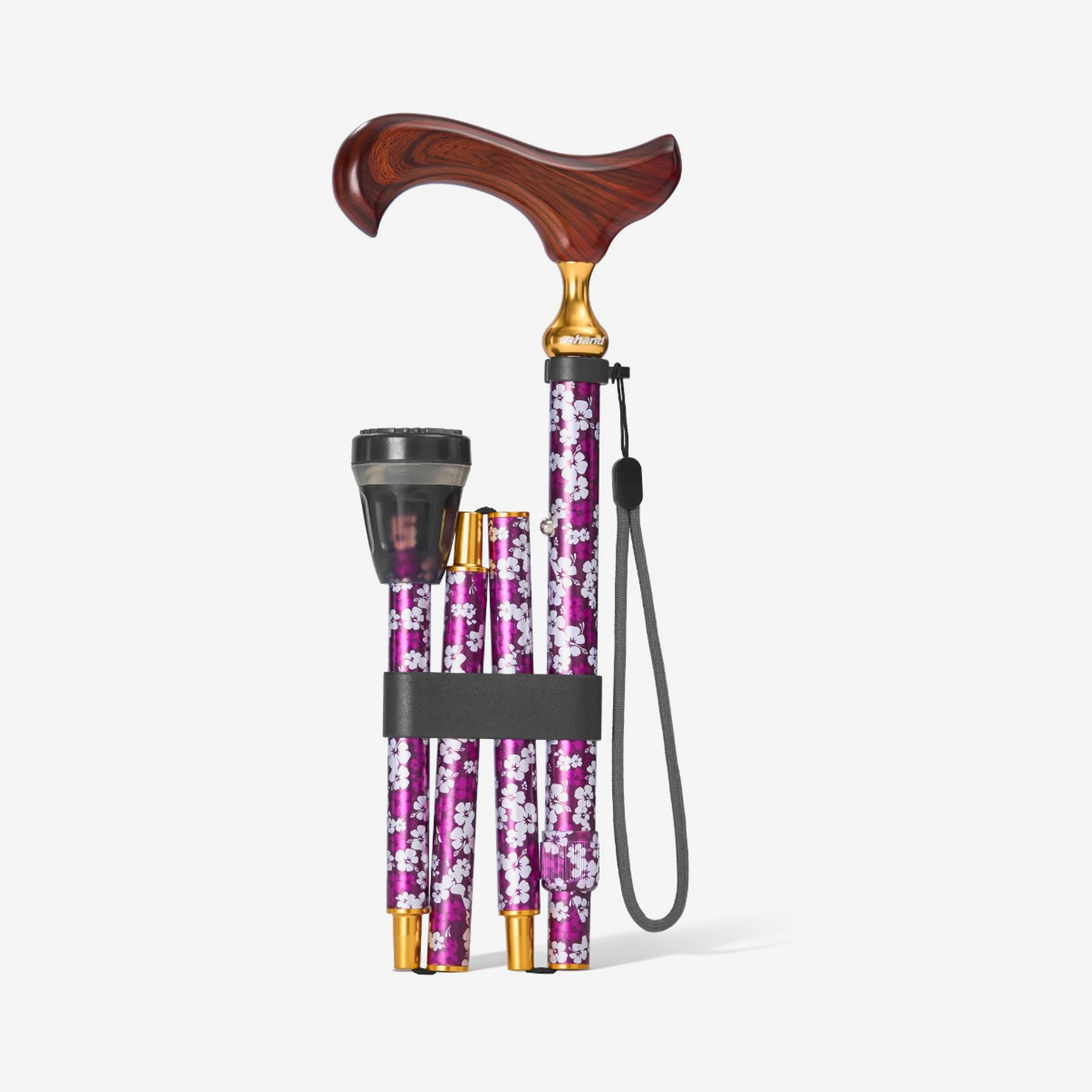
Wood handles are rigid and can offer a smooth, finished surface. The Rehand Floral Foldable Walking Cane uses a maple handle on specific models.
Compare the shape and finish rather than assuming all wood handles feel alike. Inspect for cracks, splinters, looseness, or damage to the finish. Follow the manufacturer's cleaning guidance and avoid soaking the handle.
Wood may appeal to shoppers who prioritize a classic appearance, but style should be considered alongside grip comfort, height range, weight capacity, and the cane's overall construction.
How grip size affects the decision
Mayo Clinic advises choosing a grip that feels comfortable and notes that a larger grip may be useful for someone who has trouble grasping with the fingers. This is a useful question to explore, but “larger” is not automatically better.
A grip that is too large may be difficult to close the hand around. A grip that is too narrow may concentrate pressure in a smaller area. Consider finger length, hand size, joint movement, sensation, and the amount of time you expect to hold the cane.
New numbness, persistent hand pain, skin pressure, or loss of grip deserves professional assessment rather than repeated self-adjustment.
Check the cane height before judging the handle
A handle may feel wrong because the cane is set too high or too low. With your usual walking shoes on, stand as upright as you comfortably can and let your arm hang at your side. The top of the handle should be around the wrist crease, and the elbow should remain slightly bent when you hold it.
Mayo Clinic gives a comfortable elbow angle of about 15 to 30 degrees as a reference, while the American Academy of Orthopaedic Surgeons describes a slightly bent elbow. Do not force a precise angle if it conflicts with your clinician's instructions.
Use Rehand's wrist-crease fit guide to measure first, then compare the result with the model's published adjustment range.
Seven questions to ask before choosing a handle
-
Can I wrap my fingers around the grip without excessive effort?
-
Does the handle create a pressure point in my palm or fingers?
-
Is the handle ambidextrous or made for one hand?
-
Can I reach any buttons without loosening my grip?
-
Does the cane remain correctly fitted at wrist-crease height?
-
Can I clean and inspect the material according to the manual?
-
Does the full cane—not just the handle—match the support recommended for me?
When to ask for professional help
A cane may be appropriate for relatively minor balance or stability needs, but it may not provide enough support for every person. Ask a physical therapist, occupational therapist, or other qualified clinician for help if you have repeated falls, new weakness, dizziness, significant pain, difficulty grasping the handle, reduced hand sensation, or post-surgical restrictions.
The goal is not to find the handle with the strongest marketing claim. It is to find a complete mobility aid that fits, functions correctly, and can be used as instructed.
Ready to compare options? Browse Rehand's walking cane collection, then check each product page for the exact handle material, adjustment range, base design, and weight capacity.
Sources
-
Mayo Clinic — Tips for choosing and using canes, updated July 30, 2026; accessed September 8, 2026.
-
American Academy of Orthopaedic Surgeons — How To Use Crutches, Canes, and Walkers, accessed September 8, 2026.
-
Rehand — Walking Canes Collection, accessed September 8, 2026.
-
Rehand — How to Measure Walking Cane Height, accessed September 8, 2026.

