
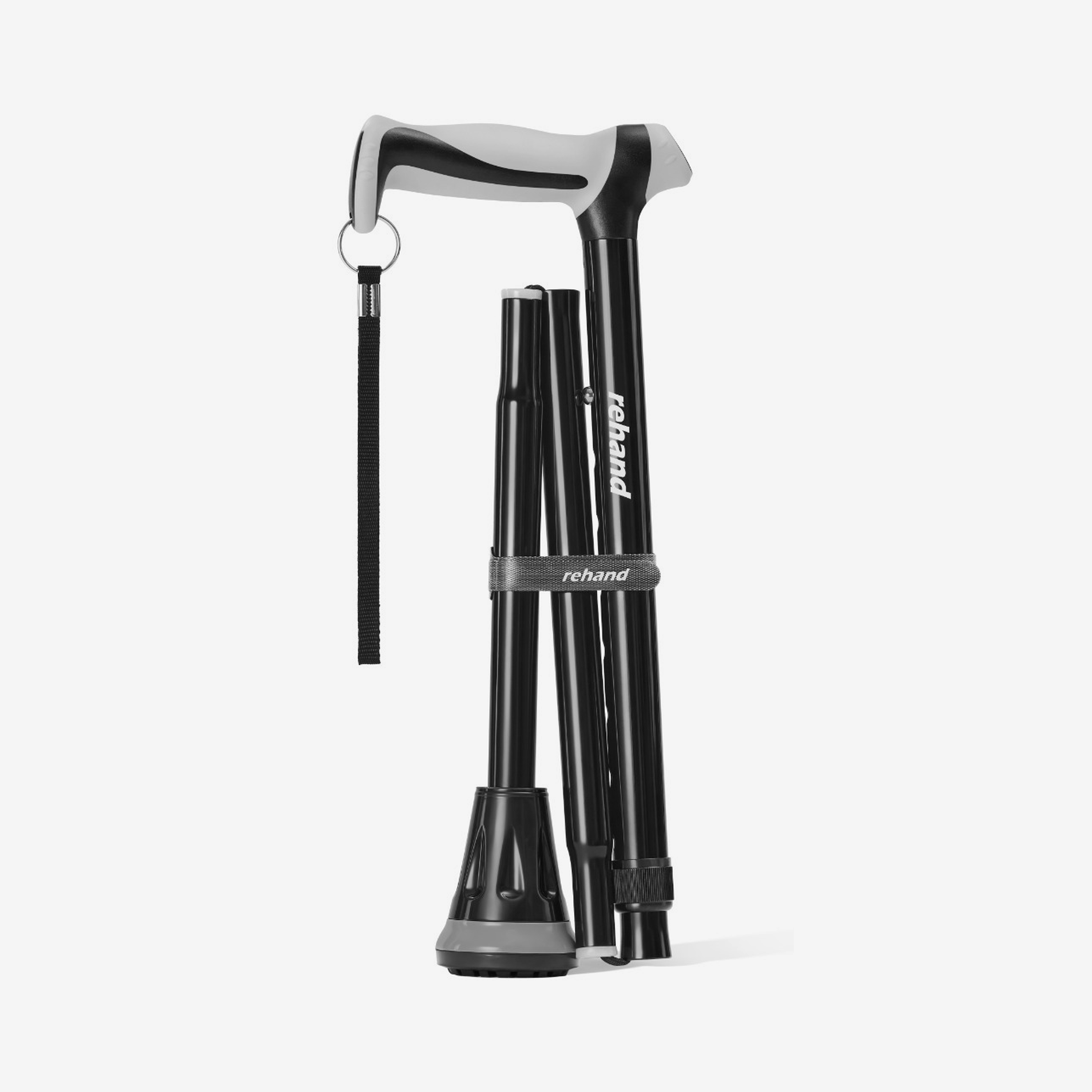
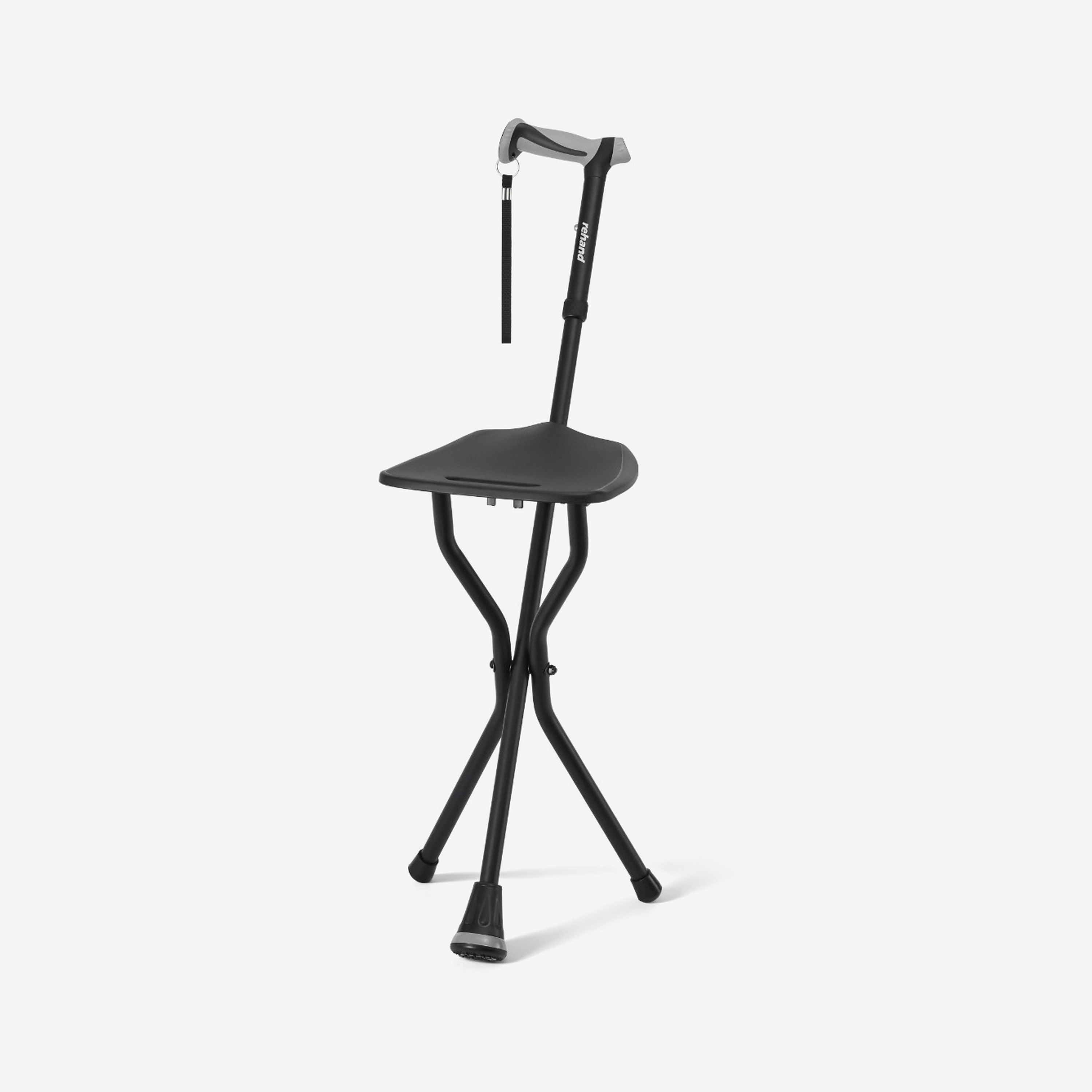
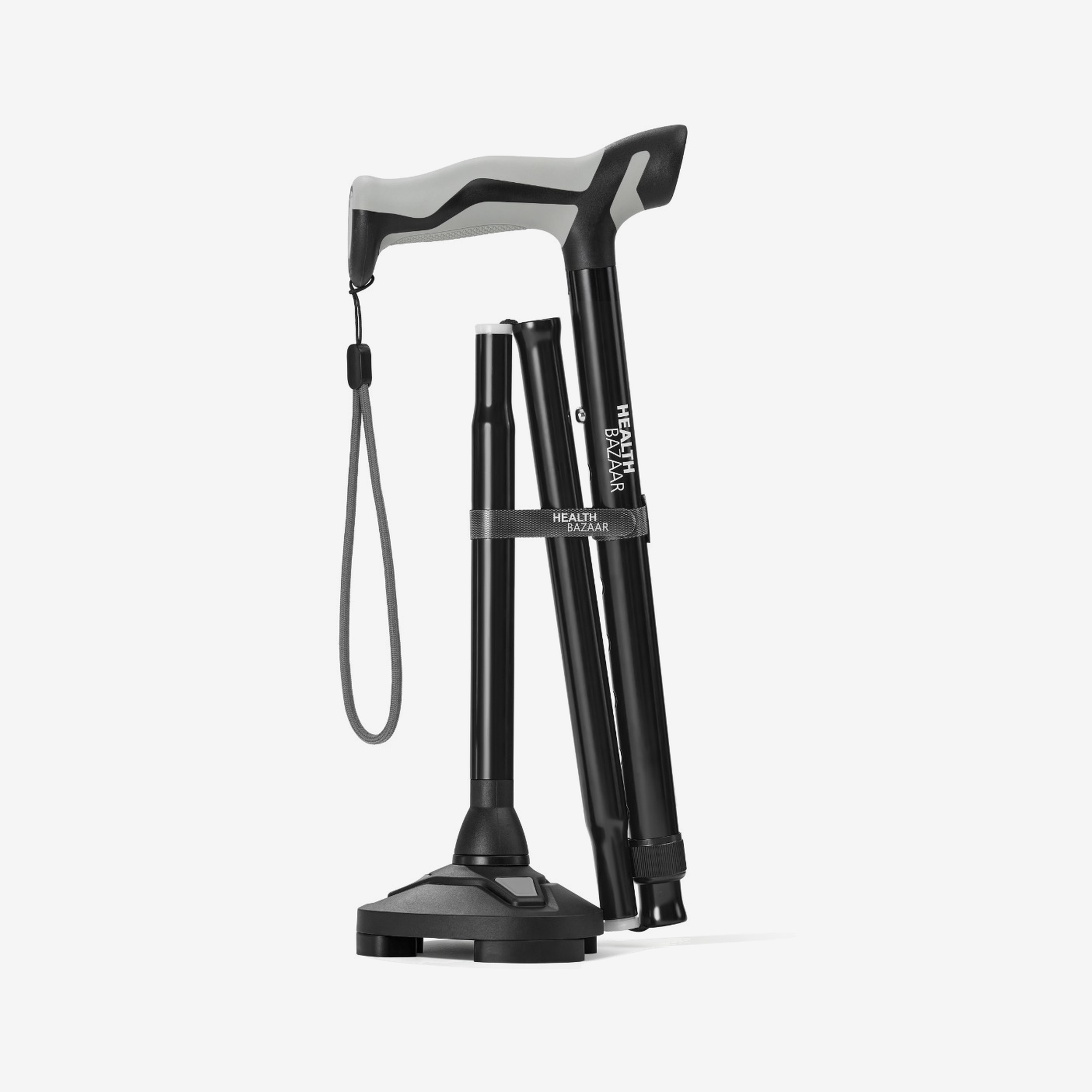

If your surgeon or physical therapist has recommended a quad cane after knee or hip surgery, the first priority is to follow your personal weight-bearing and movement instructions. A blog cannot determine when you are ready to move from a walker or crutches to a cane, how much weight you may place on the operated leg, or which gait pattern is appropriate for you.
This guide explains general quad cane setup and level-ground use so you can review what your care team has shown you. If their instructions differ, follow theirs.
Before you use a quad cane
Ask your clinician or physical therapist to confirm:
-
that a quad cane provides the right level of support for you;
-
when you may begin using it;
-
how much weight you may place on the operated leg;
-
which hand should hold the cane;
-
whether you need supervision; and
-
how to handle stairs, curbs, and uneven ground.
Do not change devices because a certain number of days or weeks has passed. Recovery timelines and movement precautions vary.
Set the cane to a useful starting height
Wear the shoes you normally use for walking. Stand as upright as you comfortably can with your shoulders relaxed and your arm hanging at your side. As a general starting point, the top of the handle should line up near the crease of your wrist. When you hold the grip, your elbow should have a comfortable slight bend.
Mayo Clinic describes a comfortable elbow bend of about 15 to 30 degrees; Cleveland Clinic describes about 20 degrees. These are general fit checks, not a substitute for an in-person assessment.
For an adjustable Rehand quad cane, make sure the push button is fully seated in a height hole and tighten the locking collar when the model instructions require it. Never walk with the button between holes.
Orient the quad base correctly
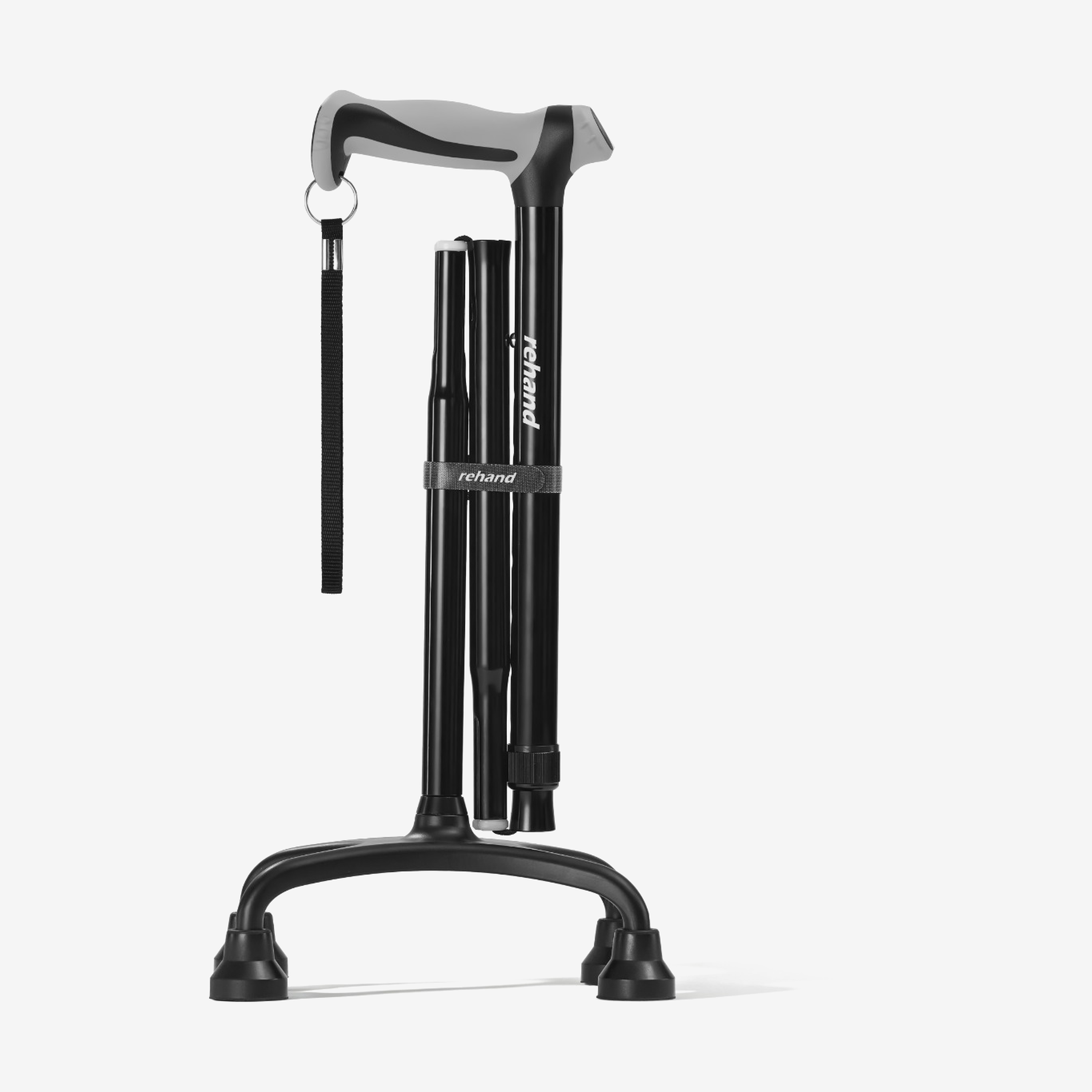
Many quad cane bases are asymmetrical. On the current Rehand Quad Cane, the flatter side of the molded base should face toward the user so the outer prongs remain farther from the feet. The model can be configured for right- or left-hand use; follow the Rehand User Manuals instructions when rotating the base.
Before walking:
-
Set the cane on a firm, level surface.
-
Confirm that all four rubber feet contact the floor.
-
Check that the base and shaft do not wobble.
-
Inspect each rubber foot for wear, cracks, stiffness, or looseness.
Do not use a damaged cane or a base that will not sit evenly.
Which hand should hold the quad cane?
For a problem affecting one leg, general clinical guidance commonly places the cane in the hand opposite the affected or operated leg. For example, a person with right-side surgery may be instructed to hold the cane in the left hand.
However, your situation may be different because of shoulder or hand limitations, bilateral symptoms, neurologic conditions, balance needs, or surgical precautions. Confirm the side with your PT or clinician rather than changing it on your own.
A general sequence for level-ground walking
Use this only if it matches the gait pattern your clinician has prescribed.
-
Stand balanced before taking the first step.
-
Place the quad cane a short distance ahead, keeping the entire base flat on the floor.
-
Move the affected or operated leg forward according to your weight-bearing instructions.
-
Step through with the other leg.
-
Pause and reset if the base lands on only one or two feet, catches your shoe, or feels unstable.
Keep the cane close enough that you do not reach far forward or lean sideways. Look ahead rather than continuously looking down, unless your therapist has instructed otherwise for a specific reason.
Sitting down and standing up
A cane is not automatically a safe substitute for a stable chair arm or prescribed transfer technique. Back up until you feel the chair behind your legs, then follow the transfer method taught by your therapist. Do not pull hard on the cane to lift your body unless the product and your clinician’s instructions specifically allow that use.
The dual-handle Rehand Quad Cane includes a lower grip intended as a sit-to-stand hand position, but it does not replace a stable chair, proper technique, or supervision when needed. Use the model-specific manual.
Stairs, curbs, and uneven surfaces
Stairs require individualized instruction because rail availability, leg strength, balance, surgical precautions, and the quad base shape all matter. Ask a physical therapist to practice the exact staircase you use when possible.
Do not assume the level-ground sequence transfers directly to stairs. A quad base may not fit completely on a narrow step. Use a handrail when instructed, move slowly, and do not attempt stairs alone if your care team has not cleared you.
On uneven, wet, icy, or loose surfaces, the four feet may not all contact the ground at once. A wider base does not make every surface safe.
Common mistakes to avoid
Starting without checking the base
A backward or outward-facing asymmetrical base may place a prong closer to the user’s foot. Confirm orientation each time the cane is reconfigured.
Reaching too far ahead
Placing the cane too far forward can encourage leaning and make it harder to keep the base flat. Use the distance demonstrated by your PT.
Walking on only part of the base
Set all four feet down together on level ground. Repeatedly loading only two feet can make the cane feel unstable and contribute to uneven wear.
Using an incorrect height
A cane that is too high or too low can change posture and arm position. Recheck the fit after changing shoes or adjusting the cane.
Following a generic recovery timeline
There is no universal week when every person should switch to a quad cane or stop using one. The decision depends on healing, strength, balance, pain, precautions, and clinician assessment.
Ignoring a change in symptoms or function
Stop and seek medical guidance if you have new or worsening pain, swelling, dizziness, weakness, numbness, shortness of breath, wound concerns, or difficulty following your prescribed weight-bearing rules. For urgent or severe symptoms, seek urgent medical care.
When to ask for another assessment
Contact your physical therapist, occupational therapist, surgeon, or clinician if:
-
you are unsure which device or hand to use;
-
the cane cannot be adjusted to a comfortable fit;
-
the base repeatedly catches your foot;
-
you must lean heavily on the cane;
-
you feel less steady than with your previous device;
-
your weight-bearing instructions changed; or
-
you are preparing to use stairs or unfamiliar outdoor surfaces.
Sometimes a walker, crutches, a single-point cane, or another device may be more appropriate. That decision should be individualized.
A quad cane can offer a broader contact base than a single-point cane, but correct setup and professional instruction still matter. Confirm the device and timing with your care team, set the handle near wrist-crease height, orient the base for the correct hand, place all four feet flat, and follow the gait pattern you were prescribed.
Compare Rehand quad cane options for verified mechanical features, then use the Rehand User Manuals page for model-specific setup. Ask your PT or clinician to confirm the final fit and technique.

