

The short answer: Underarm crutches are widely used and may feel more familiar to a first-time user. Forearm crutches use a cuff around the forearm and may feel more compact in daily life, but they can require more practice and upper-body control. Neither type is universally better. Your injury, weight-bearing instructions, balance, strength, environment, and training all matter.
If a surgeon, physician, or physical therapist has given you specific weight-bearing instructions, follow those instructions first. A product comparison cannot determine whether you should be non-weight-bearing, partial weight-bearing, or weight-bearing as tolerated.
What Are Underarm Crutches?
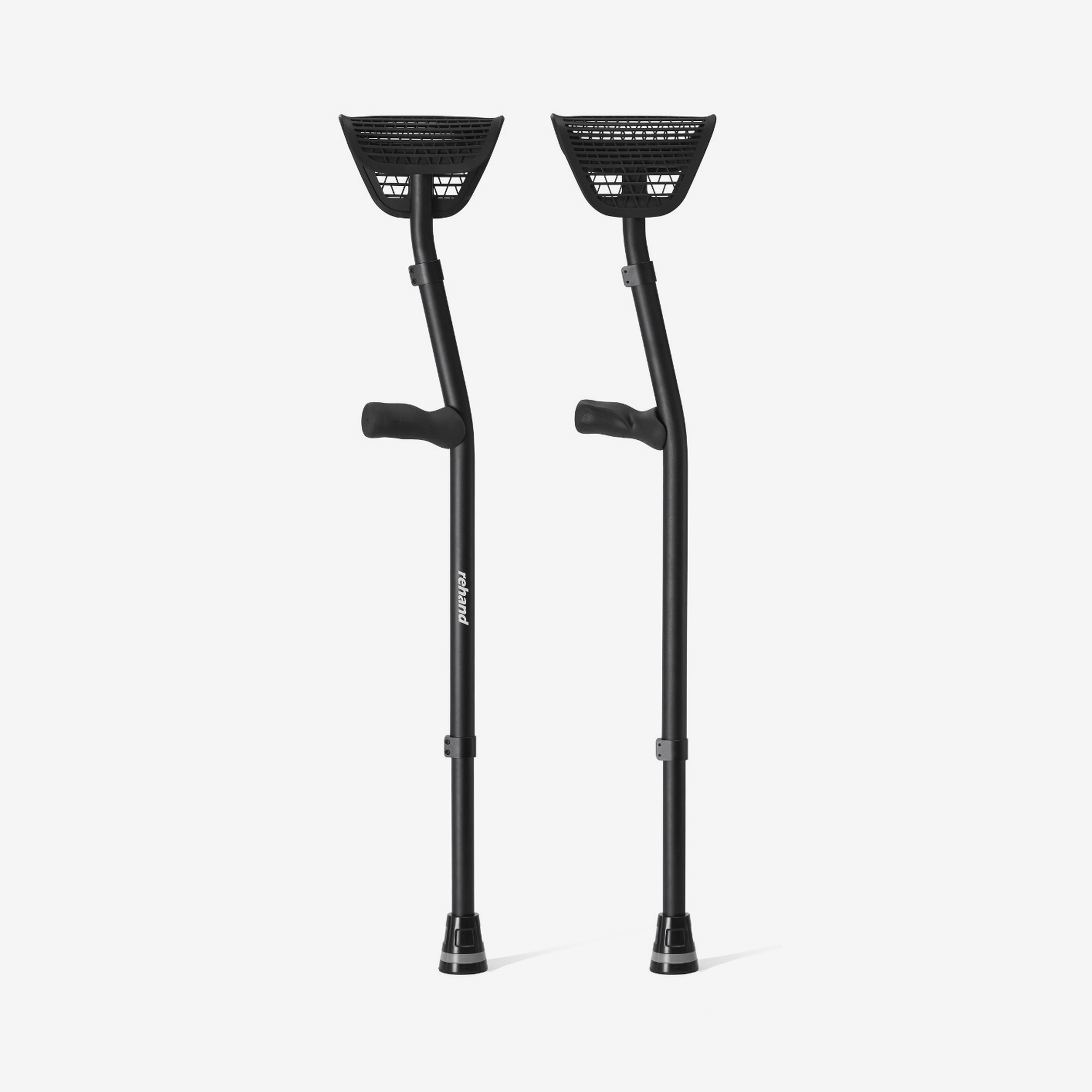
Underarm crutches are also called axillary crutches. They have a padded top positioned below the armpit, a handgrip, and a tip that contacts the floor.
They are common in hospitals and clinics and may be familiar to people using crutches temporarily. However, “underarm” does not mean your body weight should rest on the pad. Weight should be supported through your hands on the handgrips. The top pad should remain below the armpit according to the fitting instructions provided by your clinician or product manual.
Possible practical advantages include:
-
familiar design and broad availability;
-
an easier initial learning experience for some people; and
-
suitability for several gait patterns when correctly fitted and professionally taught.
Possible tradeoffs include:
-
a taller, bulkier frame;
-
the need to keep pressure away from the armpit; and
-
more space needed for storage or transportation.
What Are Forearm Crutches?
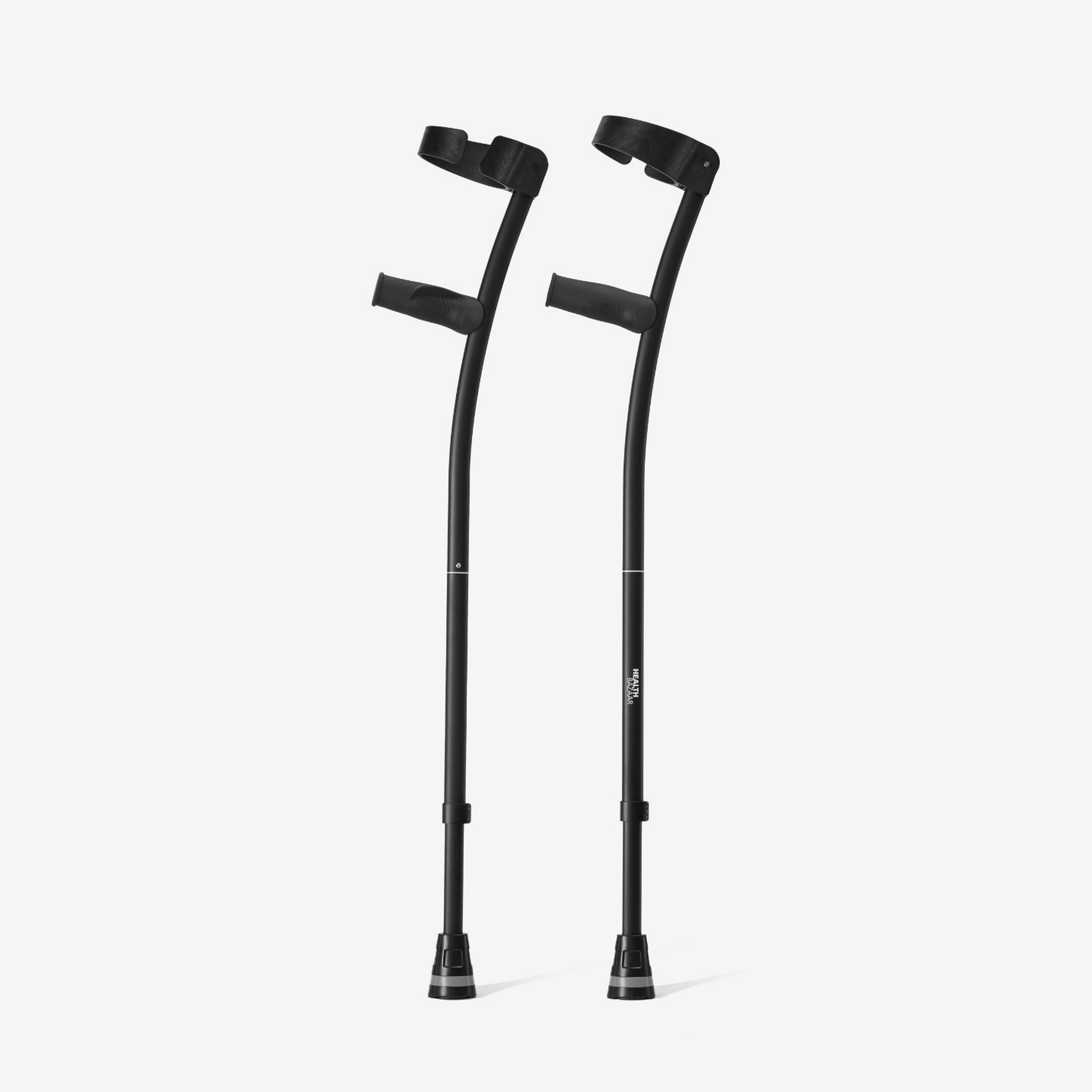
Forearm crutches are also called elbow crutches or Lofstrand crutches. They have a handgrip and a cuff that fits around the forearm below the elbow.
Because the cuff remains around the forearm, some people find these crutches easier to keep with them while briefly using a hand. Their shorter frame can also feel less bulky in tight spaces or during transportation. Correct fit and technique are still essential.
Possible practical advantages include:
-
a more compact frame;
-
a cuff that helps the crutch remain with the arm; and
-
suitability for repeated or longer-term use when recommended and properly fitted.
Possible tradeoffs include:
-
a learning curve for new users;
-
the need for adequate strength, coordination, and balance; and
-
continued load through the hands and upper extremities.
Forearm vs. Underarm Crutches: Quick Comparison
| Decision factor | Underarm crutches | Forearm crutches |
|---|---|---|
| Upper support | Padded top below the armpit | Cuff around the forearm |
| Main load path | Through the hands and handgrips | Through the hands and upper extremities |
| First-time familiarity | Often more familiar in the United States | May require more practice |
| Frame size | Taller and often bulkier | Shorter and often more compact |
| Briefly freeing a hand | Crutch usually must be managed or leaned | Cuff may help keep crutch with the arm |
| Best for | Depends on the user, gait pattern, and clinical instructions | Depends on the user, gait pattern, and clinical instructions |
Why There Is No Universal Winner
Commercial comparisons often say that underarm crutches are only for short-term use and forearm crutches are always better for long-term use. That is too simple.
One prospective cohort study compared the two designs during a three-point crutch gait in 20 healthy volunteers. In that specific test, participants moved faster and reported better stability with axillary crutches. The study was small, involved healthy participants rather than people with injuries, and evaluated one gait pattern, so it should not be treated as a universal rule. It does show why “forearm crutches win on every metric” is not a supportable claim.
The appropriate device depends on the exact task and the person using it. Your clinician may consider:
-
the amount of weight allowed on the affected leg;
-
balance and coordination;
-
hand, wrist, elbow, and shoulder function;
-
whether you need the device temporarily or repeatedly;
-
stairs, curbs, doorways, and surfaces in your home; and
-
whether you can learn and repeat the required gait pattern.
Correct Fit Matters More Than Marketing Labels
Underarm crutch fit
The padded top should sit below the armpit rather than pressing into it. Cleveland Clinic recommends positioning the top about two finger widths below the armpit, with the handgrips near the hips. Support your weight through the handgrips instead of leaning on the underarm pads.
Forearm crutch fit
The cuff and handgrip must be adjusted for your arm and height. The exact cuff position and elbow angle depend on the model and professional fitting instructions. Do not copy measurements from another person or another brand.
For both types, inspect the tips, fasteners, adjustment mechanisms, cuffs, pads, and handgrips before use. Stop using a damaged crutch and contact the seller or manufacturer for model-specific support.
Questions to Ask Before Choosing
What are my weight-bearing instructions?
This is the first question—not which crutch looks more comfortable. Your healthcare provider determines how much weight you may place on an injured or recovering leg. Use the gait pattern they teach you.
Do I have the strength and coordination for this design?
Both designs require upper-body effort. Forearm crutches may require more practice for some first-time users. Underarm crutches can also be difficult if they are poorly fitted or if the user leans on the top pads.
Where will I use the crutches?
Measure doorways and storage spaces. Consider stairs, curbs, transportation, school or work, and whether you need to carry the crutches in a vehicle. Do not assume a folding model is approved for air travel or suitable for every storage compartment.
Can I receive hands-on training?
A clinician can fit the crutches and teach the gait pattern that matches your restrictions. This is especially important for stairs, non-weight-bearing movement, and transitions from sitting to standing.
Common Mistakes to Avoid
-
Leaning on the underarm pads. This can put unwanted pressure on tissues in the armpit. Use the handgrips as instructed.
-
Changing weight-bearing status on your own. Comfort does not mean the recovering limb is ready for more load.
-
Using another person's settings. Recheck height, handgrip, and cuff position for the actual user.
-
Skipping tip inspection. Replace worn or damaged tips before they lose reliable floor contact.
-
Learning stairs without support. Practice with a healthcare professional and use a handrail when instructed.
-
Assuming one design is always safer. Device choice and technique are individual.
Rehand Product Paths
Rehand currently offers an adjustable underarm crutch model and a foldable forearm crutch model. Review the current product page and manual for the exact model rather than applying one model's specifications to another.
For recovery-related product categories, you can also review Post-Surgery & Injury Recovery Mobility Aids. A cane or quad cane does not replace crutches when your healthcare professional has instructed you to limit weight bearing.
Frequently Asked Questions
Are forearm crutches better than underarm crutches?
Not for everyone. Forearm crutches may feel more compact and may suit repeated use for some people. Underarm crutches may feel more familiar and, in one small study of a specific gait task, performed better on speed and stability. Individual assessment and training matter more than a universal label.
Can underarm crutches damage nerves?
Pressure in the armpit from poor fit or leaning on the top pads can contribute to nerve or blood-vessel injury. Keep the pads below the armpits, support weight through the handgrips, and ask a clinician to check the fit. This risk is not a reason to claim that forearm crutches have “zero risk.”
Are forearm crutches harder to learn?
They may require more initial practice for some people. The learning experience depends on strength, balance, coordination, prior experience, and the gait pattern being used.
Which crutches are better for long-term use?
Forearm crutches are commonly considered for repeated or longer-term use, but they are not automatically appropriate for every person. A healthcare professional should consider your upper-body function, balance, environment, and mobility goals.
Can I switch from underarm to forearm crutches?
Do not switch devices or gait patterns without checking your fit and weight-bearing instructions. A PT or other qualified healthcare professional can help you transition and practice safely.
The Bottom Line
Forearm and underarm crutches solve the same broad problem in different ways. Underarm crutches use a taller frame with a pad below the armpit. Forearm crutches use a cuff around the forearm. Compare fit, learning demands, environment, portability, and the gait pattern prescribed for you—not claims that one design is always superior.
Next step: Review the Rehand User Manuals for model-specific setup information, and ask your healthcare professional to confirm your crutch fit and weight-bearing instructions.
Sources
-
Cleveland Clinic, “Crutches: What They Are, Types & How To Use Properly,” medically reviewed and updated November 12, 2025: https://my.clevelandclinic.org/health/treatments/15543-how-to-use-crutches
-
American Academy of Orthopaedic Surgeons, “How To Use Crutches, Canes, and Walkers”: https://orthoinfo.aaos.org/en/recovery/how-to-use-crutches-canes-and-walkers/
-
Yap WMQ, Hairodin Z, Kwek EBK. “Axillary versus Forearm Crutches: A Prospective Cohort Comparing which is Superior for 3-Point Crutch Gait.” PubMed: https://pubmed.ncbi.nlm.nih.gov/34429820/
-
NCBI Bookshelf, “Crutches”: https://www.ncbi.nlm.nih.gov/books/NBK539724/
